9 out of 10 HR leaders regret AI layoffs: the bill for cutting by title, not by talent

🕒 Published on Zendoric: July 14, 2026 · 00:03
A survey of 600 HR leaders reveals that nearly 90% would handle their AI-related layoffs differently: a third lost critical skills and more than a third have already rehired for half of the eliminated roles. The problem isn't that AI is useless, but how it was decided who to cut.
📚 Go deeper

The best starting book if you're not technical: a Wharton professor explains how to work WITH AI — when to delegate, when to supervise, when to keep i
As an Amazon Associate, Zendoric earns from qualifying purchases; the price does not change for you. · all our recommended books →
By CPA Practice Advisor · July 13, 2026.
Outplacement firm Careerminds surveyed 600 HR leaders who oversaw layoffs over the past twelve months, and the result is a fairly stark map of how AI-driven restructuring is being applied in practice. Some 78.8% of those organizations attribute their cuts to technological advances —AI replacing functions and responsibilities— and entry-level positions have been hit hardest, cited by 31.5% of respondents as the most affected category. So far, the picture matches what we have been documenting for months: routine, entry-level work is first in the line of fire.
What changes the story is what happened next. Only 8.4% of these HR leaders say their AI-driven restructuring delivered on its promise and that they would do it again without changes: in other words, about nine out of ten admit they would do things differently. Automation, moreover, fell short of expectations: two-thirds of teams say some positions were indeed successfully replaced, but only 21.4% managed to have AI replace roles without generating operational problems, and a worrying 12.3% acknowledge that the problems created by these layoffs outweighed the ones they were meant to solve. A third of organizations (32.9%) lost critical skills and experience in the process, and 28.1% found that the remaining workforce lacked the capacity to fill that knowledge gap.
The most telling consequence is the reversal, and how fast it happens. More than a third of the companies (35.6%) that made these cuts have already rehired for more than half of the eliminated positions, and an additional 32.7% have rehired for between 25% and 50%. And it has not been a slow process: 52.1% rehired within less than six months, an additional 17.8% within less than three, and only 2.1% waited more than a year. That is, most of these organizations took less than two quarters to discover they had made a mistake. On the economic front, the promise of savings did not hold up either: 30.9% say rehiring costs exceeded any savings generated by the layoffs, leaving them worse off than before; 42.4% simply broke even; and only 26.7% came out genuinely ahead.
Amanda Augustine, a career expert at Careerminds, points to the root of the problem with a phrase worth underlining: many organizations made restructuring decisions based on job titles, not on the actual capabilities of their workforce. It is a distinction that seems like a nuance, but it explains much of the damage: an employee labeled a "junior analyst" may have spent years accumulating tacit knowledge —of processes, of clients, of exceptions no manual captures— that vanishes with the org chart, even if the software replacing them works perfectly on paper.
Our reading is that this data does not contradict the thesis that AI will profoundly transform employment; it confirms it, but points to the real bottleneck: it is not the capability of the model, it is the organizational clumsiness of those deciding whom to lay off and when. At Zendoric we have spent months pointing out that AI's impact on work is real but uneven, and that administrative and back-office functions are the most exposed. This survey adds an uncomfortable layer: even when the sector-wide diagnosis is correct, execution can be a disaster if you cut by org chart instead of by an honest inventory of skills. The result is not only a human cost —people laid off and then, in practice, replaced by someone with the same profile months later— but also a business cost that wipes out much of the promised savings.
This is exactly the kind of short-term friction that should not be downplayed: the promise of immediate efficiency collides with the reality that most organizations still do not know how to properly measure what their own workforce does, and use AI as an excuse or accelerator for decisions they already wanted to make for other reasons. In the medium term, it is foreseeable that this wave of poorly calibrated layoffs will serve as a lesson: the companies that survive this cycle of trial and error will learn to distinguish between automating tasks (something AI does increasingly well) and eliminating people by the name of their position (a management error, not a technological achievement). The underlying horizon remains the same one we defend: an economy with more abundance and less unnecessary routine work. But getting there requires that organizations first learn to distinguish well-executed replacement from hasty layoffs, and this survey shows that, as of today, most have not yet managed it.
📚 Go deeper
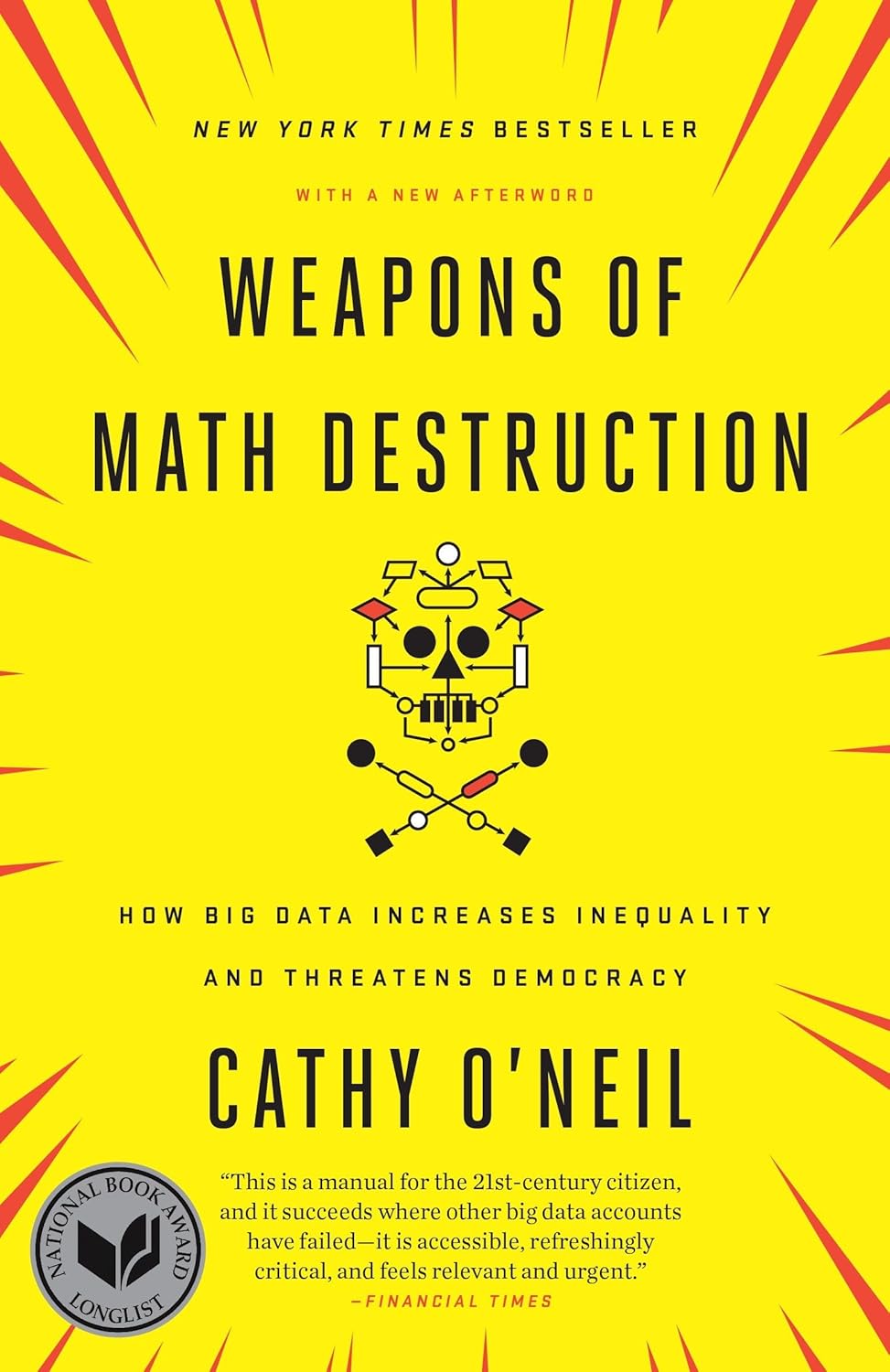
How opaque algorithms decide who gets credit, a job or parole — and why they tend to punish the same people.

The reference manual for building products on top of AI models: prompts, RAG, fine-tuning, agents, evaluation and deployment.
As an Amazon Associate, Zendoric earns from qualifying purchases; the price does not change for you. · all our recommended books →
🔗 Related on Zendoric
- 69% of the U.S. already wants to expropriate half of AI companies: layoffs have politicized abundance · 2026-07-13
- Microsoft cuts thousands of jobs to fund its AI bet: the paradox of record spending · 2026-07-02
- Love with a copilot: one in three uses AI as a couples therapist, and it's not just a passing fad · 2026-07-10