Three votes and a unanimous rejection: what a tiny local poll reveals about AI in the classroom

🕒 Published on Zendoric: July 14, 2026 · 00:03
✨ AI-generated · how it's made
An opinion poll by a Canadian local newspaper on whether elementary schoolchildren should use generative AI in school received only three votes, and all three were a resounding 'no.' The sample is minuscule, but the reflection it offers —families' instinctive wariness toward AI for children— is real and worth reading carefully.
📚 Go deeper
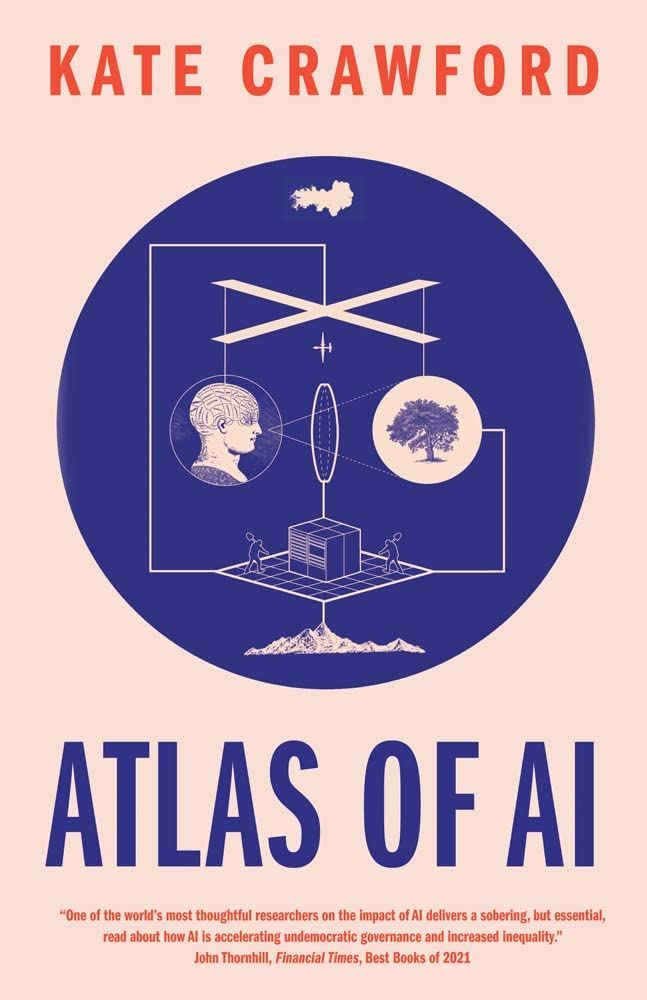
AI as an extractive industry: the lithium, the energy, the underpaid data-labeling work and the bodies behind the cloud.
As an Amazon Associate, Zendoric earns from qualifying purchases; the price does not change for you. · all our recommended books →
By Delta Optimist · July 13, 2026.
The facts are minimal and should be treated as such: the Canadian community newspaper Delta Optimist ran an open opinion poll asking its readers whether primary-school students should be allowed to use generative AI in school. The result, with just three votes recorded, was 100% 'no'. The outlet itself warns, as it does with all its polls, that this is "a sampling of public opinion intended solely for readers to express themselves" and that "its findings may not be representative" of the general population. There is no curriculum data here, no statement from a school district, no study whatsoever: it is, literally, a click counter.
That said, and precisely because of its complete lack of statistical representativeness, the figure is less interesting as a measurement than as a symptom. That a local community, without any campaign or apparent controversy involved, would vote as a bloc against generative AI for young children fits with something we have been observing in the sector's education coverage: the consensus emerging among teachers and specialists is not "teach how to use AI" but "teach how to critique it," and that nuance matters far more in primary school than in secondary or university. With children who are still forming their reading, writing and reasoning habits, the underlying fear is not technophobic but pedagogical: outsourcing the draft of an essay or the solution to a problem to a chatbot before the child knows how to do it unaided can replace learning rather than accelerate it.
Our reading, consistent with what we maintain about AI and education: the short term calls for exactly this caution, and it should not be dressed up as resistance to progress. The cognitive abundance that AI promises —personalized tutors available to any child, in any language, at no marginal cost— only materializes if we first work out how to introduce it without eroding the foundational capacities (attention, memory, argumentation) that a developing brain needs to build without shortcuts. The school districts succeeding are not those that ban it, nor those that open the door without any criteria, but those that train the teachers themselves to orchestrate the tool with clear ages and objectives. A three-vote poll decides nothing, but it points in the same direction as the most solid evidence: in childhood, the debate is not AI yes or no, but when, how and with what support.
📚 Go deeper
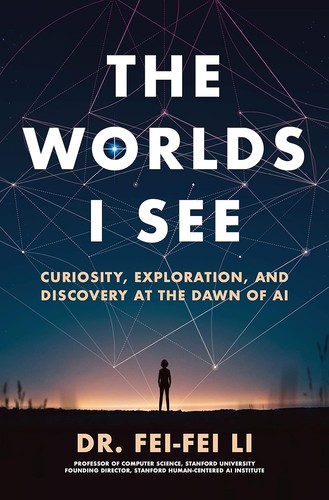
The memoir of the creator of ImageNet, the scientist who made the deep learning revolution in vision possible.

The only novel on the list, by a Nobel laureate: an artificial friend observes humans with a blend of lucidity and innocence no essay achieves.
As an Amazon Associate, Zendoric earns from qualifying purchases; the price does not change for you. · all our recommended books →
🔗 Related on Zendoric
- AI literacy starts in the neighborhood: why a local school workshop matters more than it seems · 2026-07-10
- Alabama wants to teach AI from primary school: the real debate is not whether, but how · 2026-07-25
- New York imposes a one-year moratorium on generative AI in elementary and secondary schools · 2026-09-04