Samsung Health rewards those who refuse to train its AI with data deletion

🕒 Published on Zendoric: July 13, 2026 · 00:21
✨ AI-generated · how it's made
Samsung Health is rolling out a switch to hand over your health data to train its AI. Refusing, according to reports, can cut off syncing with your account and delete your saved history. An 'optional' consent that in practice makes saying no costly.
📚 Go deeper
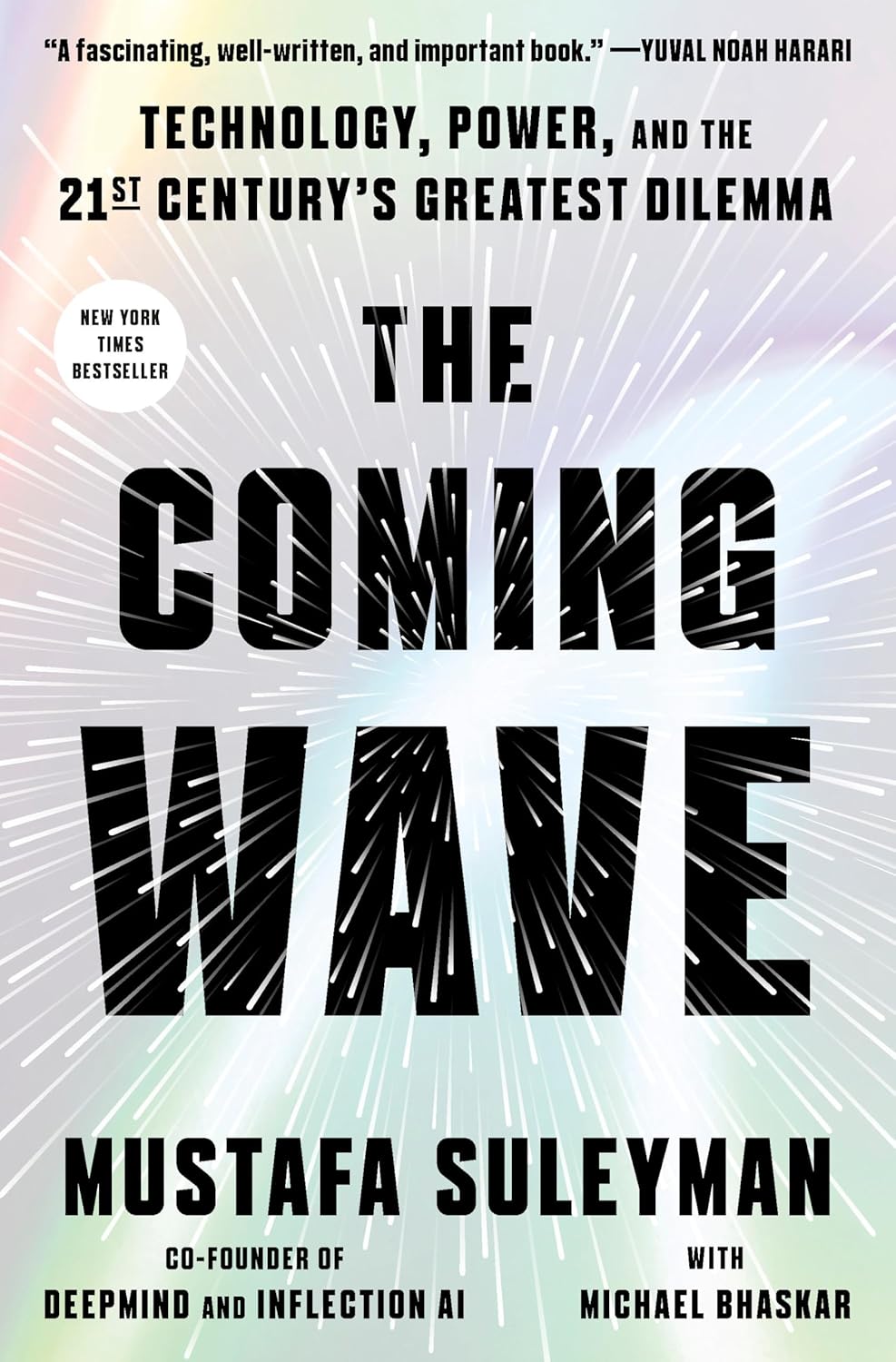
DeepMind co-founder on the dilemma of containing technologies that do not want to be contained.
As an Amazon Associate, Zendoric earns from qualifying purchases; the price does not change for you. · all our recommended books →
By Gadgets & Wearables · July 12, 2026.
Samsung Health has added a specific toggle to its privacy controls: "Consent to use health data for AI training and modeling." As reported by Gadgets & Wearables, citing an earlier feature from How-To-Geek, some users have found this option already enabled after accepting the app's latest privacy notice. So far, just another opt-in. The problem appears when you try to turn it off: Samsung Health then warns that the user will lose the syncing of health data with their Samsung account, and that their stored history will be deleted unless the law requires it to be kept, in which case it will be erased once the retention period expires. We are talking about years of activity, sleep, heart rate, body composition, medication, clinical records and menstrual cycle tracking, among other data that Samsung Health can accumulate on a long-term user.
The fine print also leaves open questions: it is unclear whether the deletion affects only what is stored on Samsung's servers or also the data saved locally on the phone or watch, nor which tracking features would remain operational without account syncing. Nor is there regional uniformity: the article itself notes that the process, the wording of the notice and even the existence of the toggle may vary by country and its legal framework, without Samsung explaining it clearly within the app. The practical recommendation making the rounds—download your personal file from Settings > Download personal data before withdrawing consent—is sensible, but also a symptom: if you need a defensive backup before exercising a privacy right, something in the design of the flow is not meant to make that decision easier.
It is worth being precise about what can be claimed here. There is no indication that Samsung is doing anything illegal: the company maintains, according to its consumer health privacy statement in the U.S., that users may withdraw consent where the law allows and that the company must then stop the collection, use and transfer of that data. The problem is not that Samsung asks permission to train its AI with health data—that is, in fact, more transparent than burying the use in a generic privacy policy. The problem, as the report itself rightly points out, is the apparent link between refusing AI training and losing syncing or accumulated history: a consent that is voluntary on paper but that, in practice, becomes costly to refuse. It is the classic playbook of the consent "dark pattern": saying no is not forbidden, it is made expensive.
This matters beyond Samsung. The entire wearable industry—Apple, Google/Fitbit, Garmin, Whoop—now competes to accumulate longitudinal series of biometric data because they are the raw material for the next generation of health AI: early detection of arrhythmias, prediction of metabolic diseases, personalized aging models. It is exactly the kind of data that, well governed, can bring us closer to the horizon we champion at Zendoric: an AI capable of anticipating and ultimately eradicating much of chronic disease, and of extending years of healthy life. But that future depends on people trusting the system enough to keep sharing their data for years, not months. A consent design that punishes "no" with the loss of one's own history does exactly the opposite: it erodes the trust that the health AI project itself needs in order to have enough data, representative enough, over a long enough period.
The timing is not incidental either. Samsung is holding its Galaxy Unpacked on July 22, with new Galaxy Watch models and, presumably, more health AI features on the table. It is reasonable to expect the pressure to gather training data to intensify in the weeks before and after the event, and for this type of consent controversy to recur—at Samsung and among its competitors—as the race for health AI on the wrist accelerates. Our reading: the underlying problem is not whether Samsung should be able to train AI with health data, but that the architecture of consent decides for the user, disguising coercion as free choice. Health data regulation—already strict in the EU and growing in the U.S.—should aim precisely there: not to prohibit training, but to require that refusing it carry no cost to services and data that have nothing to do with AI. That is the kind of governance based on evidence and on the user, not on panic, that makes the real advance of health AI compatible with the trust it needs to reach a good outcome.
📚 Go deeper

The definitive piece of investigative journalism on OpenAI: 260+ interviews, the clash between safety and speed, and the attempted firing of Sam Altma

AI as the latest chapter in the history of information networks, from gossip to the printing press to the algorithm.
As an Amazon Associate, Zendoric earns from qualifying purchases; the price does not change for you. · all our recommended books →
🔗 Related on Zendoric