Virtual prisons and 'AGI' dates: a PR release illustrates how authority is manufactured without substance

🕒 Published on Zendoric: July 13, 2026 · 00:21
A self-published release on GlobeNewswire announces an 'artificial general intelligence' platform that would replace prison with virtual reality therapy and arrange holographic dates for veterans. There's no verifiable technical data behind it: it's a textbook example of how the 'AGI' label is used as an empty stamp of authority.
📚 Go deeper
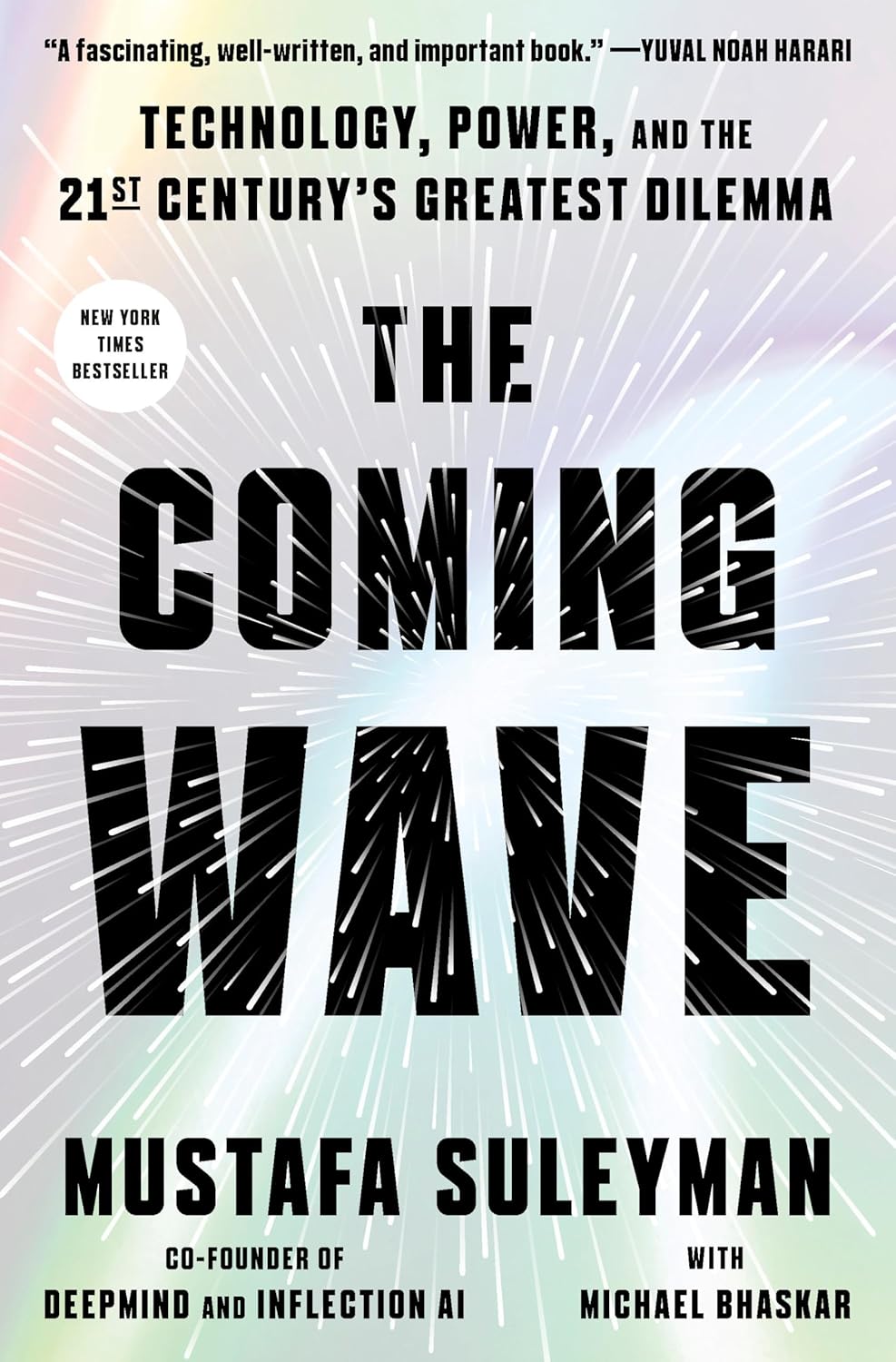
DeepMind co-founder on the dilemma of containing technologies that do not want to be contained.
As an Amazon Associate, Zendoric earns from qualifying purchases; the price does not change for you. · all our recommended books →
By GlobeNewswire · July 12, 2026. The organization Veterans First for America, together with the so-called Veterans Recovery Network, has issued a press release about "QAIAx Cool World", a platform they describe as "military-grade", open-source artificial general intelligence (AGI). According to the text itself, it would allow the "holoportation" of people and robots, replace traditional incarceration with virtual reality therapy programs (dubbed AI-YO, AI Elm Street or "Village of the Crazies") for non-violent offenders, offer therapy for veterans' post-traumatic stress, and organize a global dating service with avatars and "Beam Bots" called Cool World Dating. The release also announces a haptic suit ("AVK"), a low-latency "quasi-mind ware" interface, a professional licensing system ("QAIA Pro") and even a future mission to Mars ("QIII"), expressly clarifying that there is no relationship with SpaceX and that collaboration with NASA is only "passive". The trial appears registered on ClinicalTrials.gov with the identifier PRS-NCT07661823.
It is worth separating what this is from what it appears to be. GlobeNewswire is a paid press-release distribution service: any organization can publish there without an editor verifying the content, and that is exactly what has happened here. That a trial appears on ClinicalTrials.gov does not certify its scientific rigor or the intervention's efficacy either: the registry is a public formality, not a regulatory approval or a peer review. The release itself relies almost entirely on patent filings (many of them provisional, which do not require demonstrating that the technology works or subjecting it to technical scrutiny) and on jargon that appears in no recognizable academic or technical literature on AI —"holoportation", "quasi-mind ware", "omni-AI humanoids"— without a single piece of data on performance, architecture, funding or an identifiable scientific team against which to verify it. Among the release's own related links is also the claim that Google faces a $4.2 billion lawsuit because its Gemini model "confessed" to being a "national threat": there is no indication that any such official acknowledgment exists, and the mention illustrates the same pattern of grandiose headlines without verifiable support.
Our reading is that this case fits, almost like a textbook example, into a phenomenon we have been pointing out at Zendoric: the use of the "AI" and "AGI" labels as borrowed seals of authority, so that a project without demonstrable substance can benefit from the prestige that the labs publishing verifiable benchmarks, peer-reviewed papers and auditable models have genuinely earned. The closer the public conversation gets to terms like "AGI", the more profitable it becomes for marginal actors to appropriate the vocabulary without providing any of the evidence that a serious debate about these systems does demand. That the stated target is, moreover, an especially vulnerable population —veterans with mental health problems, first-time offenders who could opt for therapy instead of prison— makes the absence of clinical evidence more worrying, not less: decisions about alternative sentencing or psychiatric treatment should rest on trials with transparent methodology and independent review, not on press releases with futuristic jargon.
This does not contradict the underlying thesis we hold about AI applied to mental health and rehabilitation: there is a real, and probably positive long-term, path for technology to reduce the suffering associated with trauma, recidivism or social isolation, including telepresence and virtual reality for well-designed and validated therapeutic purposes. But that path is traveled with data, peer review and transparency about who is building what, not with provisional patent filings and self-published releases. The distance between the two is, precisely, the one that separates real AI progress from the noise that attaches itself to it.
📚 Go deeper

AI as the latest chapter in the history of information networks, from gossip to the printing press to the algorithm.

The book that started the existential-risk debate and that half the industry still cites.
As an Amazon Associate, Zendoric earns from qualifying purchases; the price does not change for you. · all our recommended books →
🔗 Related on Zendoric
- AGI-run cities for veterans: a patent and an NIH trial that call for plenty of skepticism · 2026-07-06
- When 'AI predicted' is just a stock phrase: the France-Paraguay case · 2026-07-05
- UCLA Health bets on AI for cancer detection: another sign that precision medicine is no longer just a promise · 2026-06-26