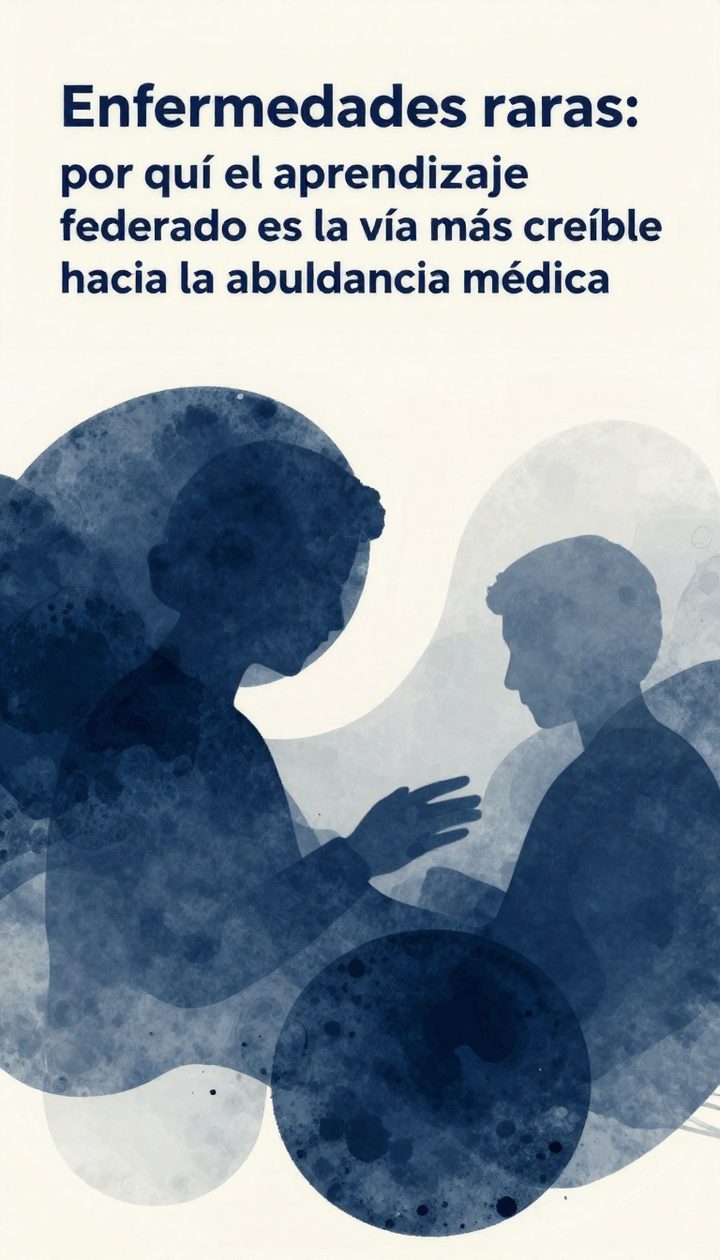
Rare diseases: why federated learning is the most credible path to medical abundance
🕒 Published on Zendoric: July 12, 2026 · 00:14
More than 300 million people live with one of the 7,000 catalogued rare diseases, and 57% wait more than a year for a diagnosis. An AI technique that moves the algorithm instead of the patient's data promises to break the clinical isolation that perpetuates that suffering.
📚 Go deeper

The definitive piece of investigative journalism on OpenAI: 260+ interviews, the clash between safety and speed, and the attempted firing of Sam Altma
As an Amazon Associate, Zendoric earns from qualifying purchases; the price does not change for you. · all our recommended books →
We'll send you a confirmation email (double opt-in). Privacy.
By EFE · July 11, 2026.
Rare diseases carry a "triple sentence," in the words of biomedical engineer Alba Garrido (UPM), honored this year by The Conversation España and the Fundación Lilly: few patients per hospital, little economic incentive for the pharmaceutical industry, and clinical knowledge fragmented into thousands of silos that never communicate with one another. A hospital in Madrid sees two cases of an ailment; another in Tokyo, three; none has enough material on its own to train a reliable AI model, and ethics prevent simply "pooling" clinical records from one country to another. The result, Garrido explains, is a diagnostic delay of more than a year in 57% of cases, with the human toll captured in the testimonies of mothers like Céline Rodríguez Limón or Xènia Cid, cited in the article.
The technical answer that is taking hold is federated learning: instead of moving the patient's data to a central server, the model is moved to each hospital, which trains it locally and returns only mathematical parameters, not records. According to Garrido, this architecture is no longer a laboratory promise: models trained in a federated way reach up to 99% of the efficacy of those trained with centralized data, without any institution ceding sovereignty over its sensitive information. In Spain, tools such as DxGPT (driven by the Fundación 29, created by engineer Julián Isla after his own son's diagnostic odyssey) are already used by more than 6,000 doctors, and in Europe the SYNTHEMA project applies the same principle to cross-reference clinical and genomic data between countries.
What matters here is not just the technical elegance, but what it solves and what it does not. Federated learning tackles the problem of scattered data and privacy, which is real and had gone years without a satisfactory solution: it makes a regional hospital a beneficiary of the experience accumulated by elite institutions worldwide, democratizing something that until now depended on geography and on the prestige of the center where one happened to fall ill. But it does not solve the other third of the "triple sentence" that Garrido points to: the economic disincentive to develop orphan drugs remains intact, because a market of few patients will keep being unprofitable even if the diagnosis is instant and perfect. Diagnosing sooner does not amount to treating better if there is no drug at the end of the road, and that is a problem of health economics and regulatory incentives, not of algorithms.
Our reading is that this kind of infrastructure —quiet, unflashy, focused on sharing knowledge without moving data— is exactly the type of advance that supports the underlying thesis about AI in medicine: not the overnight miracle cure, but the patient construction of a global medical memory that, accumulated over years, begins to bring us closer to something unthinkable a decade ago: that no disease, however rare, is left orphaned of collective knowledge merely by geographic accident. It is a concrete step toward the horizon of eradicating diseases that we defend as possible in the long term, and which here takes a very tangible form in 7,000 conditions that affect 300 million people worldwide. In the short term, however, it is worth not losing sight of the fact that technology alone does not fund orphan-drug research nor accelerate clinical trials: without public policies to accompany the technical advance, federated learning could end up accurately diagnosing diseases for which there will still be no treatment. The missing piece is not software, it is regulatory and market will.
📚 Go deeper

AI as the latest chapter in the history of information networks, from gossip to the printing press to the algorithm.
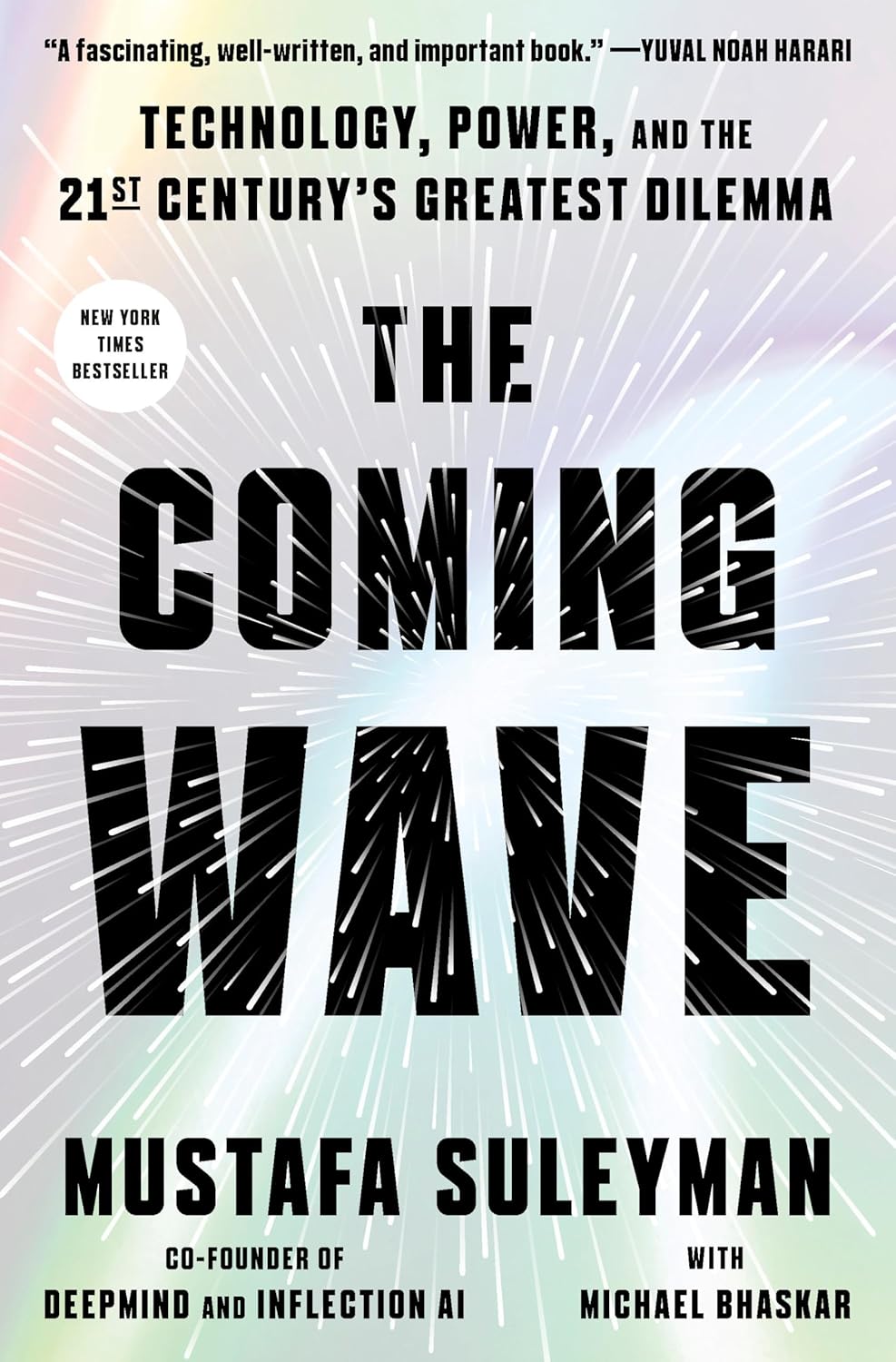
DeepMind co-founder on the dilemma of containing technologies that do not want to be contained.
As an Amazon Associate, Zendoric earns from qualifying purchases; the price does not change for you. · all our recommended books →
🔗 Related on Zendoric
- The real breakthrough against rare diseases is not a smarter algorithm, but one that doesn't need to see your data · 2026-07-12
- AI-generated fake doctors deceive older people in Brazil: the business of fearing illness · 2026-07-02
- When the patient arrives at therapy with their chatbot: the APA flags a dynamic the profession cannot ignore · 2026-06-30
Sources & references
- EFE — Rare diseases: why federated learning is the most credible path to medical abundance
- El Rancagüino — The real breakthrough against rare diseases is not a smarter algorithm, but one that doesn't need to see your data
Get the analysis by email · free
One email a day analysing the AI essentials. Free, no spam, unsubscribe anytime.
We'll send you a confirmation email (double opt-in). Privacy.