The real breakthrough against rare diseases is not a smarter algorithm, but one that doesn't need to see your data
🕒 Published on Zendoric: July 12, 2026 · 00:14
Federated learning makes it possible to train AI models with clinical records from hospitals around the world without moving them from their location. For the more than 7,000 rare diseases, each with just a handful of scattered cases, this could be the missing piece to unite knowledge that is fragmented today.
📚 Go deeper
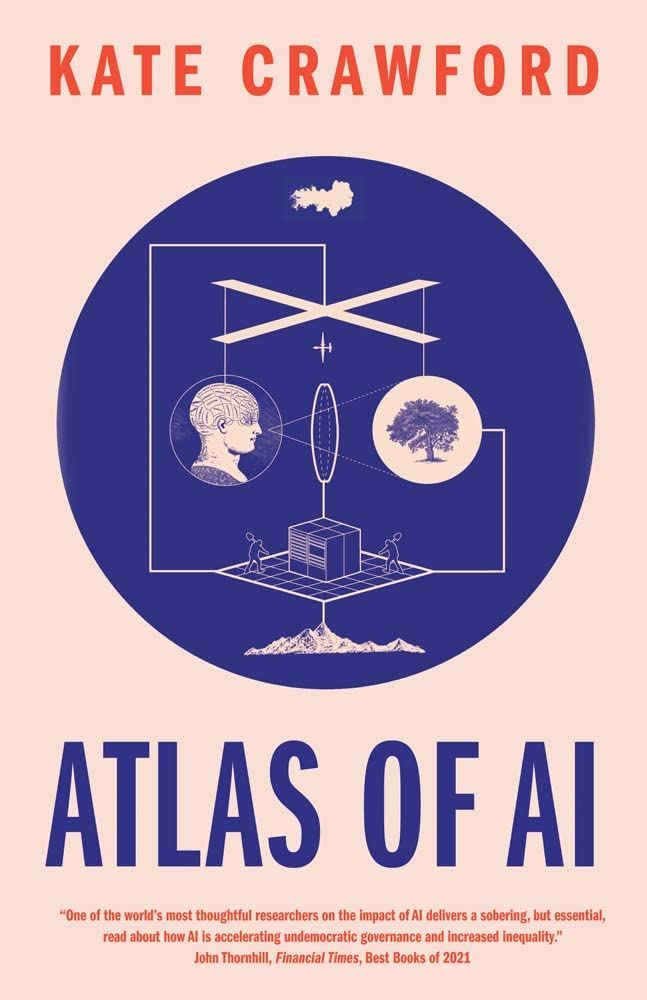
AI as an extractive industry: the lithium, the energy, the underpaid data-labeling work and the bodies behind the cloud.
As an Amazon Associate, Zendoric earns from qualifying purchases; the price does not change for you. · all our recommended books →
We'll send you a confirmation email (double opt-in). Privacy.
By El Rancagüino · July 11, 2026.
The problem with rare diseases has never been a lack of medical interest, but arithmetic: more than 7,000 distinct conditions, each affecting fewer than 5 people per 10,000 inhabitants, add up to more than 300 million people affected worldwide, while no hospital accumulates enough cases of its own to train a reliable AI model. It is a problem of inverted scale, and until now the obvious solution —centralizing the data in a large international database— collided with something as legitimate as medical privacy. Federated learning, the technique described in this article, attacks the problem from the other side: instead of moving the data toward the algorithm, it moves the algorithm toward the data. Each hospital trains locally with its own records and shares only the resulting mathematical patterns, never patient information. As researcher Alba Garrido López, of the Polytechnic University of Madrid, explains, the resulting models already reach an effectiveness of close to 99% relative to those trained with centralized databases; it is worth taking that figure as one specific researcher's estimate, not an independently validated standard, but it points in a clear direction.
What is relevant is not only the technique —federated learning has been used for years in other fields, from predictive keyboards to banking— but that here it finds the use case where its advantage is hardest to match any other way. In rare-disease diagnosis, the bottleneck is the fragmentation of knowledge: a hospital in Santiago has seen one case, another in Munich has seen three, and neither knows about the other. European projects like SYNTHEMA and GENOMED4ALL, or already operational tools like DxGPT —developed by Fundación 29, created by Spanish engineer Julián Isla after the experience with his son's rare disease, and already used by thousands of doctors in Spain— all point to the same thing: building a collective clinical memory without needing a single macroserver that concentrates sensitive data from millions of patients and that, incidentally, would be a security target and a regulatory headache in any jurisdiction with serious data-protection laws.
Our reading is that this kind of development —discreet, technical, without grandiose headlines— is precisely what sustains the underlying thesis we defend about the horizon of AI in medicine: it is not about a model that replaces the doctor nor a vague promise to "cure diseases," but about infrastructure that attacks a very specific bottleneck —the statistical scarcity of rare cases— with a solution that also resolves, along the way, the trust problem that holds back healthcare's adoption of AI in general. If federated learning fulfills its promise, the effect is not only faster diagnoses: it is that the knowledge accumulated by a small hospital in a low-resource country can benefit a patient on the other side of the world without that hospital ceding control of its data, which is also a form of global health equity.
That said, we should not lose sight of the short term, which is where the uncomfortable part of this story lives. More than half of rare-disease patients today wait more than a year to obtain a diagnosis, and that number will not drop overnight simply because the technology exists: the clinical validation of these models, their regulatory approval hospital by hospital, the heterogeneity of the clinical records themselves across different health systems and the natural —justified— resistance of doctors to delegate diagnostic judgment to an opaque system are real frictions that will take years to resolve, not quarters. The 99% effectiveness cited by the researcher is promising but comes from a controlled environment; the jump to daily clinical practice, with noisy data and disparate systems across countries, tends to be slower and less clean than the first results suggest.
Even with that caution, federated learning fits into something larger we have been noting: the AI that most transforms medicine is not always the most spectacular, but the one that solves the structural problem that prevented using knowledge that already existed. If in a few years thousands of rare diseases stop meaning years of diagnostic pilgrimage for families, it will not be because of a single brilliant model, but because of architectures like this one that allow the world's scattered medical knowledge to converge without anyone having to cede their privacy to achieve it. It is exactly the kind of silent progress that, added up over a decade, looks a lot like eradicating a disease.
📚 Go deeper
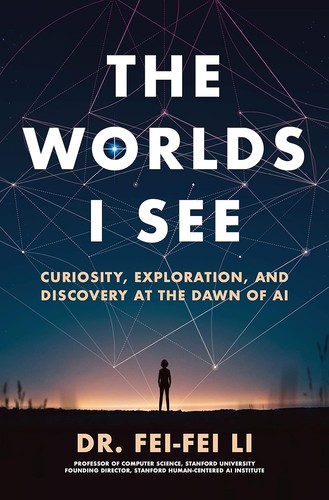
The memoir of the creator of ImageNet, the scientist who made the deep learning revolution in vision possible.

The only novel on the list, by a Nobel laureate: an artificial friend observes humans with a blend of lucidity and innocence no essay achieves.
As an Amazon Associate, Zendoric earns from qualifying purchases; the price does not change for you. · all our recommended books →
🔗 Related on Zendoric
- Rare diseases: why federated learning is the most credible path to medical abundance · 2026-07-12
- UCLA Health bets on AI for cancer detection: another sign that precision medicine is no longer just a promise · 2026-06-26
- When closing the door pushes the customer to the shop across the street: the paradox of AI controls · 2026-06-24
Sources & references
- El Rancagüino — The real breakthrough against rare diseases is not a smarter algorithm, but one that doesn't need to see your data
- EFE — Rare diseases: why federated learning is the most credible path to medical abundance
Get the analysis by email · free
One email a day analysing the AI essentials. Free, no spam, unsubscribe anytime.
We'll send you a confirmation email (double opt-in). Privacy.