The Anthropic and OpenAI IPOs are not just money: they are proof that AI already outweighs half the crypto industry

🕒 Published on Zendoric: July 12, 2026 · 00:14
Anthropic has already filed the confidential S-1 to go public in the fall of 2026 at close to $965 billion; OpenAI is preparing its own for 2027. Together they would absorb more than $240 billion in liquidity and have already shaken the crypto tokens that were betting on their valuation.
📚 Go deeper
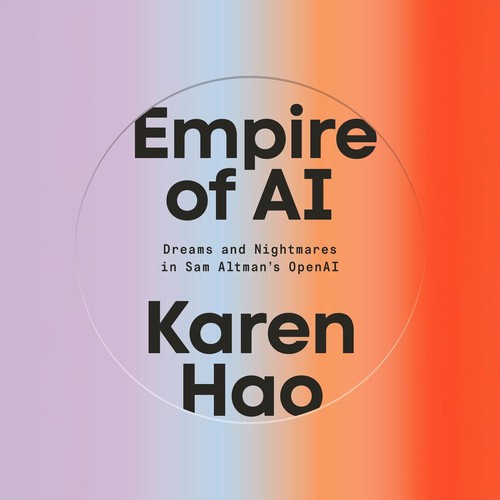
The definitive piece of investigative journalism on OpenAI: 260+ interviews, the clash between safety and speed, and the attempted firing of Sam Altma
As an Amazon Associate, Zendoric earns from qualifying purchases; the price does not change for you. · all our recommended books →
We'll send you a confirmation email (double opt-in). Privacy.
By Crypto Briefing · July 11, 2026.
The facts, first. On June 1, 2026, Anthropic filed a confidential S-1 registration with the U.S. regulator, with an eye on a stock-market debut in the fall of that same year and a projected valuation of some $965 billion. OpenAI moved earlier —it submitted its preliminary IPO documentation around May 22— but seems inclined to wait until 2027; its latest known private valuation, from March 2026, was around $852 billion. Both companies, according to the article, are aiming to surpass one trillion dollars on their debut day.
The collateral effect has already been seen in crypto. During May 2026, a series of unofficial tokens on the Solana network that synthetically replicated the private valuation of OpenAI and Anthropic collapsed by close to 40%, after both companies publicly warned that those instruments do not comply with their rules nor carry their backing. It is worth being precise here: these are unofficial vehicles created by third parties to speculate on an asset that isn't even trading yet, not regulated shares or derivatives, and their fall says more about the fragility of crypto financial engineering than about the health of the two AI companies.
What does deserve attention is the figure the article cites for liquidity absorption: more than $240 billion that, should both IPOs materialize, would have to come from somewhere —institutional funds, family offices, perhaps part of the capital parked in crypto today— to finance the subscription. It is a projected figure, not a guarantee, but even as an order of magnitude it exceeds the capitalization of all crypto assets except a handful of the largest. It is one more sign of where this decade's venture capital is migrating: from speculative digital assets toward the compute and artificial intelligence infrastructure that sustains frontier models.
Our reading is that there are two intertwined stories here and it is best not to confuse them. The first is short-term and uncomfortable: these IPOs, if executed at those valuations, will create a new crop of billionaires concentrated in a handful of founders, early investors and key engineers of two companies —recall that OpenAI was born in 2015 as a nonprofit entity and today operates as a public benefit corporation; Anthropic was founded in 2021 precisely by former OpenAI executives who split off to put safety at the center. When the market corroborates the value of two AI labs with trillions of dollars, it also corroborates the concentration of economic and political power in very few hands, just as the industry itself debates how to distribute the benefits of automation. It is a tension we have already flagged when analyzing employment sector by sector: the wealth AI generates is not distributed automatically, and going public does not change that on its own, though it does multiply the scale of the phenomenon and make it more visible —and more politically sensitive— overnight.
The second story runs deeper and connects with our underlying thesis. That two general-AI companies aspire to valuations exceeding one trillion dollars is not merely an exercise in financial engineering: it is the market betting, with real money, that these models will keep generating economic value for years, which in turn requires capital for compute, research and deployment on a scale that private capital can no longer sustain alone. If that capital truly accelerates the advances in biomedicine, energy or materials that these very companies promise, going public —with all the governance friction, shareholder scrutiny and quarterly pressure it entails— could end up being a necessary step, not just a private-enrichment event. The real challenge, and the one to watch in the coming months, is whether Anthropic and OpenAI manage to keep their mission-oriented governance structures (the PBC, the safety guardrails) once they answer to public shareholders who only look at the next quarter. That is where it will be decided whether these IPOs are the first rung toward the abundance we champion over the long term, or simply the largest private-wealth-creation event of the decade with no further consequences for everyone else.
📚 Go deeper
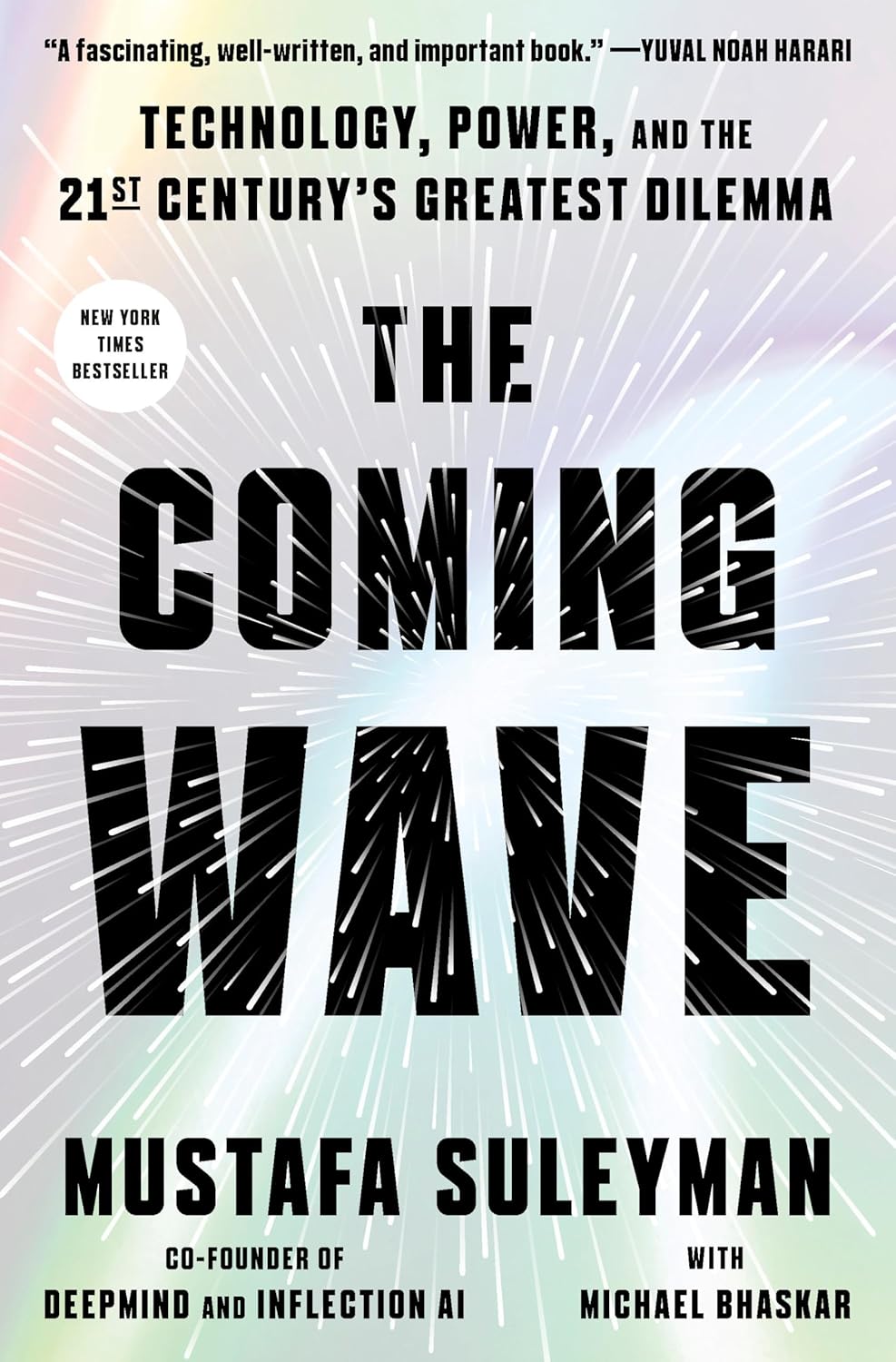
DeepMind co-founder on the dilemma of containing technologies that do not want to be contained.

AI as the latest chapter in the history of information networks, from gossip to the printing press to the algorithm.
As an Amazon Associate, Zendoric earns from qualifying purchases; the price does not change for you. · all our recommended books →
🔗 Related on Zendoric
- Anthropic and OpenAI go public: why buying before the IPO may be the worst bet of the AI frenzy · 2026-07-04
- The race for the 'plumbing' of the agent economy: BNB Chain bets on a blockchain without a mempool · 2026-07-09
- Google Loses Two Top AI Researchers to OpenAI and Anthropic — Decentralization in Motion · 2026-06-24
Sources & references
- Anthropic News (GN) — The Anthropic and OpenAI IPOs are not just money: they are proof that AI already outweighs half the crypto industry
- Daily News Egypt — Egypt taps Intel to bring AI into its military industry: dual-use is no longer just a US and China affair
Get the analysis by email · free
One email a day analysing the AI essentials. Free, no spam, unsubscribe anytime.
We'll send you a confirmation email (double opt-in). Privacy.