The race for the 'plumbing' of the agent economy: BNB Chain bets on a blockchain without a mempool

🕒 Published on Zendoric: July 9, 2026 · 00:21
BNB Chain announces a new Layer 1 designed for AI agents to move money at financial-market speed, without a public mempool and with an eye on the quantum threat. It is not alone: half a dozen crypto projects are already competing to be the payments infrastructure of the autonomous economy.
📚 Go deeper
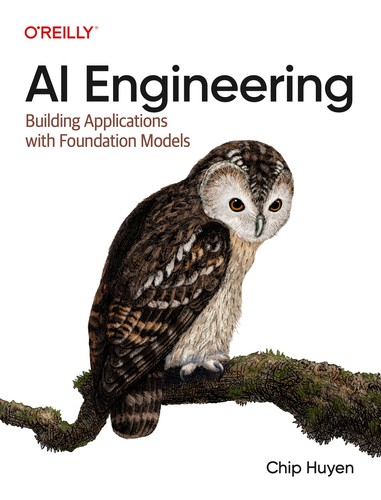
The reference manual for building products on top of AI models: prompts, RAG, fine-tuning, agents, evaluation and deployment.
As an Amazon Associate, Zendoric earns from qualifying purchases; the price does not change for you. · all our recommended books →
We'll send you a confirmation email (double opt-in). Privacy.
By Decrypt · July 8, 2026.
BNB Chain unveiled its technical roadmap for the second half of 2026 this week, and the headline is a new Layer 1 blockchain —running in parallel to the existing BNB Smart Chain, not replacing it— designed explicitly for AI agents executing automated payments and high-frequency operations. The stated goal: to exceed 100,000 transactions per second, confirm in under 50 milliseconds and finalize blocks in less than one second, with a testnet before the end of 2026 and mainnet in early 2027. The centerpiece is called TxStream: it eliminates the public mempool —the space where pending transactions are currently visible before they confirm— and sends them directly to block leaders, reducing latency and, according to the developers, the opportunities for front-running when the party trading is a machine rather than a person. It is not pure promise: in the first half of 2026 the BNB Smart Chain already cut its block intervals from 750 to 450 milliseconds and raised benchmark throughput from around 2,800 to 5,200 transactions per second. BNB Chain also adds a line of research into quantum-resistant security, via account abstraction, that would allow existing wallets to be shielded without changing their addresses; the developers themselves admit it is in the research phase and that "there is no finish line."
What matters is not only what BNB Chain announces, but the pattern it confirms. In recent months, piece by piece, a payments infrastructure has been assembled designed to let AI agents move money without constant human approval: Tempo, backed by Stripe, launched its own payments Layer 1 in March alongside the Machine Payments Protocol; MoonPay presented the Open Wallet Standard that same month with PayPal, the Ethereum Foundation, the Solana Foundation and Ripple among its collaborators; in May, Amazon Web Services teamed up with Coinbase and Stripe so agents can pay for APIs and data in USDC through Bedrock AgentCore Payments; and in June Coinbase launched its own tool, Coinbase for Agents. None of these projects solves the same problem in exactly the same way, and that is the most interesting signal: the sector has not yet decided which rail the agent economy will run on, and several heavyweights —digital banks, crypto giants, cloud providers— are betting in parallel that they will be the ones to set the standard.
Broadly speaking, this race is the infrastructure counterpart to a phenomenon we already saw grow in the arena of model capabilities: AI agents increasingly execute tasks end to end —research, negotiate, hire a service, pay for it— without a human intervening at every step. The software to reason already exists; what was missing was a financial rail capable of settling at the speed and granularity that reasoning demands. A traditional blockchain, with public mempools and blocks of several seconds, is perfectly adequate for a person to buy coffee with cryptocurrency; it is an absurd bottleneck for an agent that needs to pay micropayments for each API call or each database query in milliseconds. TxStream and its equivalents are not an incremental improvement: they are the acknowledgment that the economic unit to be served has changed, from the person to the automated process.
Our reading, with both feet on the ground: all of this remains, in large part, on paper. BNB Chain's new Layer 1 will not have a testnet until the end of the year and mainnet not until 2027; the quantum research is, by its very definition, open-ended; and the fact that half a dozen players —Tempo, MoonPay, AWS/Coinbase/Stripe, now BNB Chain— are launching different standards within a matter of months points to a fragmentation that will take time to resolve, with the usual risk that none prevails and agents end up trapped between incompatible protocols. And there is an underlying tension not to be overlooked: eliminating the public mempool gains speed and reduces front-running, but it also reduces transparency about what is being transacted and concentrates power in the "block leaders" who receive the orders directly. When the party transacting is an autonomous agent with access to funds and no human oversight at each step, that opacity and that concentration are exactly the kind of risk surface —fraud, manipulation, cascading failures— that we have already discussed when analyzing how agentic AI industrializes fraud in the short term. The speed that makes the agent economy possible is the same speed that can make an error or an attack escalate before anyone notices.
That said, the underlying direction fits the long-term thesis we defend: if AI agents are going to manage resources, negotiate and execute economic tasks on our behalf, they need financial rails that reduce friction to nearly zero —instant payments, viable micropayments, minimal marginal cost per transaction. That infrastructure, well governed, is precisely what allows the abundance generated by AI to be distributed efficiently, rather than trapped in payment systems designed for an economy of humans typing into forms. The question that will decide who wins this race is not only technical —how many transactions per second each chain supports— but one of governance: who audits these agents when something goes wrong, and what limits are imposed on them before the money moves. That, today, remains unresolved in every one of the projects mentioned.
📚 Go deeper
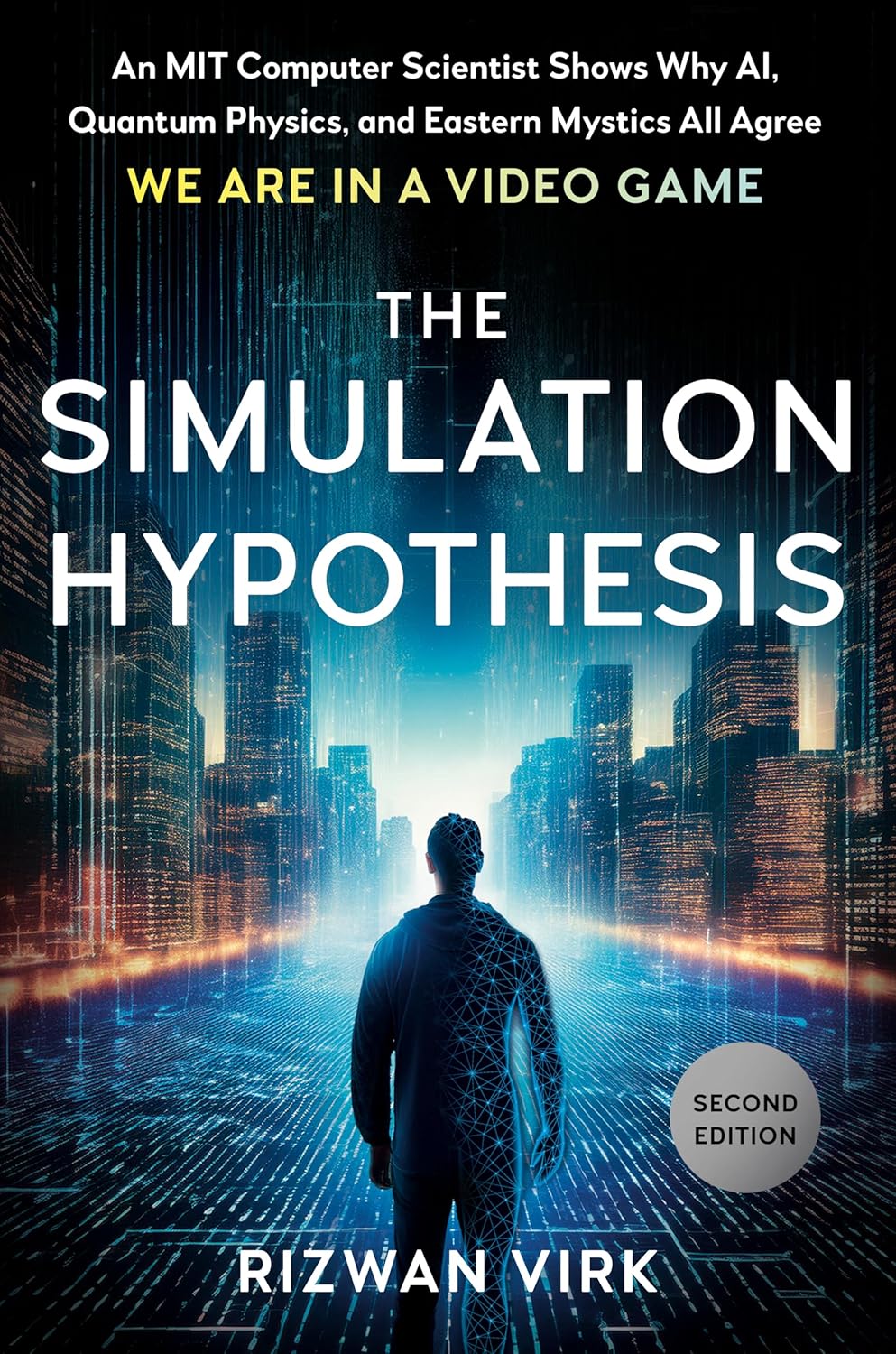
An MIT computer scientist connects AI, quantum physics and video games to take an uncomfortable question seriously: what if we live in a simulation? M
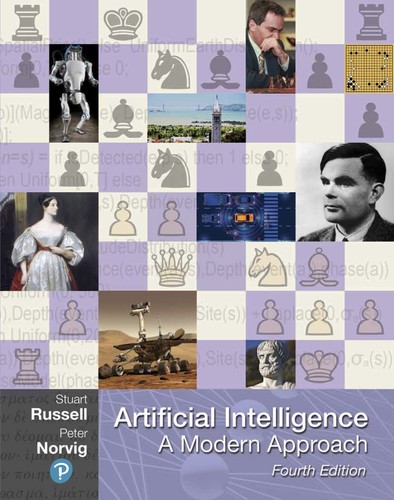
THE AI textbook: used by 1,500+ universities.
As an Amazon Associate, Zendoric earns from qualifying purchases; the price does not change for you. · all our recommended books →
🔗 Related on Zendoric
Sources & references
Get the analysis by email · free
One email a day analysing the AI essentials. Free, no spam, unsubscribe anytime.
We'll send you a confirmation email (double opt-in). Privacy.