OpenAI launches GPT-5.6: the Sol, Terra and Luna family bets on efficiency and performance per dollar
🕒 Published on Zendoric: July 11, 2026 · 00:27
OpenAI has announced the general availability of the GPT-5.6 family, following a limited preview period. The lineup comprises three models: Sol, the new flagship; Terra, presented as a balanced model for everyday work; and Luna, the most economical in terms of cost.
📚 Go deeper
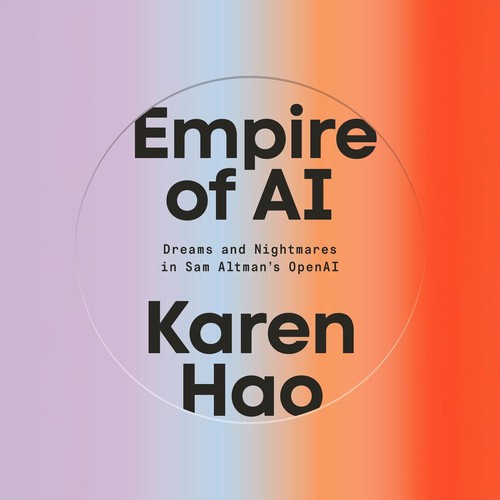
The definitive piece of investigative journalism on OpenAI: 260+ interviews, the clash between safety and speed, and the attempted firing of Sam Altma
As an Amazon Associate, Zendoric earns from qualifying purchases; the price does not change for you. · all our recommended books →
We'll send you a confirmation email (double opt-in). Privacy.
OpenAI has announced the general availability of the GPT-5.6 family, following a limited preview period. The lineup comprises three models: Sol, the new flagship; Terra, presented as a balanced model for everyday work; and Luna, the most economical in terms of cost. The central message of the launch is not just "more intelligence", but more intelligence per token: OpenAI repeatedly insists that Sol matches or surpasses competing models (cited in the article as "Claude Fable 5" and "Opus 4.8") using far fewer tokens, less time and at a considerably lower estimated cost.
As a new usage feature, a mode called "ultra" is introduced, designed for the most demanding tasks: by default it coordinates four agents working in parallel across different workflows to speed up the resolution of complex problems, and the article shows it can scale up to 16-agent configurations on certain benchmarks (BrowseComp and SEC-Bench Pro). According to OpenAI, adding agents in parallel shifts the outcome-versus-latency frontier "up and to the left", that is, better results in less time. Developers can replicate this multi-agent experience through a specific beta in the Responses API.
As for reasoning and long-horizon agentic-work benchmarks, on "Agents' Last Exam" (an evaluation of long-horizon professional workflows across 55 fields), GPT-5.6 Sol reaches a score of 53.6, 13.1 points above "Claude Fable 5". Even in medium reasoning mode, it beats that rival by 11.4 points at roughly a quarter of the estimated cost. The family's smaller models, Terra and Luna, would also surpass that benchmark at close to one-sixteenth of the cost, which OpenAI presents as key to "making intelligence more abundant and affordable". On the Artificial Analysis Intelligence Index, Sol in maximum reasoning mode comes within a point of its rival, but completing tasks in 61% less time and roughly half the estimated cost.
On safety, the article states that GPT-5.6 launches with "the most robust safeguards to date", designed to withstand deliberate and adaptive misuse without broadly limiting legitimate work. Before the general release, OpenAI says it subjected the models and their safeguards to its most extensive evaluation period yet, combining human red teaming with large-scale automated testing, and that it worked with expert organizations and trusted partners during the preview phase to stress-test the defenses.
In programming, OpenAI presents Sol as its best coding model to date. On the Artificial Analysis Coding Agent Index, Sol in maximum reasoning mode sets a new high of 80 points (2.8 points above the cited rival), using less than half the output tokens, less than half the time and about a third less cost. Terra would perform slightly above that rival and Luna would surpass "Opus 4.8", both at around a third of the time, half the output tokens and roughly a quarter of the estimated cost. The family would also establish new benchmark results on Terminal-Bench 2.1 and DeepSWE, tests of complex command-line workflows and long-horizon engineering on real codebases.
A notable technical feature is "Programmatic Tool Calling" within the Responses API: it allows GPT-5.6 to write and run small programs that coordinate tools, process intermediate results, monitor progress and decide the next action on the fly. This would reduce the number of tokens, the back-and-forth with the model and the need for developers to manually code each step, filtering out large amounts of intermediate data and keeping only what's relevant.
The article gathers numerous testimonials from customers and partners who reportedly evaluated the model ahead of the general release: Cursor, Qodo, Notion, Cognition, Rogo, Ramp, Shopify, Cisco, Clio, Balyasny Asset Management and Basis, among others. Collectively, these testimonials repeat a pattern: quality improvements (accuracy, F1, adherence to reference formats) alongside substantial reductions in tokens and latency. For example, Qodo says it measured an improvement in F1 on agentic code review using "roughly 3 times fewer tokens per PR" and "about 2 times lower median latency"; Rogo notes a 6.2-point improvement in rubric quality and 3.6 in answer accuracy on its Big Finance Benchmark, with a 24% reduction in output tokens and 28% less time thanks to Programmatic Tool Calling; and Clio mentions 14% fewer tokens with better quality in legal workflows, and a 38% reduction in prompt tokens in multi-stage document analysis with no loss of quality.
In design, OpenAI highlights what it calls a "leap in design judgment": with only high-level prompts, GPT-5.6 would create interfaces "tasteful, ergonomic and functional". Thanks to stronger computer-use capabilities, the model could inspect and refine the rendered output (not just generate the underlying code or content), detecting visual or functional problems before delivering the work. Examples cited include a sailing navigation game, a museum site, an interior design presentation and interactive explainers (a spirograph, wave interference, a tokenization explainer) generated within ChatGPT Work.
In end-to-end knowledge work, GPT-5.6 would take "messy" context from documents and everyday tools like Slack, Notion, Microsoft 365 and Google Drive, turning it into professional-grade artifacts ready to share. Sol would set new highs on BrowseComp (92.2%) and OSWorld 2.0 (62.6%), surpassing "Opus 4.8" on the latter with 85% fewer output tokens. The performance-per-dollar gains would extend across the whole family: Luna would nearly match the peak performance of the previous model (GPT-5.5) at less than half the estimated cost, while Terra would surpass it at a lower cost.
The document places particular emphasis on improvements to presentations, documents and spreadsheets: creating fully editable presentations from a prompt and reference material, with the ability to infer a template's "design system" (layout, typography, spacing, colors, recurring patterns, even Slide Master rules) and apply it consistently to new content. It shows an example in which, when asked to update figures according to a reference file, GPT-5.5's output would omit key components of the master slide, whereas GPT-5.6 would follow the reference structure more faithfully. It also highlights greater accuracy in equations and financial models (cited examples include an equity analysis document and a leveraged buyout model).
Once again, customer testimonials focused on this area are included: Lovable notes 25% fewer steps and between 35% and 48% fewer tool calls, with 15% fewer "stuck" runs; Model ML indicates 39% fewer tokens per presentation versus the cited rival, with more polished decks; Triple Whale reports a score of 4.4 out of 5 on its frontend QA rubric (versus 4.0 for GPT-5.5 and 3.5 for "Claude 4.8"); PlayCo mentions 63.5% fewer total tokens and 50.1% fewer model turns when building Unity scenes via Programmatic Tool Calling; Canva speaks of being "1.6 times more token-efficient" in slide creation; Microsoft, Base44, Legora and Figma also offer positive assessments focused on cohesion, reduced iteration effort and improvements in design-to-code workflows.
In cybersecurity, GPT-5.6 is presented as OpenAI's strongest model to date in this area, achieving frontier performance with far fewer tokens. On ExploitBench 2 (progress from vulnerable code to arbitrary code execution) it reaches 73.5% versus GPT-5.5's 47.9% with a comparable output-token budget. On ExploitGym 3 (turning real vulnerabilities into working exploits) it nearly doubles GPT-5.5's peak success rate, going from 15.1% to 24.9% under a two-hour limit, and reaching 33.7% with six hours. On SEC-Bench Pro (generating proofs of concept on complex software) it scores 71.2% versus GPT-5.5's 45.8%, with better latency.
The article also details a program called "OpenAI Daybreak's Trusted Access for Cyber", through which qualified individuals and organizations can access the model's greater defensive capabilities (vulnerability triage and validation, malware analysis, detection engineering, patch validation) in authorized environments. Identity verification is required, and it is announced that, starting September 1, individual members will need to enable "Advanced Account Security" with hardware passkeys to keep access to the most capable frontier models in cybersecurity; those who don't will revert to default access. It is mentioned that those without hardware passkeys can obtain preferential pricing through a partner, Yubico. OpenAI also says it is taking additional measures to restrict access for high-risk entities and in high-risk jurisdictions.
In science, it is claimed that GPT-5.6 shows "Pareto improvements" over GPT-5.5 in real-world biology, life sciences research workflows and chemistry, with mentions of benchmarks such as GeneBench Pro, LifeSciBench and MedChemBench. The article notes that the benchmark comparator "Claude Fable 5" is not included in GeneBench Pro because, it is claimed, it does not answer advanced biology questions and refuses to answer most of the questions in that evaluation.
Finally, the text describes how GPT-5.6 is reportedly accelerating OpenAI's internal research work: researchers would use it to diagnose failures, optimize training systems, run experiments and interpret results. During the internal testing period, average daily output tokens per active researcher reportedly more than doubled the peak level observed with GPT-5.5. Over the past six months, the share of research compute devoted to internal code inference reportedly grew 100-fold, and internal agentic token usage roughly 22-fold, although the article itself clarifies that these adoption metrics do not by themselves measure real research progress.
An important caveat: the content of the article as received cuts off abruptly mid-sentence ("...like sales,"), right in the "GPT-5.6 accelerates OpenAI" section. The sections the article's own index announces next —"Scaling safety and security with capability" (beyond what has already been summarized about safeguards) and, above all, "Availability and pricing"— did not arrive in the downloaded material. Therefore, this summary does not include any concrete data on availability, per-token pricing, API access dates or usage limits for GPT-5.6 Sol, Terra or Luna, because that information is not present in the provided text; any pricing figure sought should be confirmed directly on OpenAI's official page.
📚 Go deeper
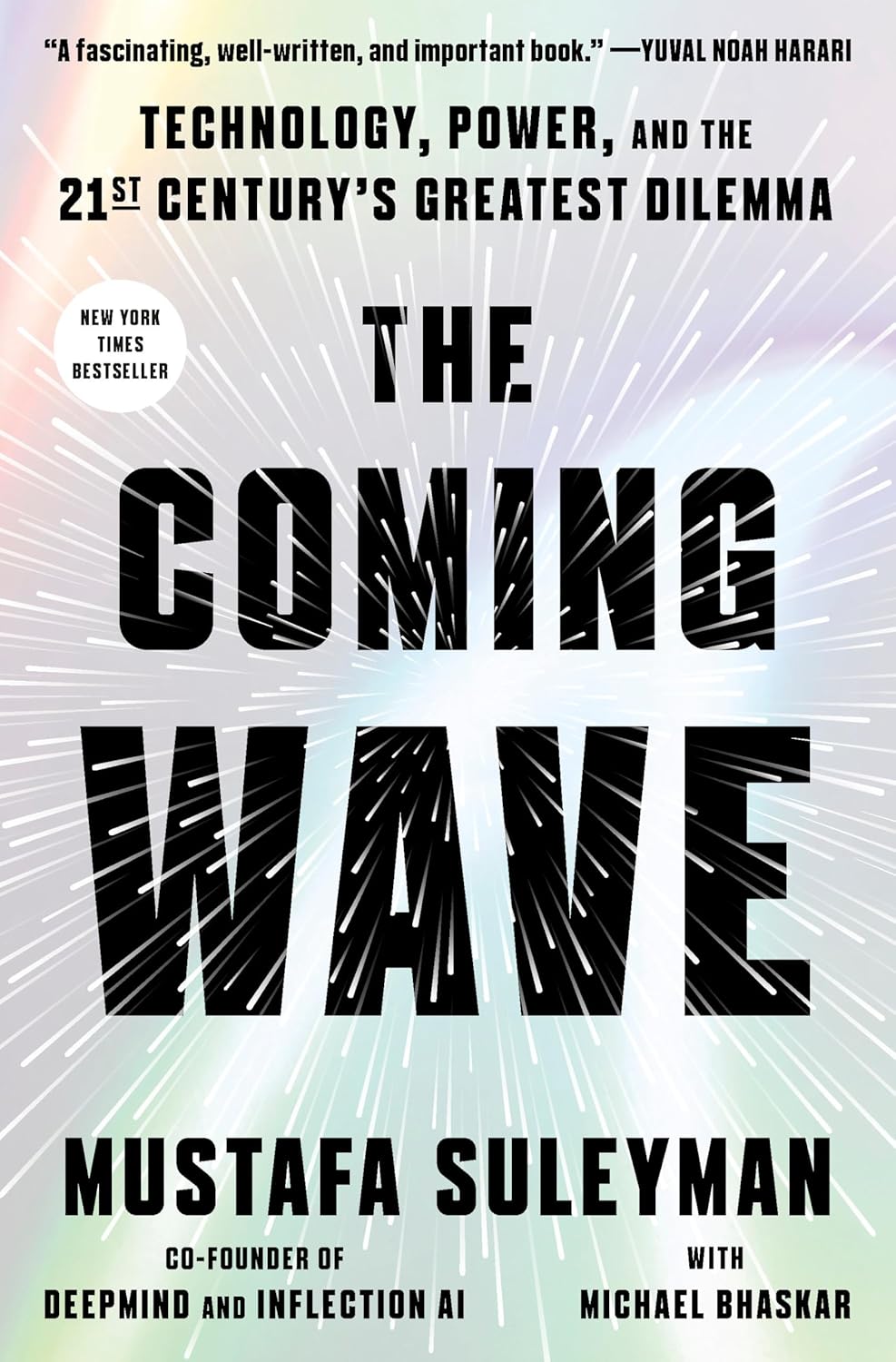
DeepMind co-founder on the dilemma of containing technologies that do not want to be contained.
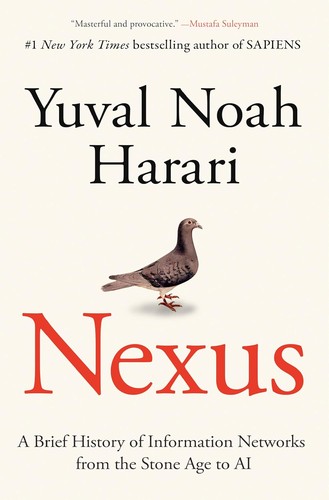
AI as the latest chapter in the history of information networks, from gossip to the printing press to the algorithm.
As an Amazon Associate, Zendoric earns from qualifying purchases; the price does not change for you. · all our recommended books →
🔗 Related on Zendoric
- GPT-5.6 and ChatGPT Work: OpenAI attacks Anthropic with its own benchmarks and price, not a clear advantage · 2026-07-10
- Sonnet 5: Anthropic targets the invisible bill of AI agents with an Opus-grade model at a Sonnet price · 2026-07-01
- Meta claims its 'Watermelon' model has reached the level of OpenAI's GPT-5.5 · 2026-07-07
Sources & references
- openai.com — OpenAI launches GPT-5.6: the Sol, Terra and Luna family bets on efficiency and performance per dollar
- qz.com — Meta starts charging for its AI: it launches the paid Muse Spark 1.1 API to take on Anthropic and OpenAI
Get the analysis by email · free
One email a day analysing the AI essentials. Free, no spam, unsubscribe anytime.
We'll send you a confirmation email (double opt-in). Privacy.