GPT-5.6 beat Opus in production: the lesson isn't the model, it's the engineering around it

🕒 Published on Zendoric: July 11, 2026 · 00:27
Ploy had spent four months unable to find a model that beat Claude Opus in its marketing-website agent. GPT-5.6 Sol did it, but only after redesigning tool schemas, prompt caching and reasoning replay. The migration reveals how much hidden 'lock-in' lies beneath any model change.
📚 Go deeper
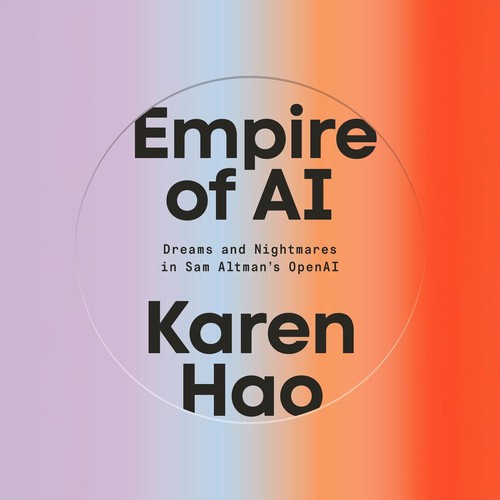
The definitive piece of investigative journalism on OpenAI: 260+ interviews, the clash between safety and speed, and the attempted firing of Sam Altma
As an Amazon Associate, Zendoric earns from qualifying purchases; the price does not change for you. · all our recommended books →
We'll send you a confirmation email (double opt-in). Privacy.
By Ploy · July 9, 2026.
For four months, Claude Opus (first 4.7, then 4.8) was the only model capable of passing the demanding battery of internal evaluations at Ploy, a startup that builds and edits marketing websites autonomously with an AI agent. That agent plans pages, reads code, writes components, generates images and decides when the work is done: a demanding, well-instrumented agentic use case. GPT-5.6 Sol, the high-end line OpenAI launched on July 9, was the first model to break that streak, and Ploy has made it the default model across its entire platform. The numbers they cite are notable: builds completed in 3m42s versus Opus's 8m00s, 27% lower cost, and a visual score (evaluated by an automated judge against a reference design) of 0.970 versus 0.936, with less than half the output tokens.
What's interesting about the article is not the final scoreboard, but everything that had to be rebuilt to get there, and which is rarely documented at this level of detail. First, they discovered that their own evaluation harness was biased toward Opus's style (tool-call budgets designed for its sequential pattern, no support for batched file reads that GPT-5.6 uses constantly), so a third of the initial failures were not from the new model but from the test itself. Second, GPT-5.6 fills in all 25 parameters of each tool call with made-up values instead of omitting the ones it doesn't use, and those phantom values —indistinguishable from real arguments— caused between 52% and 64% of its file reads to return empty content without anyone noticing, because the tool kept responding 'success'. Third, OpenAI's prompt caching model changed substantially with this version (it stopped caching partial prefix matches), and without redesigning the per-workspace key strategy, GPT-5.6 appeared 50% more expensive than Opus out of pure misconfiguration, not real price: once fixed, the first-call cache hit rate went from 0% to 83.7%.
Our reading is that this case study is worth more than any benchmark published by a lab, precisely because it exposes the part that model announcements never tell: the engineering cost of switching. The thesis we have been defending about the Google-Microsoft dispute over controlling the 'plumbing' of agents is confirmed here from another angle —that of whoever builds on the models, not whoever distributes them. The real 'lock-in' is not the model's quality, it is the way each provider implements tool calling, caching and the persistence of reasoning across turns; using a universal SDK like Vercel's does not spare you from having to redesign half your platform to take advantage of a better model. This also reinforces something we already noted about the economics of compute: the real competitive advantage today lies not just in winning a benchmark point, but in squeezing cost and inference engineering until that point translates into money and time genuinely saved.
As industry context, the launch of GPT-5.6 is already being discussed in market terms too: financial media have begun linking it to the outlook of exchange-traded funds focused on agentic AI, a sign that these model leaps transcend the lab and move investment expectations. For our underlying thesis, this kind of intense competition between Anthropic and OpenAI —where each new version forces the previous one to prove its edge with production data, not promises— is exactly the mechanism that makes the technology cheaper and faster in the short term, even if engineering teams get the uncomfortable job of rebuilding their stack. It is the fine print of abundance: before AI frees up time and resources at scale, someone has to wrestle with caching schemes and made-up arguments at three in the morning.
📚 Go deeper
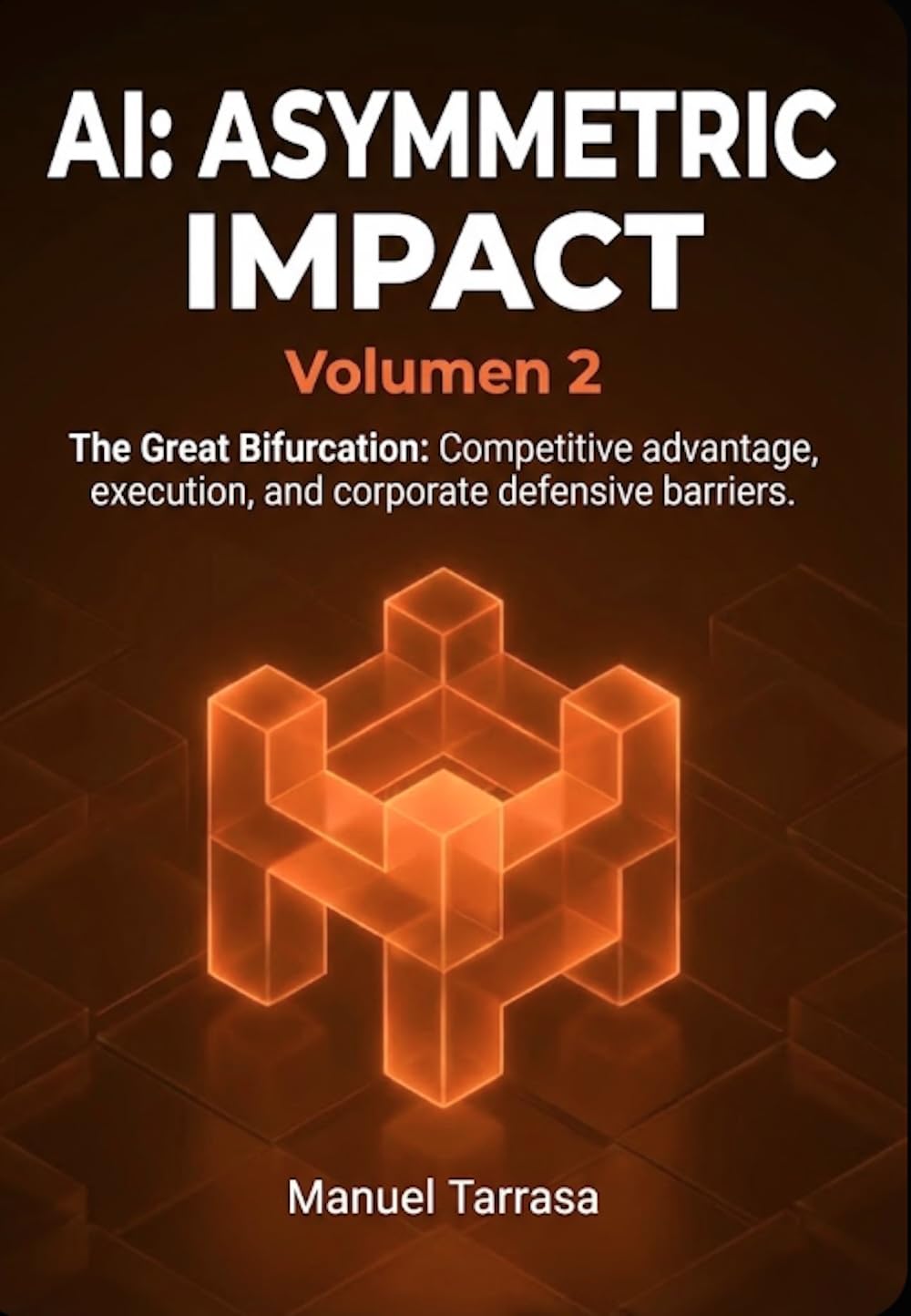
The same bifurcation seen from the boardroom: strategy, execution and defensive moats to reorganize a business around AI before your competitors do.

A macroeconomic, sector-by-sector X-ray of how AI redraws the global chessboard over the coming decade, with the human factor at the center.
As an Amazon Associate, Zendoric earns from qualifying purchases; the price does not change for you. · all our recommended books →
🔗 Related on Zendoric
- Claude Science: Anthropic turns its model into a lab for researchers and takes direct aim at AI's most ambitious promise · 2026-07-01
- The AI agent doesn't fail because of the model, it fails because of the data: 57% of companies have already seen it · 2026-07-11
- Pruning Claude Code's memory with a human in the loop: the tool that doesn't trust the model · 2026-06-26
Sources & references
Get the analysis by email · free
One email a day analysing the AI essentials. Free, no spam, unsubscribe anytime.
We'll send you a confirmation email (double opt-in). Privacy.