Meta buys time: an agentic coding model and its own chips ease fears over AI spending

🕒 Published on Zendoric: July 10, 2026 · 00:24
✨ AI-generated · how it's made
The market rewarded Meta on Thursday after the launch of Muse Spark 1.1, its agentic coding model, and news of progress on its own chips and a possible business selling compute capacity to third parties. The rebound says less about the model's real quality than about investors' nervousness over AI spending.
📚 Go deeper

The story of NVIDIA and Jensen Huang: how a video-game card company ended up making the most coveted resource on the planet.
As an Amazon Associate, Zendoric earns from qualifying purchases; the price does not change for you. · all our recommended books →
By MarketWatch · July 9, 2026.
The facts are brief but significant: Meta shares rose on Thursday after the company unveiled Muse Spark 1.1, an agentic coding model that the company itself (and press coverage) places as "comparable" to the benchmarks of OpenAI and Anthropic. Added to that were reports of a milestone in developing its own chips and Meta's plans to sell compute capacity to third parties. The immediate result: the market, which had spent months uneasy about Meta's pace of capital spending on AI infrastructure, breathed easier.
It's worth separating the verified from what is still a promise. That a model is "comparable to leading benchmarks" is, until concrete figures are tested on unsaturated benchmarks, a claim of commercial positioning rather than a corroborated technical fact; at Zendoric we have kept insisting that these announcements should be read with the calculator in hand, not with the press release. What is relevant, though of a different nature, is the underlying signal: Meta is seeking to demonstrate that its massive AI spending is not a black hole, but is beginning to generate its own assets (chips) and business (selling compute), not just a product for internal consumption.
This fits a dynamic we already know from Google (TPU) and Amazon (Trainium): the big hyperscalers are looking to reduce their dependence on Nvidia by designing their own silicon, and at the same time to turn their surplus infrastructure into a sellable service, mimicking the business model that made AWS shine within Amazon. If Meta consolidates that path, it stops being merely a voracious buyer of GPUs and also becomes an infrastructure provider, which would change its financial risk profile: capex stops being pure defensive spending and starts to look like investment with its own return.
Our read is that this stock rebound speaks more to investor mood than to a real leap in capability. The AI market has spent quarters swinging between enthusiasm for capabilities and fear that big tech's capital spending won't translate into proportional revenue; any news suggesting revenue diversification (selling compute) or reduced dependence on outside suppliers (in-house chips) acts as an immediate sedative, even when the technical details are still hazy. It's the same short-term pattern we've noted in other episodes: the narrative moves faster than the hard evidence, and investor judgment rewards gestures of strategic solvency before publicly comparable metrics exist.
In the long run, however, each in-house chip and each cycle of agentic models that competes head-to-head with OpenAI and Anthropic adds one more piece to the board of a cheaper, more distributed AI less dependent on a single hardware bottleneck. That is, ultimately, the material basis of the abundance we champion as a horizon: the more players that can build and sell AI compute at declining cost, the faster access is democratized to tools that today are the privilege of whoever can pay the Nvidia bill. The short term will remain a tug-of-war over investor confidence quarter by quarter; the long term depends on whether these chip and model promises hold up with data, not just with headlines that soothe the market on any given Thursday.
📚 Go deeper
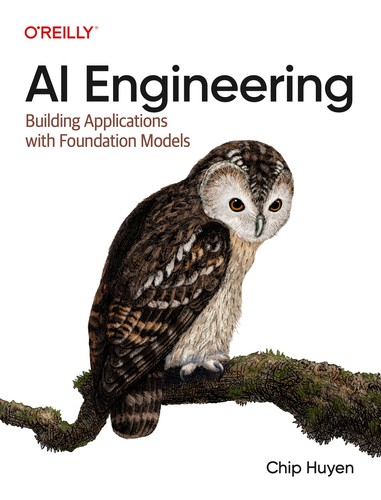
The reference manual for building products on top of AI models: prompts, RAG, fine-tuning, agents, evaluation and deployment.
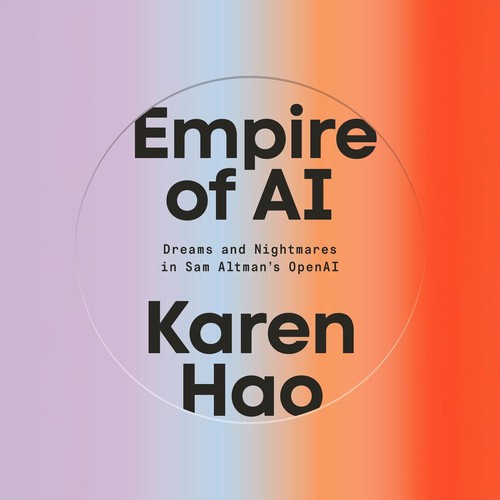
The definitive piece of investigative journalism on OpenAI: 260+ interviews, the clash between safety and speed, and the attempted firing of Sam Altma
As an Amazon Associate, Zendoric earns from qualifying purchases; the price does not change for you. · all our recommended books →
🔗 Related on Zendoric