Arm falls 11% even as demand for its AI chips exceeds its manufacturing capacity twentyfold
🕒 Published on Zendoric: July 9, 2026 · 00:21
Arm Holdings posted a record quarter and still plunged on the market: demand for its new CPU aimed at AI workloads is around $20 billion, but available manufacturing capacity barely covers $1 billion. The market, already nervous after weak Samsung results, is beginning to wonder how long the AI infrastructure spending supercycle can last.
📚 Go deeper
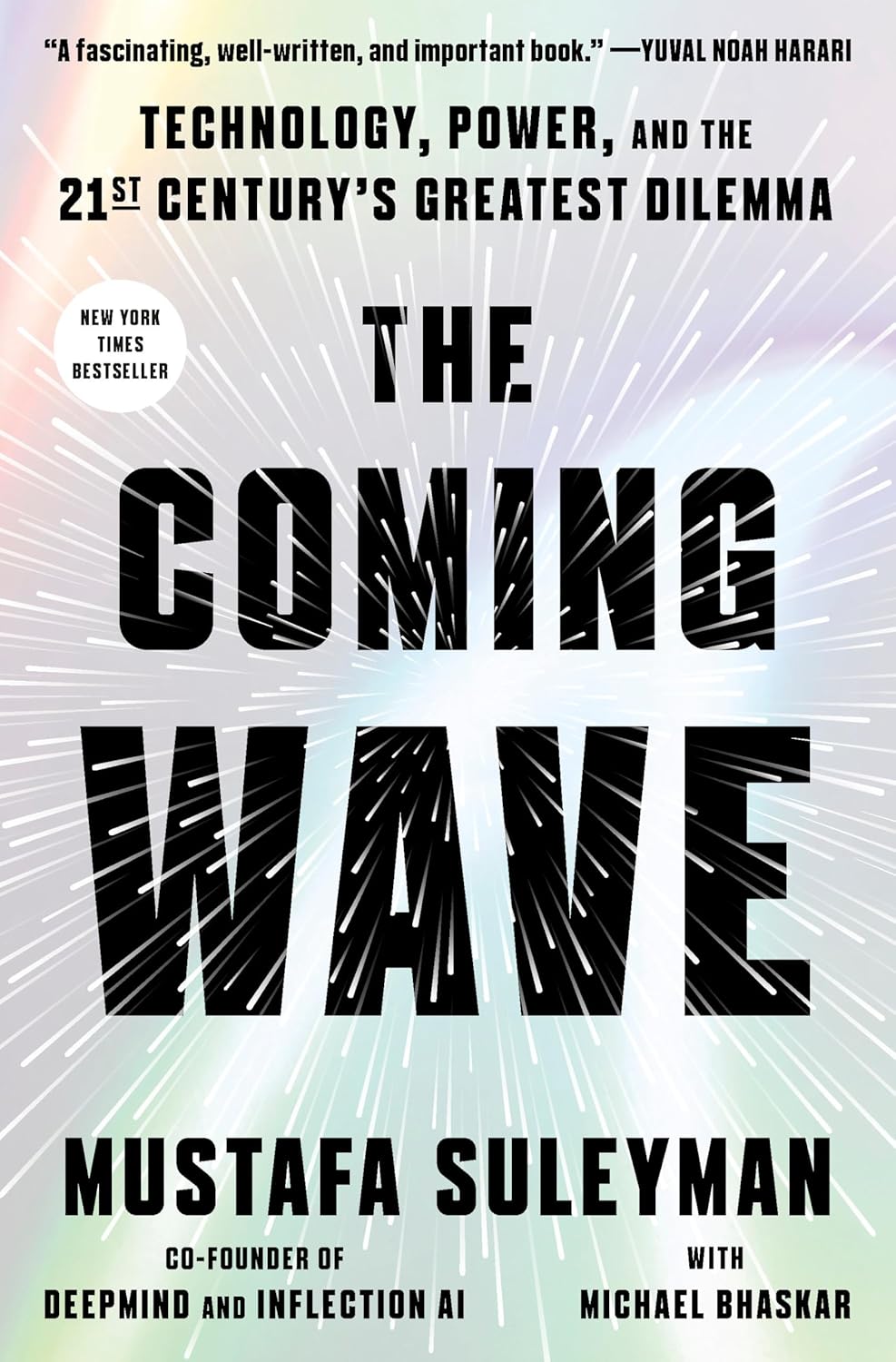
DeepMind co-founder on the dilemma of containing technologies that do not want to be contained.
As an Amazon Associate, Zendoric earns from qualifying purchases; the price does not change for you. · all our recommended books →
We'll send you a confirmation email (double opt-in). Privacy.
By Simply Wall St · July 8, 2026.
Arm Holdings closed its fourth fiscal quarter with a record $1.49 billion in revenue and solid growth in licensing, the kind of result that normally sends a stock soaring. Instead, the shares fell 11%. The explanation the company itself offers is revealing: demand for its new CPU aimed at AI workloads (what the company and the coverage describe as an "AGI CPU") stands at around $20 billion, while the manufacturing capacity available to meet it barely reaches $1 billion. In other words, Arm can convert into real revenue only about 5% of what the market is asking of it. Added to this was an adverse backdrop: worse-than-expected results at Samsung reignited doubts about how much AI-semiconductor spending is sustainable at these prices.
Here it is worth separating hard facts from speculation. The $1.49 billion in revenue and the gap between demand (~$20 billion) and capacity (~$1 billion) are figures Arm itself has disclosed. Different is the valuation exercise circulating on forums such as Simply Wall St, where a community narrative projects $9.5 billion in revenue and $2.9 billion in profit for 2029, with a fair value of $171.98 — well below the current share price — versus other, more optimistic readings that speak of $13.4 billion in revenue and $3.9 billion in profit over the same horizon. These are financial-modeling exercises, not official Arm forecasts or an accredited analyst consensus, and they should be treated as what they are: scenarios, not certainties.
What is interesting about this episode, beyond the market swing, is what it confirms about where AI's real bottleneck lies today. For much of recent years the debate has centered on the capability of the models; increasingly, the real limit is in the physical chain that sustains them: chip manufacturing, advanced packaging, high-bandwidth memory and energy. That a company with such pent-up demand cannot monetize it is not a sign of business weakness, but that the entire industry — foundries included, which is why Samsung's numbers weigh so heavily on the narrative — is building capacity more slowly than the market consumes it. The same datum that punishes the stock in the short term (you cannot bill what you cannot manufacture) is, read another way, the most compelling proof that demand for AI compute is real and not a valuation mirage.
In the short term, this disconnect between demand and supply will continue to generate stock-market volatility: any company that depends on others' capacity to monetize its order book will be exposed to the market penalizing execution, not the underlying thesis. It is consistent with what we have been noting in other pieces: the competition for AI is increasingly fought at the physical layer — fabs, packaging, energy — and not only over who has the best model. In the long term, however, this scarcity is transitory by definition: manufacturing capacity expands with investment and time, and each new plant that comes online brings closer the moment when compute stops being the scarce good that today slows the spread of AI. If the underlying thesis of this transition — an abundance of resources and intelligence available to all — has to be fulfilled at some point in the chain, it is precisely here, in going from $20 billion of demand that today cannot be served to an industry capable of making everything the market asks of it.
📚 Go deeper
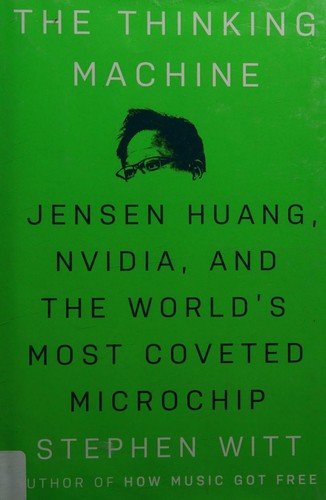
The story of NVIDIA and Jensen Huang: how a video-game card company ended up making the most coveted resource on the planet.
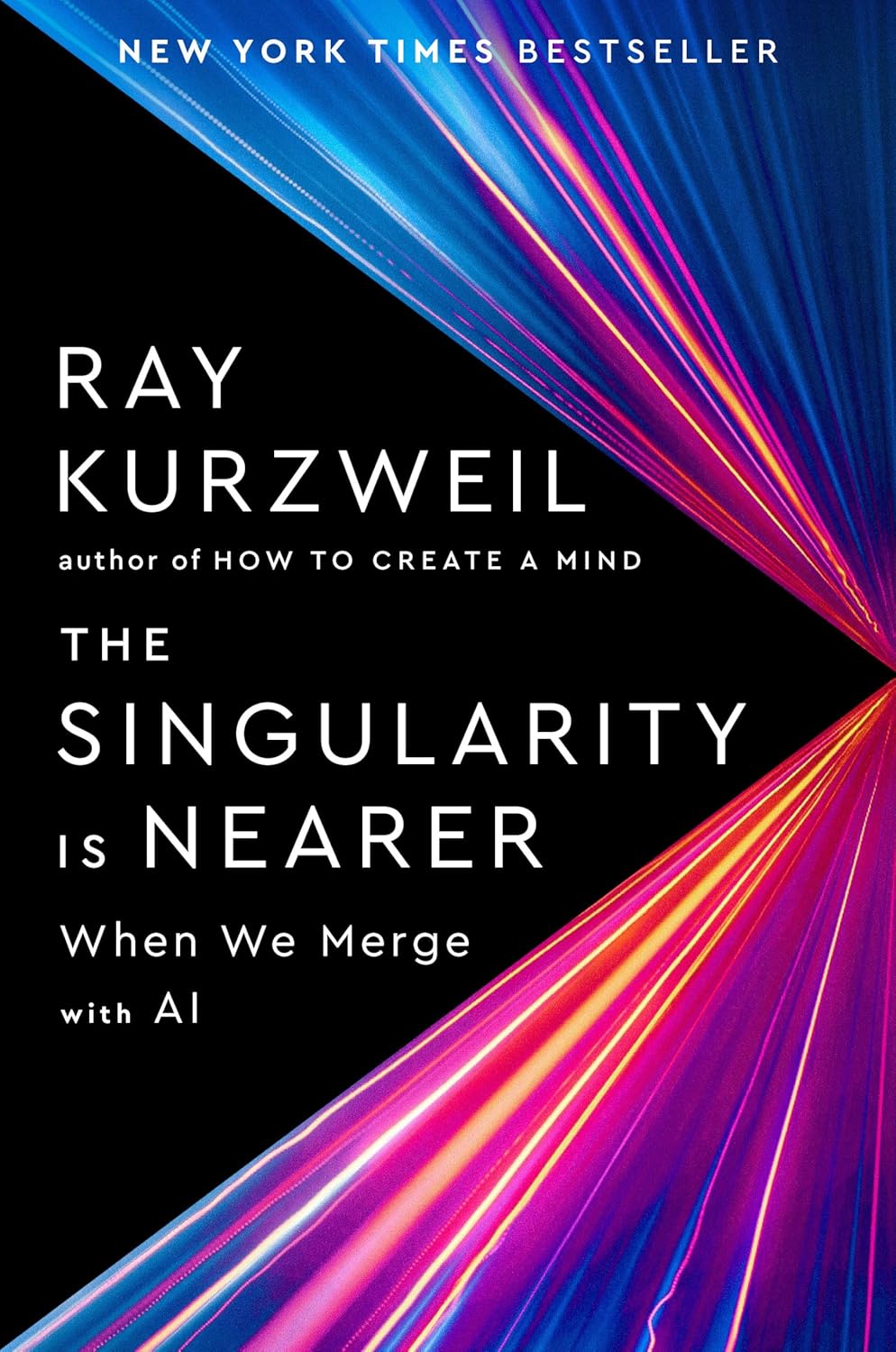
Twenty years after "The Singularity Is Near", Kurzweil revisits his predictions and keeps the date: human-AI merger around 2045.
As an Amazon Associate, Zendoric earns from qualifying purchases; the price does not change for you. · all our recommended books →
🔗 Related on Zendoric
Sources & references
Get the analysis by email · free
One email a day analysing the AI essentials. Free, no spam, unsubscribe anytime.
We'll send you a confirmation email (double opt-in). Privacy.