AI learning loops aren't an engineering trick: they're a governance problem

🕒 Published on Zendoric: July 9, 2026 · 00:21
✨ AI-generated · how it's made
Important note: the content downloaded from this Fast Company article, by Enrique Dans, is a paywall-limited teaser. The text is cut off explicitly in the HTML itself with the note "Expand to continue reading ↓," so we only have access to the article's introduction and not to its…
📚 Go deeper
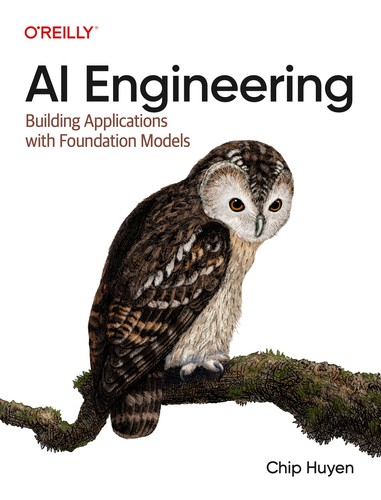
The reference manual for building products on top of AI models: prompts, RAG, fine-tuning, agents, evaluation and deployment.
As an Amazon Associate, Zendoric earns from qualifying purchases; the price does not change for you. · all our recommended books →
Important notice: the content downloaded from this Fast Company article, bylined by Enrique Dans, is a teaser limited by a paywall. The text is explicitly cut off in the HTML itself with the indication "Expand to continue reading ↓", so we only have access to the article's introduction and not to its full development, its conclusions or the recommendations for executives, regulators and boards of directors that the headline promises. What follows is a brief summary strictly confined to that opening fragment.
Dans argues that, over the past two years, the basic unit of work with generative AI was the "prompt": a person writes an instruction, the model responds, and the quality of the result depended on learning to formulate that instruction well (so-called "prompt engineering"), with its appropriate phrasing, examples and constraints. That was the dominant pattern because it matched most users' first experience with these systems: one person, one model, one request, one response.
According to the article, that phase is ending. It cites a Business Insider article describing the rise of "loop engineering": the practice of designing loops that allow AI agents to keep working, verifying, retrying and coordinating with each other without waiting for a human to issue each instruction manually. The examples that Business Insider piece mentions are mainly technical: coding agents, review agents, sub-agents and automated workflows.
However, Dans maintains that the shift is far broader than software development: the unit of value of AI is moving from the one-off answer to the continuous loop. And that shift, he argues, is what should make executives, regulators and boards of directors pay attention, because within a corporation a loop is not simply an engineering pattern, but a governance structure.
The central idea he develops —as far as the available fragment goes— is the distinction between requesting a result (the prompt) and creating a behavior (the loop). A prompt can be wrong and that error disappears with the response; a loop, by contrast, can be wrong and that error compounds or amplifies over time, because the loop itself observes, acts, receives feedback, adjusts and repeats the cycle again. That capacity for continuous self-adjustment is, according to Dans, precisely what makes loops powerful, but also what makes them dangerous if companies do not properly understand what they are optimizing when they set them in motion.
From there, the downloaded text breaks off completely. We cannot know, without accessing the full article, what specific governance mechanisms Dans proposes (oversight, auditing, autonomy limits, legal liability, etc.), nor what additional examples of risk or best practices he develops in the rest of the piece. Any extension on those points would be speculation unsupported by the received content, so it is left out of this summary.
📚 Go deeper
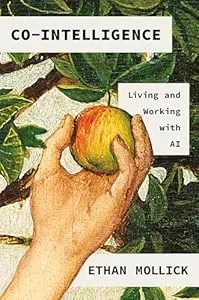
The best starting book if you're not technical: a Wharton professor explains how to work WITH AI — when to delegate, when to supervise, when to keep i
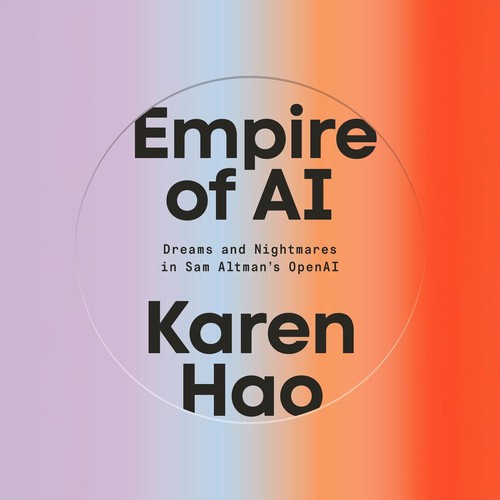
The definitive piece of investigative journalism on OpenAI: 260+ interviews, the clash between safety and speed, and the attempted firing of Sam Altma
As an Amazon Associate, Zendoric earns from qualifying purchases; the price does not change for you. · all our recommended books →
🔗 Related on Zendoric