From prompt to 'loop': why agentic AI is a governance problem, not just an engineering one

🕒 Published on Zendoric: July 8, 2026 · 09:15
Important notice: the downloaded content of this article by Enrique Dans in Fast Company is cut off by the subscription wall (the notice "Expand to continue reading ↓" appears after just four or five paragraphs).
📚 Go deeper
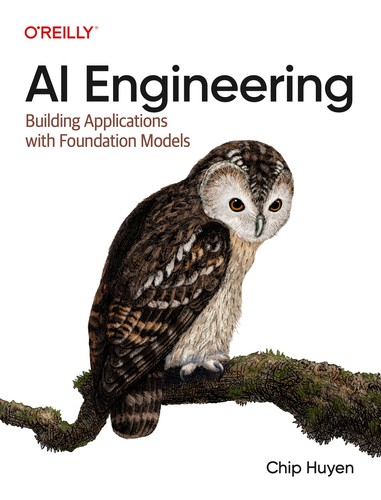
The reference manual for building products on top of AI models: prompts, RAG, fine-tuning, agents, evaluation and deployment.
As an Amazon Associate, Zendoric earns from qualifying purchases; the price does not change for you. · all our recommended books →
We'll send you a confirmation email (double opt-in). Privacy.
Important notice: the downloaded content of this article by Enrique Dans in Fast Company is cut off by the paywall (the notice "Expand to continue reading ↓" appears after just four or five paragraphs). Therefore, what follows is a brief summary, strictly limited to the little that can be read of the text, without speculating on the subsequent development of the argument the author probably builds from there.
Dans begins by situating the current moment of generative AI within a paradigm shift. Over the past two years, he says, the basic unit of work with AI has been the prompt: a human writes an instruction, the model responds, and the quality of the result depended on learning to phrase that request well (tone, examples, constraints). This gave rise to what he calls "the first folk discipline of the generative AI era": prompt engineering, which fit the initial experience of most users —one person, one model, one request, one response.
The article argues that this phase is ending. It cites a Business Insider report describing the rise of "loop engineering": the practice of designing loops that allow AI agents to keep working, verifying, retrying, and coordinating with each other without waiting for a human to manually issue every instruction. According to Dans, the examples usually given of this phenomenon are mostly technical —coding agents, reviewer agents, subagents, automated workflows— but the underlying shift, he warns, is much broader than software development: AI's unit of value is moving from the one-off response to the continuous loop.
This shift, the author argues, should capture the attention of executives, regulators, and boards of directors, because within a corporate context a loop is not simply an engineering pattern: it's a governance structure. The key distinction he raises is conceptual and very powerful: a prompt asks for an output; a loop creates behavior. And that difference, according to Dans, changes everything in terms of risk and accountability.
The idea that closes the available excerpt is the most suggestive in the whole text: a prompt can be wrong and simply disappear without major consequence; a loop, on the other hand, can be wrong and that error compounds, because the loop observes, acts, receives feedback, adjusts, and repeats the cycle over and over. That very capacity to feed back on itself is what makes agentic loops so powerful —and, Dans stresses, also dangerous if organizations don't clearly understand exactly what they are optimizing when they delegate continuous behavior, and not just one-off responses, to AI systems.
The accessible content is cut off here. The article likely goes on to develop why this demands new corporate and regulatory governance frameworks —continuous auditing of emergent behaviors, mechanisms for correcting cumulative errors, oversight of agents operating with prolonged autonomy— but we cannot state with certainty what the full argument is or what Dans's specific recommendations are without access to the rest of the text, which remains behind Fast Company's paywall.
📚 Go deeper
The same bifurcation seen from the boardroom: strategy, execution and defensive moats to reorganize a business around AI before your competitors do.
A macroeconomic, sector-by-sector X-ray of how AI redraws the global chessboard over the coming decade, with the human factor at the center.
As an Amazon Associate, Zendoric earns from qualifying purchases; the price does not change for you. · all our recommended books →
🔗 Related on Zendoric
Sources & references
Get the analysis by email · free
One email a day analysing the AI essentials. Free, no spam, unsubscribe anytime.
We'll send you a confirmation email (double opt-in). Privacy.