AI literacy from elementary school: why teaching the habit matters more than banning the tool
🕒 Published on Zendoric: July 9, 2026 · 00:21
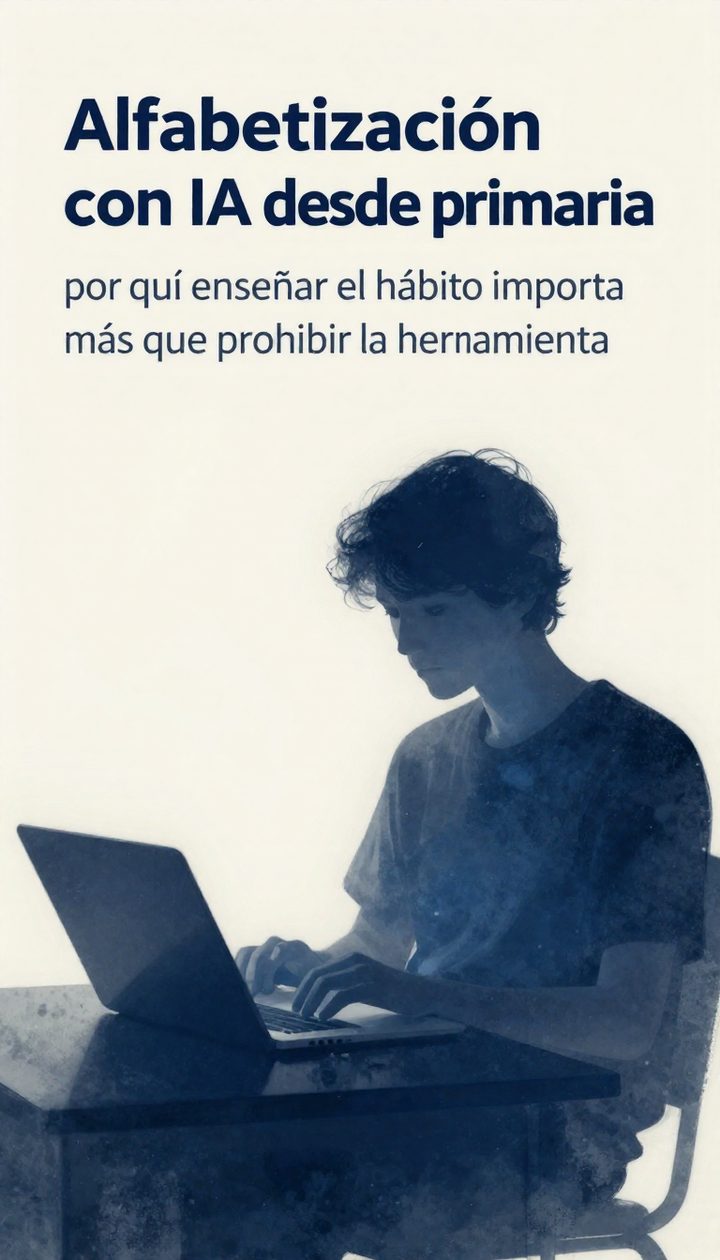
At ISTELive 26 + ASCD in Orlando, elementary teachers showed how they teach AI to 6- to 8-year-olds: from supervised chatbots to 'unplugged' activities that reveal data bias. The underlying debate is not whether children should use AI, but who teaches them to do so with judgment.
📚 Go deeper
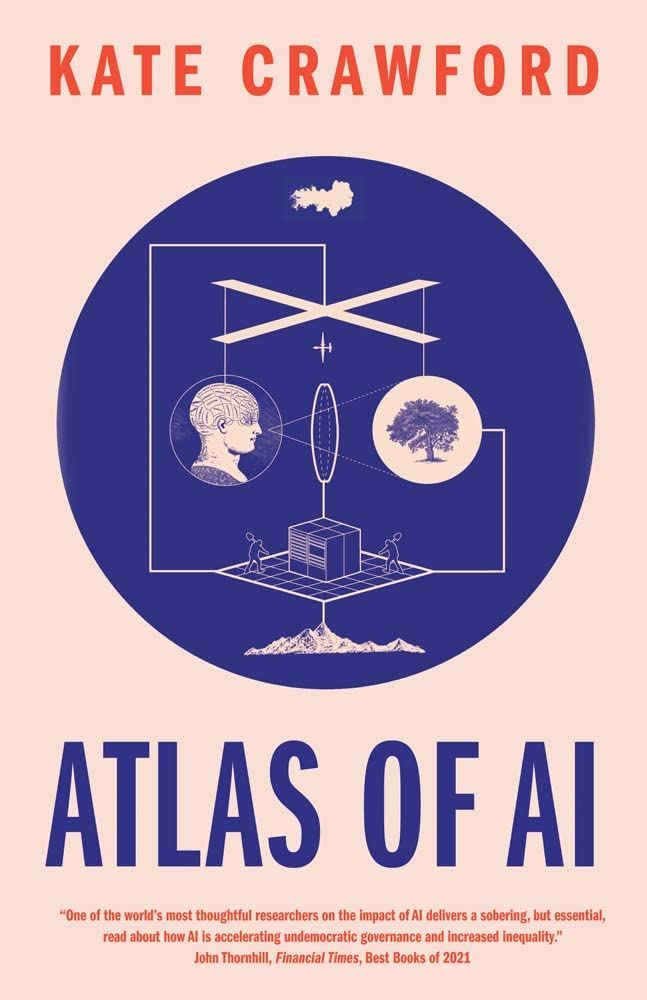
AI as an extractive industry: the lithium, the energy, the underpaid data-labeling work and the bodies behind the cloud.
As an Amazon Associate, Zendoric earns from qualifying purchases; the price does not change for you. · all our recommended books →
We'll send you a confirmation email (double opt-in). Privacy.
By Education Week · July 8, 2026.
At the ISTELive 26 + ASCD conference in Orlando, a group of elementary school teachers shared something that until recently seemed unthinkable: how they teach artificial intelligence to first- and second-graders. The approaches range from generating AI images of insects for a language arts project on insect habitats to personalized astronomy chatbots that answer six-year-olds' questions by voice. Cara Pavek, a first-grade teacher in Boca Raton, has her students first draw what they want to ask an image generator before writing the prompt, and teaches them a simple rule: "chatbots are like strangers; you don't talk to strangers at the supermarket without your parents." In Massachusetts, where school regulations bar children from using AI because of their age, specialist Kate Shaw Olender teaches how the algorithm works, how it can become biased, and how to protect data anyway, without the children touching a screen. Along the same lines, another presenter showed "unplugged" activities: decks of cards with images of surgeons and nurses, mostly men and women respectively, that let children discover for themselves how an unbalanced dataset produces unbalanced results.
The news comes amid real friction: parents, doctors, and policymakers have spent months warning about screen time in the classroom and about the safety of minors on AI platforms that were not designed with them in mind. That caution is not unfounded, and the article itself acknowledges it without downplaying it. What is interesting is that the teachers' argument is not "the concern is overblown," but "the concern is not solved by absence, it is solved by supervision": none of the cited examples leaves a seven-year-old alone in front of an unfiltered chatbot. The image that best captures the approach comes from researcher Dustin Nadler, of Maryville University: starting earlier is not exposing more, it is giving more agency; a child who understands how a model is trained and why it fails stops being a passive user and starts seeing themselves as someone who could build that technology.
This connects with something we had already been observing in our analysis of AI's impact on the education sector: the value lies not in the teacher who conveys memorized content, but in the one who orchestrates the tool and teaches how to use it with judgment. What this piece adds is evidence that this orchestration no longer begins in high school or university, but in elementary school, and that the most effective pedagogical instrument sometimes does not even require a screen to be switched on. Olender's phrase —"teach them good habits now, so that high school teachers don't have to teach them to break the bad ones"— is, at bottom, an argument about educational opportunity cost: the later critical literacy is introduced, the more ingrained the habits that later have to be unlearned, whether it's overconfidence that "AI knows everything" or the inability to look up information without relying on an assistant.
Our reading is that these kinds of initiatives, modest and decentralized —a classroom here, an ed-tech fair there— are exactly the kind of social infrastructure that will determine whether the next generation benefits from the abundance AI promises in the long term or ends up trapped depending on systems it does not understand. Zendoric's underlying thesis holds that AI, well governed, can free up time and resources so that people can devote themselves to what they are passionate about; but that liberation requires citizens capable of questioning the tool, detecting its bias, and deciding when not to use it, not merely consumers who accept it without question. Teaching a seven-year-old that an image-generation algorithm reproduces gender stereotypes because its training data is biased that way is, in miniature, the same exercise of critical thinking that an adult will need to evaluate an AI-assisted medical diagnosis or a public-policy recommendation generated by a model. The short-term risk —overexposure to screens, dependence on commercial platforms inside the classroom, the lack of common standards across districts— is real and should not be underestimated; the conference organizers themselves mention a recent push for schools to demonstrate "safe and deliberate" use of the technology, a sign that the sector is aware it runs the risk of substituting novelty for pedagogy. But the alternative of waiting until high school to talk about AI amounts to handing teenagers a powerful tool without having first given them the vocabulary to distrust it when needed. In that sense, these elementary classrooms are a low-cost laboratory for a question that society as a whole would do well to resolve soon: not how to prevent children from using AI, but how to ensure that, when they use it, they know exactly what they are using.
📚 Go deeper
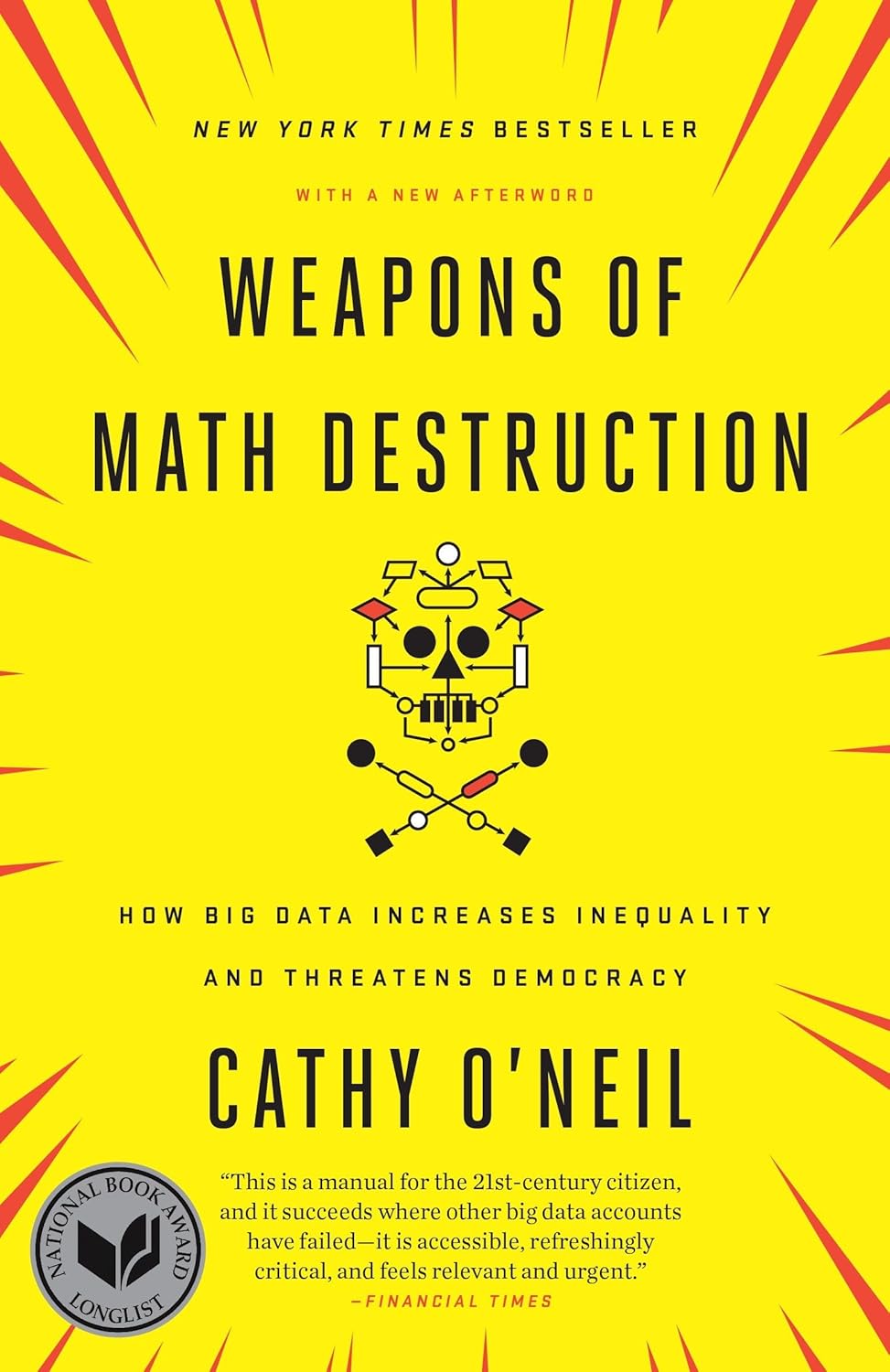
How opaque algorithms decide who gets credit, a job or parole — and why they tend to punish the same people.
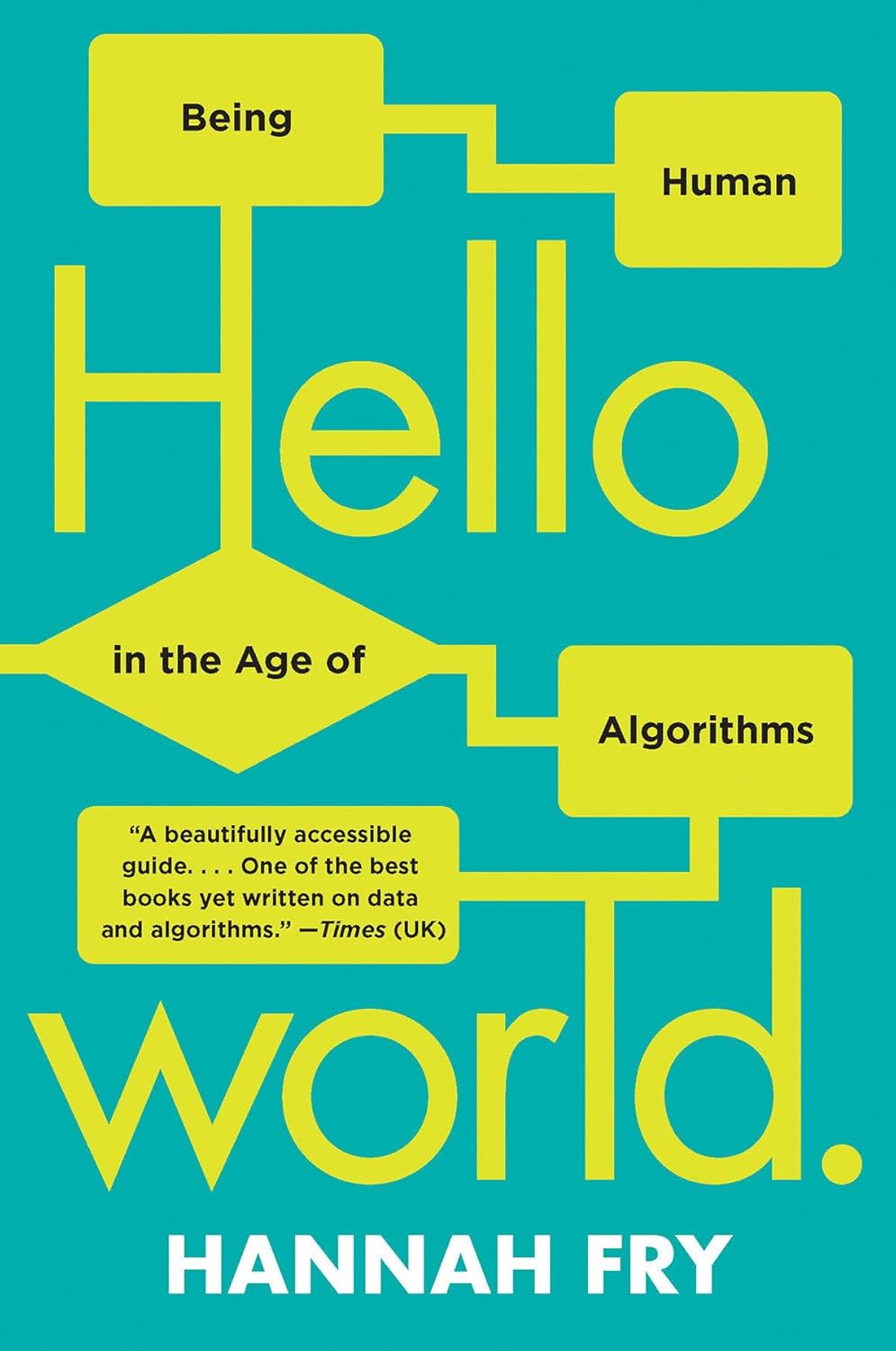
Algorithms in justice, medicine, cars and art, explained with British humor and mathematical honesty.
As an Amazon Associate, Zendoric earns from qualifying purchases; the price does not change for you. · all our recommended books →
🔗 Related on Zendoric
Sources & references
Get the analysis by email · free
One email a day analysing the AI essentials. Free, no spam, unsubscribe anytime.
We'll send you a confirmation email (double opt-in). Privacy.