Chatbots to teach empathy: the paradox of using AI to save what is human
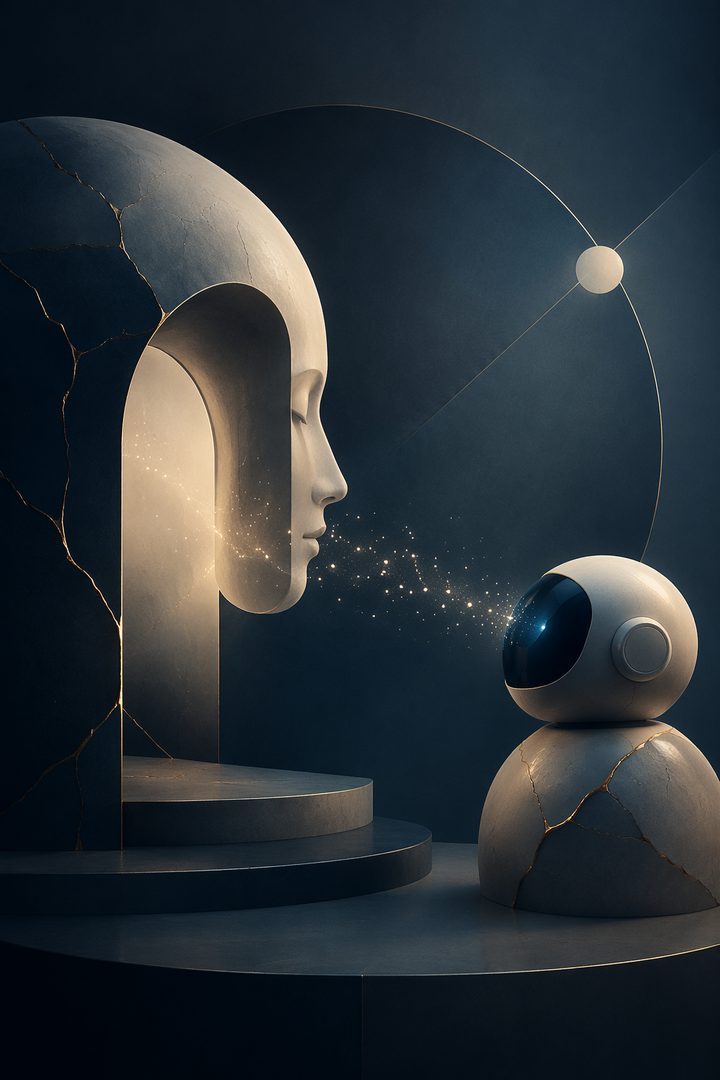
🕒 Published on Zendoric: July 3, 2026 · 01:20
At the ISTELive 26 + ASCD conference, educators showcased custom chatbots that simulate characters —from a Civil War soldier to a person with a disability— to train empathy and conflict management in secondary school classrooms. The paradox is clear: using the very technology feared for eroding human interaction to teach precisely the skills it replaces.
By Education Week · July 2, 2026.
At the ISTELive 26 + ASCD conference held in Orlando, a still small but growing group of educators presented their case for using generative AI chatbots to teach social-emotional learning (SEL) skills: empathy, self-awareness, conflict management. Chris Cromwell, instructional technology coordinator in a Pennsylvania district, built several conversational characters with the SchoolAI platform: one simulates a person with a physical disability so students learn to ask respectful questions; another is a U.S. Civil War soldier who forces history students to engage with a perspective other than their own; a third lets you choose characters such as 'firefighter' or 'AI ethics specialist.' In Maryland, Amanda Brown developed 'CalmBot,' a chatbot that guides restorative conversations after peer conflicts, helping students name emotions and needs before a high-stakes face-to-face talk, such as returning to class after a suspension.
The underlying argument these educators make is consistent with what is already repeated in the debate on AI and employment: in an economy dominated by automation, it will be the ability to empathize, communicate and think critically that sets people apart from chatbots. Therefore, training those skills now, in school, is framed as workforce preparation as much as emotional development. It is a reasonable reading, but also conveniently circular: the technology that generates the threat is used to teach the defense against it.
The most interesting part of the report is not the tool itself, but the safeguards the educators themselves insist on building in. Cromwell explicitly uses these interactions to teach 'AI literacy': that the chatbot has no real feelings however convincing it sounds, and that one should not develop a relationship with it. That distinction is not incidental, it is the core of the problem. The article connects it with a growing concern among parents, lawmakers and researchers about the parasocial relationships that children and adults are developing with general-purpose chatbots, a phenomenon we have already flagged as distinct from and riskier than the use of well-defined functional assistants.
Our reading: a legitimate and unresolved tension is at play here. On one hand, using a chatbot as a low-risk simulator to rehearse difficult conversations —a restoration after a conflict, an apology, an unfamiliar historical perspective— makes pedagogical sense: it reduces the emotional load of the first time and gives the teacher a control panel (SchoolAI's dashboards allow reading the conversations in real time) that would not exist in a spontaneous social interaction. On the other, the same ease with which a teenager can feel understood by a simulated character is the gateway to emotional dependence on an entity that feels nothing, a risk that, according to the source, already worries parents, lawmakers and researchers. The difference between 'practicing empathy with teacher support and clear curricular goals' and 'replacing the human bond with a synthetic one' is enormous, but in practice it depends entirely on how the use is designed, supervised and limited, not on the technology itself.
This connects with our underlying thesis on employment: the school that survives automation is not the one that eliminates the teacher, but the one that turns the teacher into an orchestrator of these tools, able to use AI to generate perspective-taking exercises while teaching, at the same time, its limits. The case of Tony Frontier —asking a chatbot to simulate the real workload of an assigned task, so the teacher sees what the student sees— is perhaps the most honest use in the whole report: AI does not replace pedagogical judgment, it informs it.
In the short term, the risk of misuse is real and should not be downplayed: the line between practicing social skills with a simulator and replacing human interaction with a more comfortable, always-available one is thin, and schools with fewer resources for rigorous supervision could cross it without realizing. But in the long term, if these tools are deployed with the safeguards Cromwell and Brown describe —transparency about the bot's non-human nature, active teacher supervision, clear curricular goals—, they can be a reasonable bridge toward a generation that understands both the potential and the limits of AI before entering an economy where they will coexist with it daily. That is the kind of literacy that, done well, is part of the terrain where technological abundance frees up human time for what only humans can give: real presence, not simulated.