Meta claims its 'Watermelon' model has reached the level of OpenAI's GPT-5.5

🕒 Published on Zendoric: July 7, 2026 · 03:25
✨ AI-generated · how it's made
This Business Insider article is mostly behind a paywall, so the accessible content is limited and based on internal statements reported by two anonymous sources, not on publicly verifiable documentation. The following should be read with that caution in mind.
📚 Go deeper
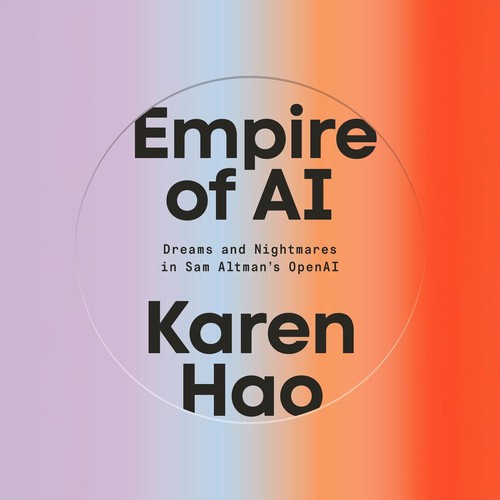
The definitive piece of investigative journalism on OpenAI: 260+ interviews, the clash between safety and speed, and the attempted firing of Sam Altma
As an Amazon Associate, Zendoric earns from qualifying purchases; the price does not change for you. · all our recommended books →
This Business Insider article is mostly behind a paywall, so the accessible content is limited and relies on internal statements reported by two anonymous sources, not on publicly verifiable documentation. It's worth reading the following with that caveat in mind.
According to the available information, Alexandr Wang, Meta's head of AI (chief of the so-called Meta Superintelligence Labs), reportedly said in an internal employee meeting that the company's next model, code-named "Watermelon," has reached the performance level of GPT-5.5, OpenAI's flagship model. Wang based this claim on AI benchmarks, though the article clarifies that it does not specify which ones exactly, a significant limitation when assessing the announcement's credibility.
Watermelon would be the successor to another internal model called "Avocado," and according to Wang it would use "an order of magnitude more compute" than the latter. Avocado, in turn, would be the code name for Muse Spark, the family of models Meta released publicly in April, which, according to the article itself, posted benchmark performance that fell short of matching OpenAI or Anthropic.
In parallel, Wang posted on X that a Muse Spark update will arrive soon with significant improvements in coding and agentic capabilities, with the stated goal of closing the gap with rival models. When a user asked when Meta would have a coding model on par with Anthropic's Claude Opus, Wang replied that it would be "pretty soon."
The article frames this within Meta's long-standing ambition to close the gap with OpenAI, Google and Anthropic, despite a massive investment in chips, data centers and talent. It notes that Zuckerberg appointed Wang last year to lead this effort, renaming the AI division as Meta Superintelligence Labs, and that Wang oversees a team of elite researchers known as TBD, in addition to other AI efforts, including a recent push into hardware.
It also cites that Meta reportedly offered top AI talent hundreds of millions of dollars to join the company, as Business Insider previously reported, and that this hiring push coincides with rising infrastructure spending: the company told investors it expects to spend between $125 billion and $145 billion this year on chips, data centers and other infrastructure, a figure up from an earlier forecast of between $115 billion and $135 billion, citing higher component costs and additional data center spending.
The article also mentions that GPT-5.5 was launched by OpenAI in April of this year, and that the company already unveiled its most powerful model to date, GPT-5.6, last month, though it has not yet released it broadly, supposedly at the request of the U.S. government. This last claim about GPT-5.6 and the reasons for its lack of a general release is not developed or verified in the rest of the text, so it should be taken with caution.
It's important to stress that neither Meta nor OpenAI provided comment for this article, and that the text's central claim—that Watermelon matches GPT-5.5—comes from internal statements that have not been officially confirmed or accompanied by specific, verifiable benchmark data. For newsletter readers, this should be treated as a public relations claim or a matter of internal company morale, rather than as a proven technical fact, until there are public releases and independent evaluations that confirm or refute it.
📚 Go deeper
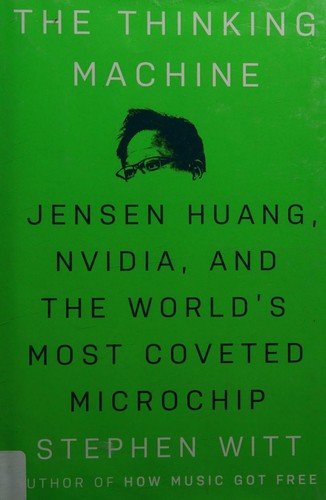
The story of NVIDIA and Jensen Huang: how a video-game card company ended up making the most coveted resource on the planet.
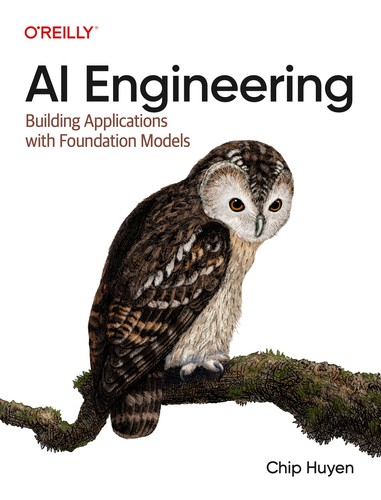
The reference manual for building products on top of AI models: prompts, RAG, fine-tuning, agents, evaluation and deployment.
As an Amazon Associate, Zendoric earns from qualifying purchases; the price does not change for you. · all our recommended books →
🔗 Related on Zendoric