OpenLoop buys Hey Revia: digital health chooses to buy communication AI rather than build it

🕒 Published on Zendoric: July 5, 2026 · 04:36
✨ AI-generated · how it's made
OpenLoop acquires Hey Revia, an AI clinical communication platform, amid a wave of digital-health mergers. The deal —terms undisclosed— portrays an industry that prefers to acquire proven AI capabilities rather than develop them from scratch.
📚 Go deeper

The best starting book if you're not technical: a Wharton professor explains how to work WITH AI — when to delegate, when to supervise, when to keep i
As an Amazon Associate, Zendoric earns from qualifying purchases; the price does not change for you. · all our recommended books →
By MarketScale · July 4, 2026. OpenLoop, a telehealth infrastructure company, has acquired Hey Revia, an AI-based patient communication platform, according to MobiHealthNews. The financial terms of the deal have not been made public. The transaction comes at a time of accelerating M&A in digital health: that same week, the FDA granted breakthrough device designation to Aurenar, aimed at detecting brain hemorrhages, and Sharecare announced that its AskMD health navigation assistant will run on Amazon Bedrock, orchestrating several AI foundation models rather than relying on one of its own.
OpenLoop's move follows a simple logic: rather than building automated patient communication tools in-house—a problem that grows as the volume of virtual consultations rises—it buys a technology already up and running and integrates it into its existing stack. It is the pattern we are seeing repeated across the tech industry: acquiring mature AI capability is faster and less risky than developing it, especially when competitive advantage is decided by speed of deployment, not by the originality of the model.
Our reading is that this transaction, modest in appearance, is representative of where telehealth is heading: differentiation no longer lies in offering a virtual consultation—that is a commodity—but in the quality and scale of the automated communication surrounding that consultation: reminders, treatment follow-up, initial triage, handling of questions. It is exactly the kind of task that, as we have analyzed before in the healthcare sector, is most exposed to automation: not the clinical relationship itself (therapy, long-term care, the physician's judgment), but the administrative and communicative work that surrounds it. That implies a hard transition for the staff who today perform that coordination and follow-up work—clinic receptionists, program coordinators, patient support teams—while demand grows for roles that know how to supervise, audit and improve these AI systems.
The regulatory and infrastructure backdrop reinforces the thesis. The FDA's breakthrough designation for Aurenar confirms that the agency remains willing to speed up the arrival of AI devices in conditions where time is critical, such as intracranial hemorrhages; and Sharecare's bet on Bedrock—coordinating multiple models rather than training one of its own—confirms that even consumer health platforms are giving up on building their own foundational AI to focus on orchestration. It is the same dynamic we have noted in other sectors: competitive advantage is shifting from having the best model to having the best integration, the best data and the infrastructure to deploy it with clinical safety. The remark by an official from Spain's National Health System on HIMSS TV—insisting that the lack of common data standards, not the lack of models, is the main bottleneck to scaling AI in healthcare—points in the same direction: the technology is already ready before the infrastructure that supports it.
If we look beyond the headline, the abundance that AI promises in healthcare—more accessible consultations, continuous patient monitoring, earlier detection of emergencies such as brain hemorrhages—is being built precisely through this kind of quiet acquisition, with no public figures and no big headlines, but which steadily consolidate the infrastructure on which the AI-assisted medicine of the next decade will rest. The short-term risk—displaced clinical communication jobs, data fragmentation, dependence on cloud providers like AWS—is real and deserves monitoring, but it should not overshadow the fact that each of these pieces, assembled with regulatory care, brings us closer to a healthcare system that is faster, more preventive and, over time, more equitable in access.
📚 Go deeper
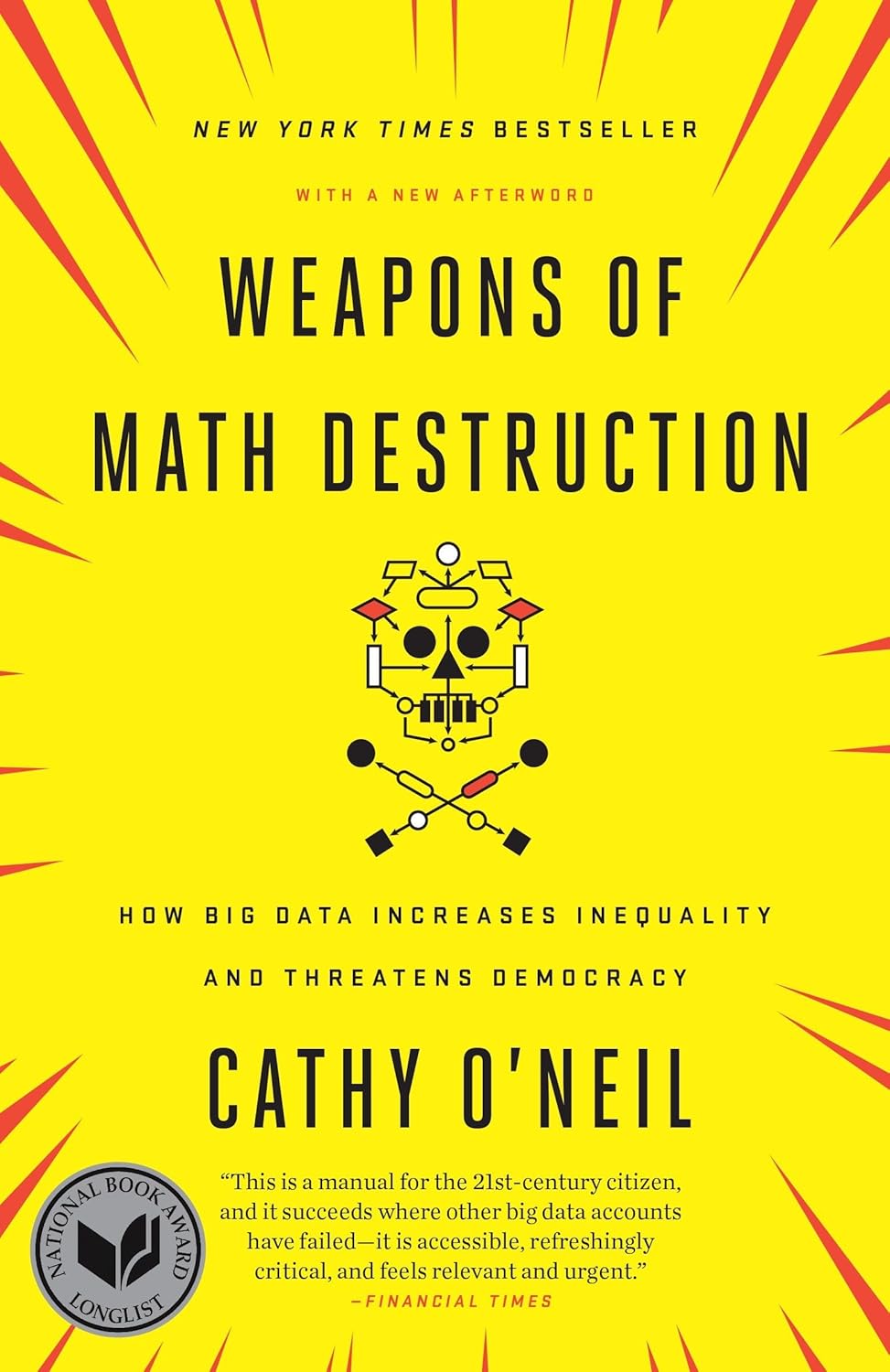
How opaque algorithms decide who gets credit, a job or parole — and why they tend to punish the same people.

The definitive piece of investigative journalism on OpenAI: 260+ interviews, the clash between safety and speed, and the attempted firing of Sam Altma
As an Amazon Associate, Zendoric earns from qualifying purchases; the price does not change for you. · all our recommended books →
🔗 Related on Zendoric
- SpinSci buys Dialog Health: a small merger that portrays the quiet consolidation of AI in healthcare · 2026-07-24
- UCLA Health bets on AI for cancer detection: another sign that precision medicine is no longer just a promise · 2026-06-26
- Lapsi Health embeds its clinical AI into medical records via Redox: the plumbing matters more than the algorithm · 2026-07-28