mlx-serve: frontier AI now fits on a Mac, with no cloud or subscription — the symptom of a deeper shift

🕒 Published on Zendoric: July 4, 2026 · 00:29
✨ AI-generated · how it's made
An independent developer publishes in Zig an inference server that runs DeepSeek V4 Flash (284 billion parameters) on a Mac with 96 GB of memory, without sending a single byte to the cloud. Little immediate traction on Hacker News, but a strong signal of where local AI is heading.
📚 Go deeper

Semiconductors as the oil of the 21st century: history, espionage, and why an island of 23 million people underpins the entire AI economy.
As an Amazon Associate, Zendoric earns from qualifying purchases; the price does not change for you. · all our recommended books →
By mlxserve.com · July 3, 2026.
mlx-serve is an inference server for language models written in Zig, designed exclusively for Apple Silicon and presented as an alternative to LM Studio and Ollama. Its authors claim it is between 12% and 39% faster than LM Studio in benchmarks with identical MLX weights, and that its speculative decoding (combining n-gram lookup, an auxiliary 'drafter' model and native MTP sidecars in models such as Qwen 3.6) can double the speed in code-editing tasks and agent loops, without altering the exact output. The binary takes up about 4.5 MB, depends on neither Python nor Electron, and exposes OpenAI- and Anthropic-compatible APIs —allowing Claude Code, Cursor or Continue to connect directly to the model running on the machine itself—.
The most striking figure is the ability to run DeepSeek V4 Flash, a 284-billion-parameter model, on a Mac with 96 GB or more of unified memory, thanks to a dedicated engine (based on the work of Salvatore Sanfilippo, antirez) with native Metal kernels. Added to that are image generation and editing (FLUX.2, Krea-2-Turbo), video with synchronized audio (LTX-Video), zero-shot voice cloning (Qwen3-TTS), an agent sandbox that isolates shell commands in a Linux VM, and native support for Ollama's protocol so that existing tools —Raycast, Obsidian, Open WebUI— work without changes. All under an MIT license and with no telemetry: the server binds to 127.0.0.1 by default.
It is, in practice, a niche project: the Hacker News launch barely gathered a couple of points and no comments, which is worth stating honestly —this is not an announcement from a major company nor a story with massive reach, but the work of a developer (or small team) pushing the limits of what a consumer Mac can do—. But the technical fact itself is relevant beyond its social traction: just two years ago, running a model of this scale required GPU clusters in data centers; today, with 4-bit quantization, optimized Metal kernels and well-implemented speculative decoding, it fits on a premium laptop without touching the cloud.
This connects with an underlying trend we have been pointing out: the open frontier (DeepSeek, Qwen, Gemma, Llama) is rising in quality at the same rate as the hardware needed to run it is falling, and projects like mlx-serve are the plumbing that makes that leap usable for anyone with a powerful Mac. The advantage is not only cost —zero subscriptions, zero per-token calls— but sovereignty: the data, the code handed to an agent, the conversation with a voice assistant, never leave the device. At a time when the concentration of power around a handful of cloud AI providers is a legitimate cause for concern, every tool that returns computing power to the end user is, on a small scale, a counterweight. It will not change the market on its own, but it is exactly the kind of quiet infrastructure —just as happened with web servers or open-source databases— on which much broader adoptions are later built. The honest reading is that today this is a matter for enthusiasts and developers; the deeper reading is that each generation of these local tools brings a little closer the day when running a frontier model on your own hardware is the default option, not the exception.
📚 Go deeper
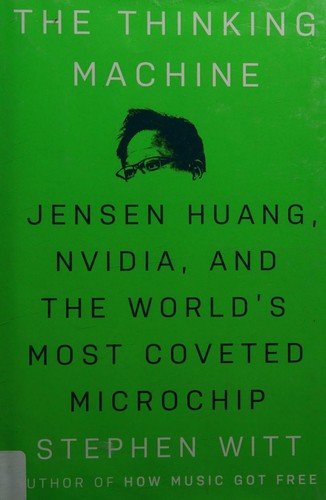
The story of NVIDIA and Jensen Huang: how a video-game card company ended up making the most coveted resource on the planet.

China vs.
As an Amazon Associate, Zendoric earns from qualifying purchases; the price does not change for you. · all our recommended books →
🔗 Related on Zendoric
- AI takes over the health debate at the Aspen Ideas Festival: a symptom of a deeper cultural shift · 2026-06-30
- Qubitz and the local-agent fever: when data sovereignty outweighs raw intelligence · 2026-07-03
- When the 'genuine' ID lies: why AI fraud forces us to bury biometrics as a silver bullet · 2026-07-15