Trapped in groupthink: the startup trying to stop LLMs from repeating themselves

🕒 Published on Zendoric: July 3, 2026 · 01:20
✨ AI-generated · how it's made
The MIT Technology Review article, written by Will Douglas Heaven, explores a curious but little-discussed phenomenon of language models: their astonishing predictability when faced with open-ended questions.
📚 Go deeper
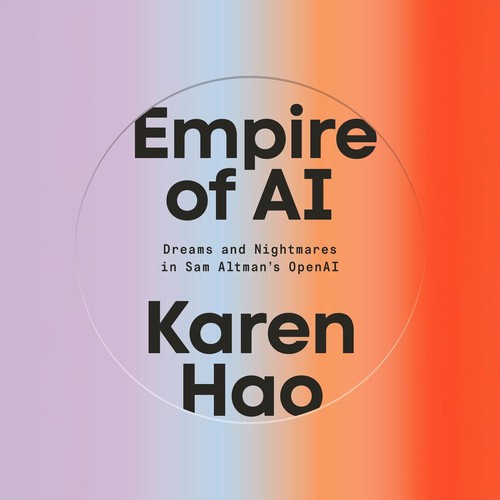
The definitive piece of investigative journalism on OpenAI: 260+ interviews, the clash between safety and speed, and the attempted firing of Sam Altma
As an Amazon Associate, Zendoric earns from qualifying purchases; the price does not change for you. · all our recommended books →
The MIT Technology Review article, written by Will Douglas Heaven, explores a curious but rarely discussed phenomenon in language models: their astonishing predictability when faced with open-ended questions. The opening example is almost a magician's trick: asking ChatGPT or Claude for "a random number between 1 and 10" almost always produces a 7. Asking for another car name yields Toyota or Honda. Asking for a slogan for New Balance generates nearly identical responses across different models ("Run your way" in both Claude and ChatGPT). This behavior is not random in the statistical sense, but a symptom of what the authors call groupthink or herd thinking: models systematically converge toward the same high-probability answers, both within a single model across different runs and across different models.
The phenomenon has academic backing: a November paper titled "Artificial Hivemind: The Open-Ended Homogeneity of Language Models (and Beyond)," awarded best paper at NeurIPS, analyzed 25 LLMs (including models from the leading US firms as well as Chinese and other open-source models) by asking each of them 50 times to write a metaphor about time. Of 1,250 responses, the vast majority revolved around "time is a river" or "time is a weaver." The researchers speculate that the cause lies in the fact that most current LLMs are trained in similar ways, with similar data, for similar tasks, which produces convergence toward common patterns. OpenAI, consulted by the authors, notes that training models to give reliable and coherent answers tends to make them converge toward familiar, high-probability responses, and that forcing more novelty can weaken the reliability of the answers; it also points out that the paper analyzed 2024 models that have already been updated.
This behavior is perfectly suitable for tasks such as coding or research, where precision and consistency are sought, but it becomes a serious problem when the user is looking for new ideas, creative brainstorming or planning something original, such as a trip. That is where Springboards comes in, an Australian startup that has developed a model called Flint, trained specifically to offer greater variety in responses to open-ended questions. According to Pip Bingemann, co-founder and CEO of Springboards, "most language models are fighting against hallucinations; we welcome them." In the article's demonstrations, Flint responded with a Ford F-150 instead of Toyota/Honda, with the slogan "Built to last, run to win" instead of the generic "Run your way," and in the random-number game it even gave 3.7916 instead of the predictable 7.
Technically, Flint is built on Qwen 3, Alibaba's open-source model, since Springboards is a small team for which training its own foundational model is economically unfeasible. The team, as co-founder and CTO Kieran Browne explains, initially explored the "temperature" parameter (the usual setting for introducing randomness), but found that raising it too much generated serious incoherences —even causing an OpenAI model to switch from English to code midway through a sentence. Springboards' solution was more surgical: instead of increasing randomness across the board, they trained Flint to identify the specific points in the text where it makes sense to introduce variety (for example, only when naming a travel destination, not in every word of the response) and to insert more unusual options there. Browne sums it up by saying that Flint is "programmed to throw out a wild idea," more an invitation to think differently than a guaranteed answer.
Springboards' product is not just Flint on its own, but a tool that combines several LLMs —including ChatGPT and Claude— designed for creative professionals in advertising and marketing, allowing them to drag and combine fragments of text generated by different models to build new ideas. Flint is offered as an additional option within that tool when greater variety is sought. Several sources from the marketing world validate the usefulness of the approach: Zoe Scaman, founder of Bodacious and head of strategy at 77X (a direct-to-fan marketing platform linked to Luka Dončić), recounts that in a test with a classic MBA case —how to reinvent a financial company for today's young people— the three conventional models converged on the same clichéd idea of "teaching financial literacy in a fun way," while Flint proposed rethinking the very concept of wealth accumulation, something she described as genuinely interesting. Scaman warns, however, that Flint is still a prototype that "sometimes crashes" when pushed too hard.
Maximilian Weigl, co-founder and head of strategy at the marketing firm Uncommon, offers a more nuanced perspective: his team uses Flint alongside ChatGPT, Claude and Gemini, valuing the fact that tools that push toward the average are of no use for creating something truly disruptive. However, he also acknowledges that in nine out of ten cases the average is perfectly acceptable, because most people are content with familiar, mass-market solutions, not creative extremes. Weigl adds a broader warning applicable to any AI, including Flint: he worries that teams may rely excessively on the output of these tools, to the point of copying and pasting without thinking, when the real value lies in thinking, talking to others and using one's own voice.
The article closes by placing the problem in a broader context: although Flint is currently marketed to advertisers and marketing professionals (Springboards' current clients), Bingemann and Browne argue that the lack of variety in LLMs is a problem affecting any chatbot user, not just the creative industry. The project's philosophy, in Bingemann's words, is to give people the ability to choose between variety or homogeneity, letting them be the ones to decide whether the result is good or not, rather than letting the machines —all trained in similar ways— end up producing, in his words, "a gray and boring world."
In short, this is a light piece of journalism but grounded in recent academic research (the award-winning NeurIPS paper), documenting a structural bias in current LLMs toward high-probability answers that are homogeneous across different models, and presenting the case of a small startup trying to address it with a specific technical solution —selective intervention of randomness at particular points in the generated text, rather than global adjustments such as temperature— applied to an existing open-source model (Qwen 3) for cost reasons. The approach is validated through testimonials from marketing professionals who use the tool in production, albeit with honest caveats about its current limitations as a prototype.
📚 Go deeper
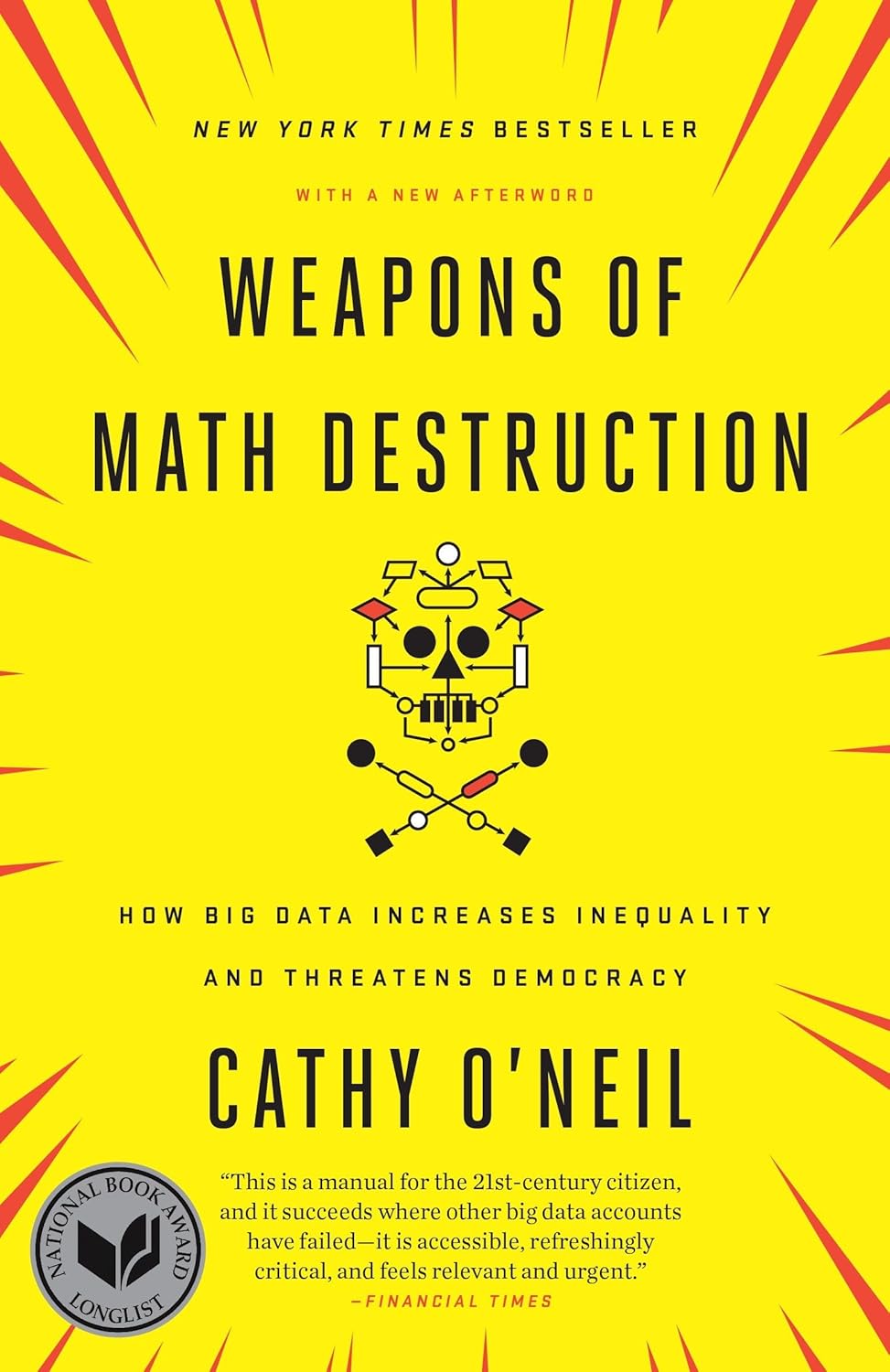
How opaque algorithms decide who gets credit, a job or parole — and why they tend to punish the same people.
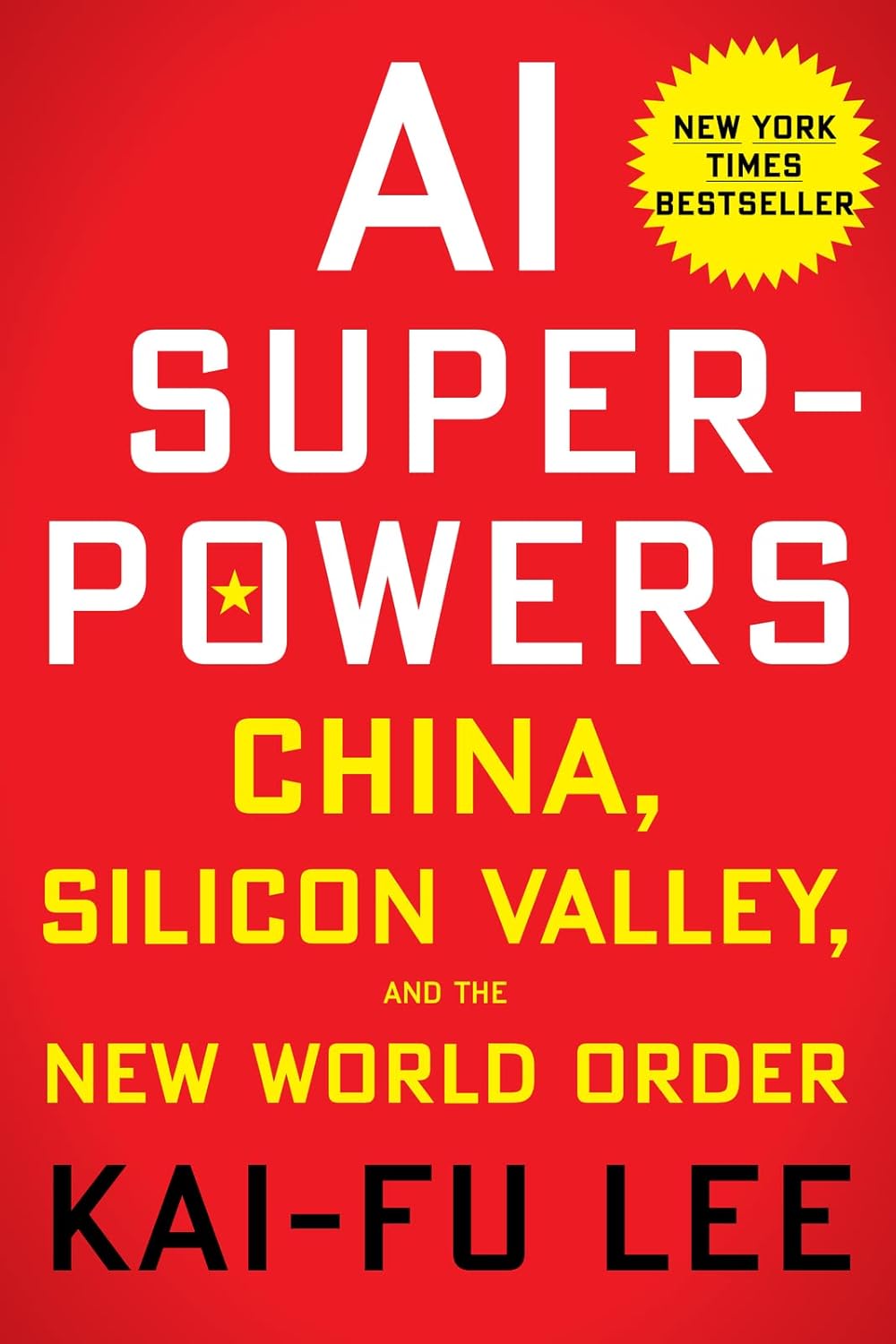
China vs.
As an Amazon Associate, Zendoric earns from qualifying purchases; the price does not change for you. · all our recommended books →
🔗 Related on Zendoric
- AI that composes music with diffusion models puts authorship and human creativity in check · 2026-09-02
- The search for dark matter opens up to new horizons after decades without conclusive findings · 2026-07-02
- Three open fronts after the clash between Anthropic and the U.S. government over AI safety · 2026-06-30