When the US Congress unites over AI and jobs, but with no plan on the table

🕒 Published on Zendoric: July 3, 2026 · 01:20
✨ AI-generated · how it's made
Democratic and Republican lawmakers agree that AI is already destroying jobs and are calling for 'urgent action.' The bipartisan consensus is the real news; the absence of concrete measures is the uncomfortable part best not overlooked.
📚 Go deeper
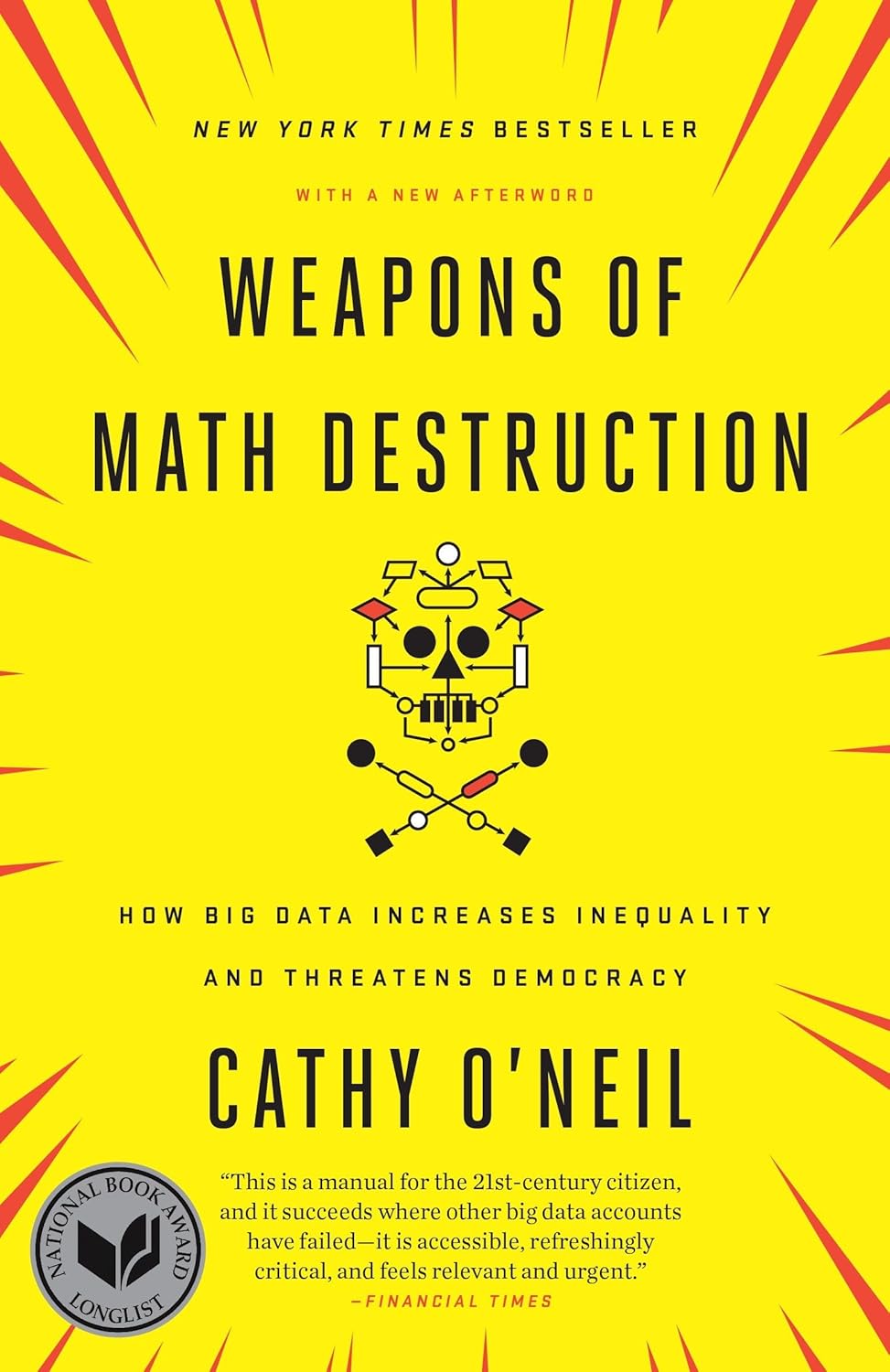
How opaque algorithms decide who gets credit, a job or parole — and why they tend to punish the same people.
As an Amazon Associate, Zendoric earns from qualifying purchases; the price does not change for you. · all our recommended books →
By Fox Baltimore (WBFF) · July 2, 2026. The coverage reaching us —reproduced almost word for word across several U.S. local TV stations, a sign that it comes from a single news wire— is brief: lawmakers from both parties in the U.S. agree that the advance of AI is causing job losses and are calling for "urgent action." The material contains no concrete layoff figures, no name of a specific legislative proposal, and no testimony that would allow us to gauge the real magnitude of the problem being denounced. Faced with that, we prefer to be honest about what we know and what we don't, rather than filling gaps with assumptions.
The interesting thing, given the available information, is not the technical detail —there is none here— but the political fact itself: in a Congress historically unable to agree on almost anything, concern over AI's impact on employment appears as one of the few points of cross-party consensus. That, in itself, is a relevant data point. When Republicans and Democrats agree in diagnosing a problem without necessarily agreeing on the solution, it is usually because the social and economic pressure is already being felt on the ground, in the districts, before any regulatory framework capable of responding exists.
This fits with what we have been observing sector by sector: AI's impact on employment is real, but uneven and concentrated in administrative and back-office tasks, while expert judgment, customer relationships and in-person work hold up better. The legislative reaction tends to arrive late relative to technological disruption, and the usual risk is that the political response ends up being more a gesture to contain social discontent than a coherent industrial policy —training, safety nets, workforce transition— capable of accompanying real change.
Our reading, with the caution demanded by such underdeveloped material, is that this kind of headline will keep multiplying before we see concrete, well-designed legislation. The short term of this transition will indeed be hard for many workers, and to deny it would be dishonest. But the bipartisan urgency can also be read as the first necessary step toward a governance that, done well, would allow the benefits of automation to be better distributed —an automation that, in the long run, has the potential to free up time and human resources for work of greater value and purpose. The problem is not that urgency is being talked about; it is that, for now, the urgency remains a mere statement of intent.
📚 Go deeper

The best starting book if you're not technical: a Wharton professor explains how to work WITH AI — when to delegate, when to supervise, when to keep i

The definitive piece of investigative journalism on OpenAI: 260+ interviews, the clash between safety and speed, and the attempted firing of Sam Altma
As an Amazon Associate, Zendoric earns from qualifying purchases; the price does not change for you. · all our recommended books →
🔗 Related on Zendoric
- 200 economists and 16 Nobel laureates sign a warning on jobs: what's unusual is who agrees, not what they propose · 2026-07-16
- The U.S. creates an 'AI coordinator' against childhood cancer: the cure isn't in the law, it's in the data · 2026-07-14
- When rivals share the same fear: why the U.S. and China need common rules for AI · 2026-06-26