Leadership and change management in the AI era: from automation to augmentation

🕒 Published on Zendoric: July 2, 2026 · 08:26
✨ AI-generated · how it's made
The article, written by Richard Steele, a McKinsey partner in New York, starts from a clear premise: traditional change management was already under pressure before AI burst onto the scene, and now the AI boom has added an extra layer of disruption that demands a complete rethink of the role of leadership.
📚 Go deeper

DeepMind co-founder on the dilemma of containing technologies that do not want to be contained.
As an Amazon Associate, Zendoric earns from qualifying purchases; the price does not change for you. · all our recommended books →
By Richard Steele (McKinsey Quarterly) · July 1, 2026.
The article, written by Richard Steele, a McKinsey partner in New York, starts from a clear premise: traditional change management was already under pressure before AI burst onto the scene, and now the AI boom has added an additional layer of disruption that demands a complete rethinking of the role of leadership.
Steele explains that, in the past, organizations managed discrete, time-bound changes —implementing a new system, restructuring a function, applying a defined process— with relatively stable end states. Today, by contrast, the environment is characterized by continuous disruption: the number of change initiatives that executives at large corporations have taken on has soared over the past decade, to the point where many organizations are simultaneously juggling dozens or hundreds of initiatives deemed top priority.
This overload has a direct effect on employees: many are opting out of discretionary efforts tied to these initiatives, even when taking part could benefit their careers. The author cites research from the McKinsey Health Institute that has found mental health and well-being problems to be widespread in today's workforce, with significant shares of employees reporting symptoms of anxiety or burnout. According to Steele, "something fundamental isn't working."
The AI boom, the article notes, has produced three additional surface-level effects on change management. First, it has further increased the number of initiatives companies pursue or feel they must pursue. Second, because AI itself is advancing so quickly, executives feel the need to accelerate not only AI experimentation and adoption but other change initiatives as well; for example, because AI works better with modern technology systems and high-quality enterprise data (and can also speed up software development), many companies are accelerating their efforts to modernize legacy technology platforms, which in turn raises expectations about the speed of transformation in general. Third, because AI has the capacity to automate parts of many jobs in the future, it has increased employee anxiety levels and labor-market uncertainty, which were already too high.
A point Steele particularly emphasizes is that these problems are compounded by the fact that AI use has not penetrated far enough into the managerial ranks. Executives tend to adopt AI tools less frequently, partly because of the nature of their roles, their own time pressures, and because they are not in a position to experiment as much as more junior employees do.
The author offers a direct and personal recommendation: his advice to leaders is to step back and reimagine their own roles as augmented by AI, with much of their routine work automated. Doing so, he argues, will help them realize that what they most need to accelerate is their own learning.
Steele describes how what was once a growing digital divide has now become an "AI divide," one that extends beyond the mere use of tools to include an understanding of what new AI tools can do and how long tasks should now take. This causes a loss of credibility for leaders, and employees notice it; deep down, many leaders are aware of it too, which has led some to lose confidence in their ability to lead based on accumulated experience.
To address this, the article argues that leaders need to reimagine their own roles as reshaped by AI. AI can help them frame illuminating questions about the future of the business and how value will be created: how to think differently about risk, innovation and new business models; where the organization should accelerate adoption and where it should be more selective; which activities are no longer as important and can be stopped to create more capacity and give employees some breathing room.
Steele insists that stepping back to reimagine leadership roles, with much of the routine work automated, puts leaders in a better position to help others experiment with new tools, because they will first have accelerated their own learning.
A particularly illustrative analogy the author uses is to compare today's progress in AI adoption to being, say, three years into the development of steam power: a point at which the potential of a new technology is not yet fully understood because its impact remains hard to measure. From this perspective, it is clear that leaders can do more to create learning cultures. They should conceive of leadership itself as an exercise in helping others learn, including a shift from a directive stance toward a question-asking role that generates energy rather than contributing to collective burnout.
The author also warns, however, that leaders must think more strategically about the gains available through AI. Many organizations are opting for obvious applications focused on task automation when they could be planning bigger, more imaginative bets. He gives a concrete example: instead of automating tasks to save fractions of a researcher's time, organizations could empower those researchers to use AI to run thousands of trials simultaneously.
The article's central conclusion is that the opportunity for leaders lies in looking at AI from a human-augmentation standpoint, not just a workforce-automation standpoint. These important mindset shifts can help leaders manage disruption in new ways. Change management, Steele argues, is now about reinvention, and it requires leaders to move beyond discrete programs and initiatives to instead lead continuous adaptation across their organizations. Their own roles can evolve too: from directing change and providing answers to creating the conditions for learning and experimentation. Rather than simply implementing new processes or structures, they can rethink how a company creates value at its core, while helping employees navigate ongoing uncertainty and disruption.
The article is edited by Barbara Tierney, a senior editor in New York, and notes that Richard Steele is a partner in McKinsey's New York office. The email also links to other related pieces by the same author, such as 'Change is changing: How to meet the challenge of radical reinvention,' on how leadership must rethink its traditional change-management tools, and 'Bias Busters: Escaping the echo chamber at the top,' on biases such as egocentric anchoring and authority bias that can amplify leaders' perspectives and silence those of others.
📚 Go deeper

AI as the latest chapter in the history of information networks, from gossip to the printing press to the algorithm.
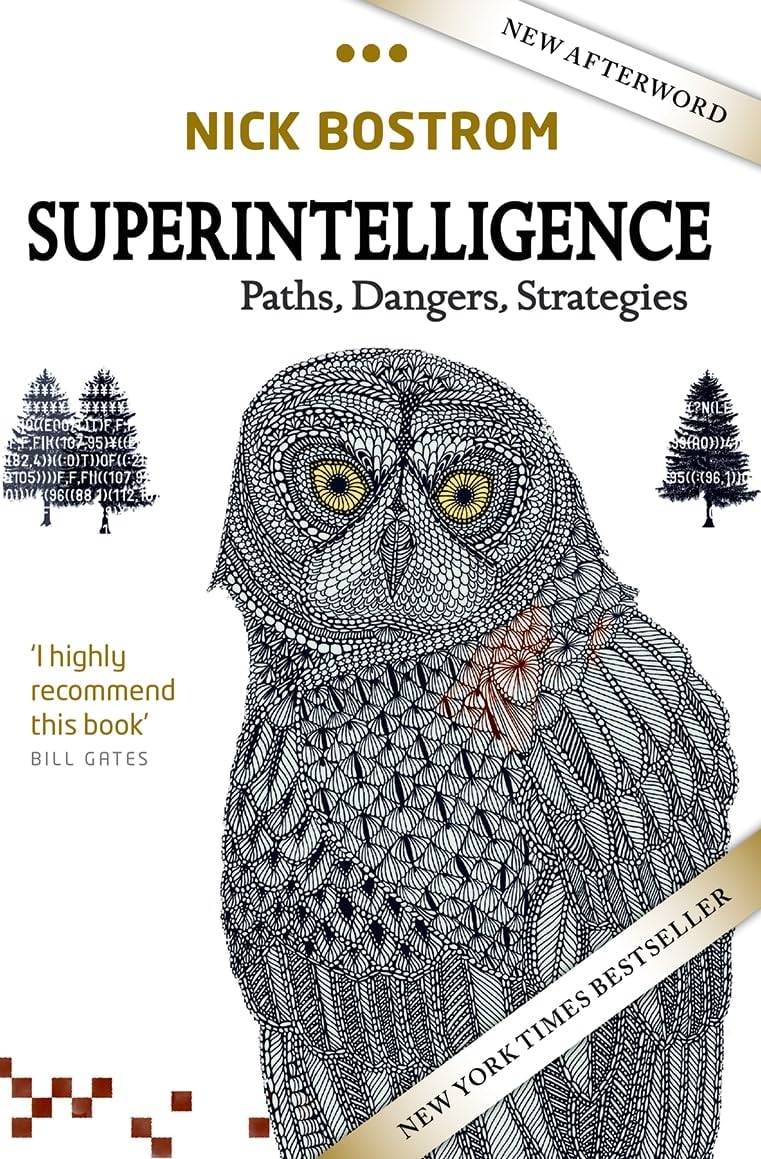
The book that started the existential-risk debate and that half the industry still cites.
As an Amazon Associate, Zendoric earns from qualifying purchases; the price does not change for you. · all our recommended books →
🔗 Related on Zendoric