If AI gets more expensive before it gets cheaper: the inflationary dilemma posed by its infrastructure

🕒 Published on Zendoric: June 27, 2026 · 09:00
✨ AI-generated · how it's made
An analysis by Justin Lahart in the Wall Street Journal suggests that the massive rollout of data centers could become a new driver of prices in the U.S. The thesis opens an uncomfortable but necessary conversation: who pays the bill for building the AI era?
📚 Go deeper

The story of NVIDIA and Jensen Huang: how a video-game card company ended up making the most coveted resource on the planet.
As an Amazon Associate, Zendoric earns from qualifying purchases; the price does not change for you. · all our recommended books →
It is best to start with honesty: the source article sits behind The Wall Street Journal's paywall and we only have access to the introductory excerpt by Justin Lahart. On that limited basis we build this commentary, without attributing to the text any data we have been unable to verify.
The idea hinted at in the teaser is provocative and worth examining. According to the WSJ, the U.S. economy could face a "third wave" of inflation that would no longer come from tariffs or fossil-fuel prices —which the article itself points to as falling— but from the colossal effort to build artificial-intelligence infrastructure. The vector explicitly singled out is demand for memory chips, whose rising cost would be passed on to products as everyday as smartphones and to electricity bills.
From a calm perspective, this dynamic should not be read as a surprise but as a familiar pattern in economic history. The great technological transitions —the railroad, electrification, fiber optics— first demanded heavy capital outlays on physical inputs, and only afterward returned their productivity dividends. What is interesting is not that AI puts pressure on costs in the short term, but the time lag between that cost and its reward.
There lies the real question, the very one the article raises and that we cannot answer without the full text: will the productivity gains arrive with enough force and speed to offset the price pressure? The answer is not automatic. It will depend on how quickly companies convert installed computing capacity into real efficiency, and on whether that efficiency spreads beyond a handful of tech giants.
In the meantime, the prudent nuance is this: talking about AI-driven inflation is not an argument against AI, but a reminder that every infrastructure carries a transition cost. Managing it with supply-side policies —more semiconductor manufacturing capacity, more electricity generation— will likely prove more useful than curbing investment. For those who want the detail with figures and sources, the full read requires a subscription to The Wall Street Journal.
📚 Go deeper

Semiconductors as the oil of the 21st century: history, espionage, and why an island of 23 million people underpins the entire AI economy.
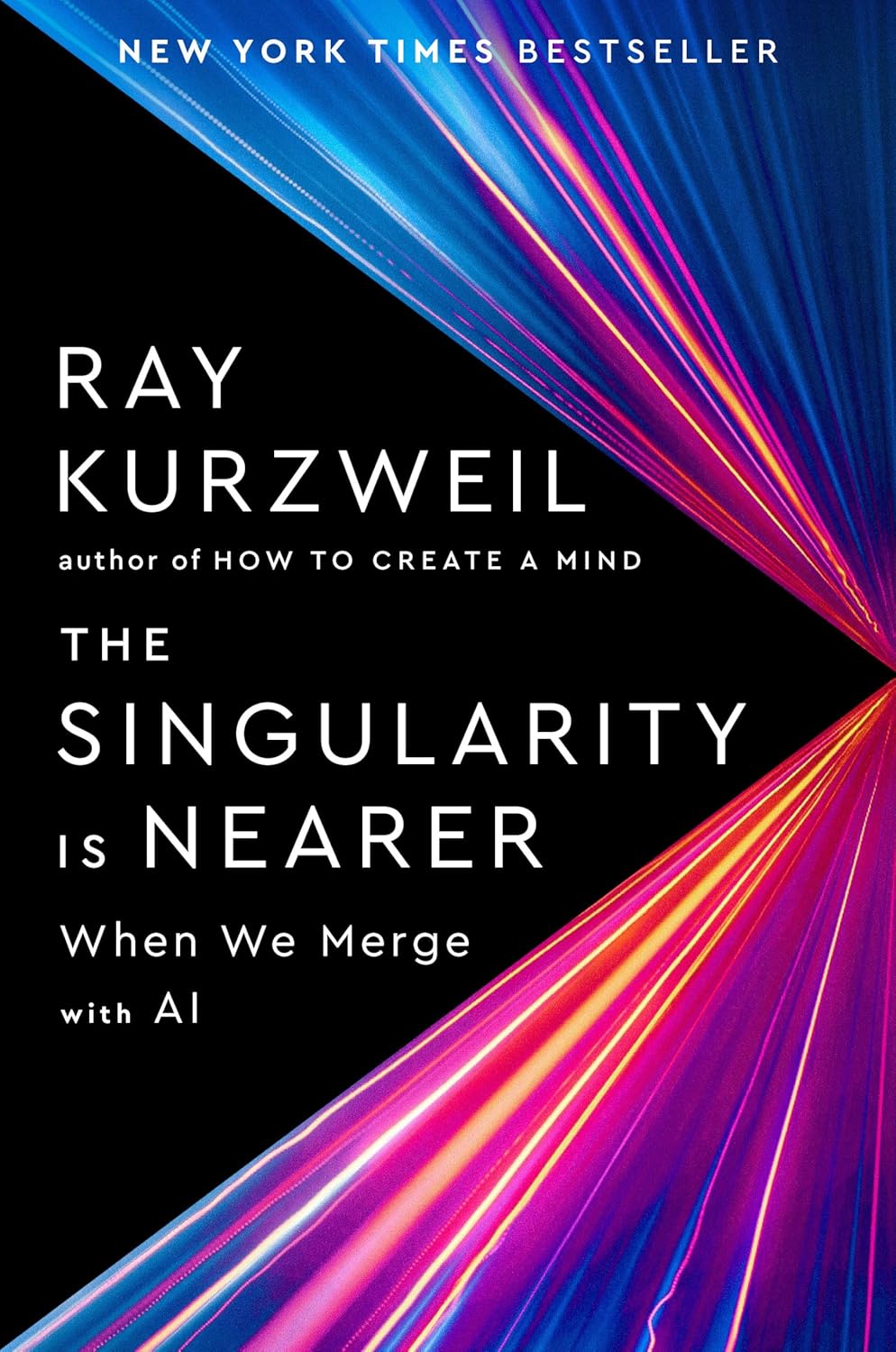
Twenty years after "The Singularity Is Near", Kurzweil revisits his predictions and keeps the date: human-AI merger around 2045.
As an Amazon Associate, Zendoric earns from qualifying purchases; the price does not change for you. · all our recommended books →
🔗 Related on Zendoric