If AI is boosting productivity, why isn't your pay going up? The fight over who gets the gains
✨ AI-generated · how it's made
Microsoft is offering voluntary buyouts to about 60,000 employees, roughly a quarter of its workforce. In the same month, it reported $36.6 billion in quarterly profit. Economic history makes one thing clear: a technology that raises output does not automatically raise wages. Who gains depends on who controls the technology, how it is used, and the rules we set. Our thesis is that AI could become the most equalizing technology in history, but only if we win the fight over distribution this decade.
🎬 Our Short
📚 Go deeper
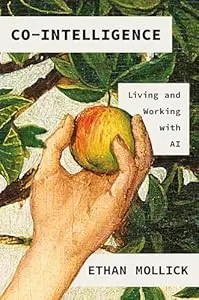
The best starting book if you're not technical: a Wharton professor explains how to work WITH AI — when to delegate, when to supervise, when to keep i
As an Amazon Associate, Zendoric earns from qualifying purchases; the price does not change for you. · all our recommended books →
THE NUMBER THAT MATTERS. On October 26, Microsoft offered voluntary buyouts to about 60,000 employees. That is roughly a quarter of its global workforce, according to CNBC, Axios and GeekWire. Eligibility runs from vice president down, in the US, Canada, India and the UK. Divisions taking part include Xbox, Windows, Copilot and Finance. Terms are similar to the company's standard severance. Two days later, Microsoft reported its results. Quarterly revenue was $92.3 billion, up 19% from a year earlier. Net income was $36.6 billion, up 32%. A spokesperson says AI is not driving the buyouts and that the company does not need fewer people. Fortune and Deadline read it differently: as a way to offset massive data center spending, meaning fewer people and more equipment. We won't repeat the debate over whether AI is an excuse for layoffs; we have already covered it. This analysis asks a different question, about distribution. When a technology raises what each worker produces, who keeps the gain?
HISTORY HAS BEEN HERE BEFORE. The question is two centuries old. Oxford economic historian Robert Allen gave the name "Engels' pause" to what happened during Britain's Industrial Revolution. Between 1780 and 1840, output per worker rose 46%. Real wages rose only 12%. Between 1800 and 1830, at the peak of the wave of inventions, real wages were essentially flat. The difference went into profits, which factory owners reinvested in more machines. Wages only took off after 1840. Labor shortages, unions and laws such as the Factory Acts helped. It took a whole generation. The modern economy repeated the pattern. In 1987, Nobel laureate Robert Solow stated his famous paradox: "You can see the computer age everywhere but in the productivity statistics." And since the late 1970s, US productivity and pay have drifted apart. According to the Economic Policy Institute (EPI), a labor-aligned think tank, productivity grew about 90% between 1979 and 2025. Hourly compensation for the typical worker rose by roughly a third. The OECD has documented a similar, though milder, decoupling in many rich countries. The figure has caveats. Economists such as Robert Lawrence argue that much of the gap comes from how prices are adjusted and from machinery wearing out faster. But no serious method makes it disappear entirely.
OUR READING: LABOR'S SLICE IS SHRINKING. This is the data point that worries us most. The US Bureau of Labor Statistics (BLS) measures the "labor share": the percentage of business income that goes to wages and benefits. In the second quarter of 2026 it fell to 52.8%. That is the lowest level since the series began in 1947. For much of the postwar period it sat between 60% and 66%. At the same time, productivity is picking up. According to the BLS, it grew at a 3.6% annual rate in the third quarter, the best reading in two years. Michael Feroli, JPMorgan's chief US economist, says the share could fall below 50% by 2030. The measurement debate matters too. A Goldman Sachs analysis attributes about 40% of the decline since the 1990s to accounting factors such as depreciation. The Tax Foundation argues that, once those effects are removed, the split remains within historical ranges. Even so, the trend points one way. In 2020, David Autor and his co-authors offered a convincing explanation: "superstar firms." These are very large companies with few employees per dollar of revenue and huge margins. When markets concentrate around them, labor's share falls even if no firm cuts wages. AI fits that model perfectly. It demands huge investment in chips and data centers, rewards scale, and tends toward winner-take-most outcomes. Our reading is that the problem is not technological. It is about market structure. Microsoft is not the villain of this story. It is a textbook illustration of an economy that today rewards owners of capital far more than owners of working time.
AUTOMATE OR AUGMENT: THE FORK IN THE ROAD. Daron Acemoglu and Simon Johnson, both at MIT and 2024 Nobel laureates in economics, frame the central question in "Power and Progress" (2023). Automation means replacing the worker. Augmentation means making the worker more capable. Only the second raises wages in a lasting way. Acemoglu also warns against "so-so automation": machines that displace people without truly improving productivity. Self-checkout kiosks are the classic example. Early studies of generative AI offer a hopeful clue. Erik Brynjolfsson (Stanford) and his co-authors studied 5,179 customer support agents. With an AI assistant, they resolved 14% more issues per hour on average. For novices and less-skilled workers, the gain reached 34%. For the most experienced, it was close to zero. The AI spread the best practices of top performers to everyone else. In other words, it lifted those at the bottom closer to the top. The other extreme exists, and it should be reported. A 2025 randomized trial by METR, an independent research lab, followed 16 veteran programmers working on projects they knew deeply. With AI, they took 19% longer. Yet they believed they had been 20% faster. The authors present this as a snapshot in time, not a law. Together, these studies say something important. AI helps the least experienced most. That could compress pay gaps within each occupation. But only if companies use the tool to make novices perform like veterans, and pay them accordingly. If they use it to drop the veteran, or to stop hiring novices, the equalizing effect turns into a cut.
IMPLICATIONS: HOW THE DISTRIBUTION FIGHT IS WON. In the short term, we will not sugarcoat it. The next few years may look like an Engels' pause. Rising productivity, record profits, stagnant wages, and pressure on administrative jobs, which our sector series shows are the most exposed. The difference from 1830 is that this time we know what closed the gap back then: institutions, not technology. That points to three concrete levers. The first is competition. If AI is not locked inside three or four giants, gains spread more widely, through lower prices and new companies. That is why open models, which anyone can download and run, are good news for distribution, not just for engineering. The second is taxation and ownership. Many tax systems today tax labor more heavily than capital. That nudges companies toward automating rather than augmenting. Fixing that bias, and broadening worker ownership of capital through shares or funds, changes the incentives. The third is bargaining. Companies that make their people more capable should be able to show it on their payrolls, not just in their earnings reports. In the long term, our bet remains optimistic. AI that multiplies what each person produces can make medicine cheaper, speed up cures for diseases, and create an abundance that lets people work on what they love. But abundance does not distribute itself. It never has. This decade's question is not whether AI will make the pie bigger. That is already happening. The question is who cuts it. That is a political decision, and there is still time to get it right.
📚 Go deeper
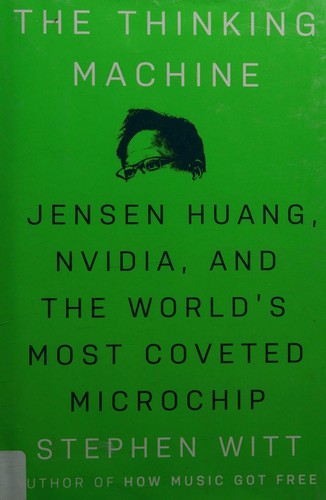
The story of NVIDIA and Jensen Huang: how a video-game card company ended up making the most coveted resource on the planet.
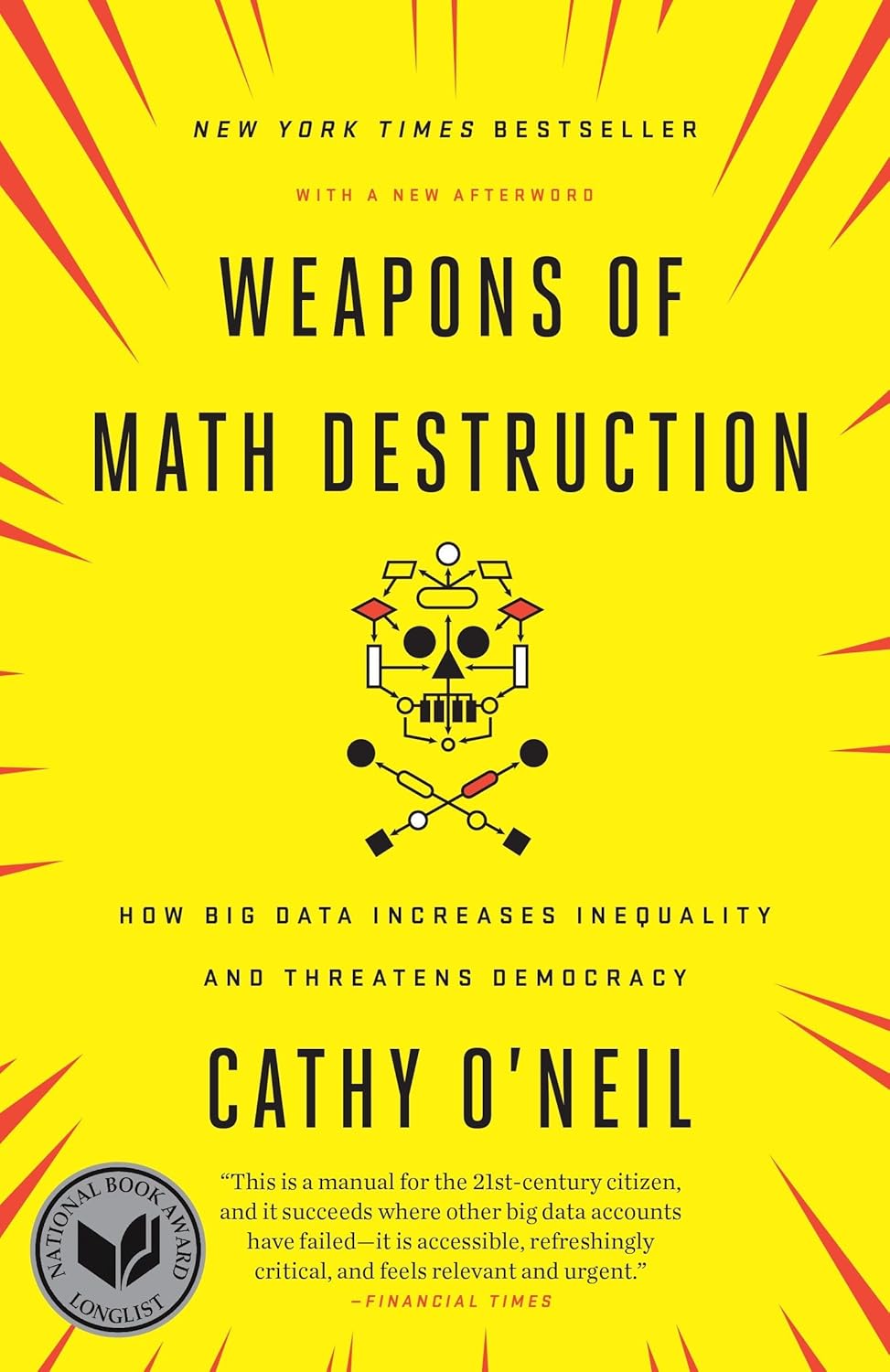
How opaque algorithms decide who gets credit, a job or parole — and why they tend to punish the same people.
As an Amazon Associate, Zendoric earns from qualifying purchases; the price does not change for you. · all our recommended books →
Sources & references
- CNBC – Microsoft offers voluntary buyouts to 60,000 employees
- GeekWire – Microsoft makes new 'voluntary exit' offer to about a quarter of its workforce
- Axios Seattle – Microsoft offers voluntary buyouts to 60,000 workers worldwide
- Fortune – Microsoft's 60,000-person buyout offer hints at a future with fewer workers and more equipment
- Microsoft – First quarter FY27 results
- BLS – Labor share at its lowest level, 52.8 percent, in second quarter 2026
- Fortune – Goldman says the economy is rewarding capital ownership over labor
- CNN – Workers are getting a shrinking slice of America's economic pie