China is no longer chasing the frontier: it has split it in two (and now there's a third race)
✨ AI-generated · how it's made
GLM-5 was trained without a single NVIDIA chip, Chinese models now account for 41% of Hugging Face downloads, and yet the US keeps an overwhelming lead in compute and investment. All three things are true at once. Our thesis stands and gets stronger: there isn't one AI race, there are two — peak capability and ubiquity — each superpower is winning its own, and July 2026's data adds a third: serving intelligence to the whole planet.
🎬 Our Short
📺 The full analysis on video (with chapters)
📚 Go deeper
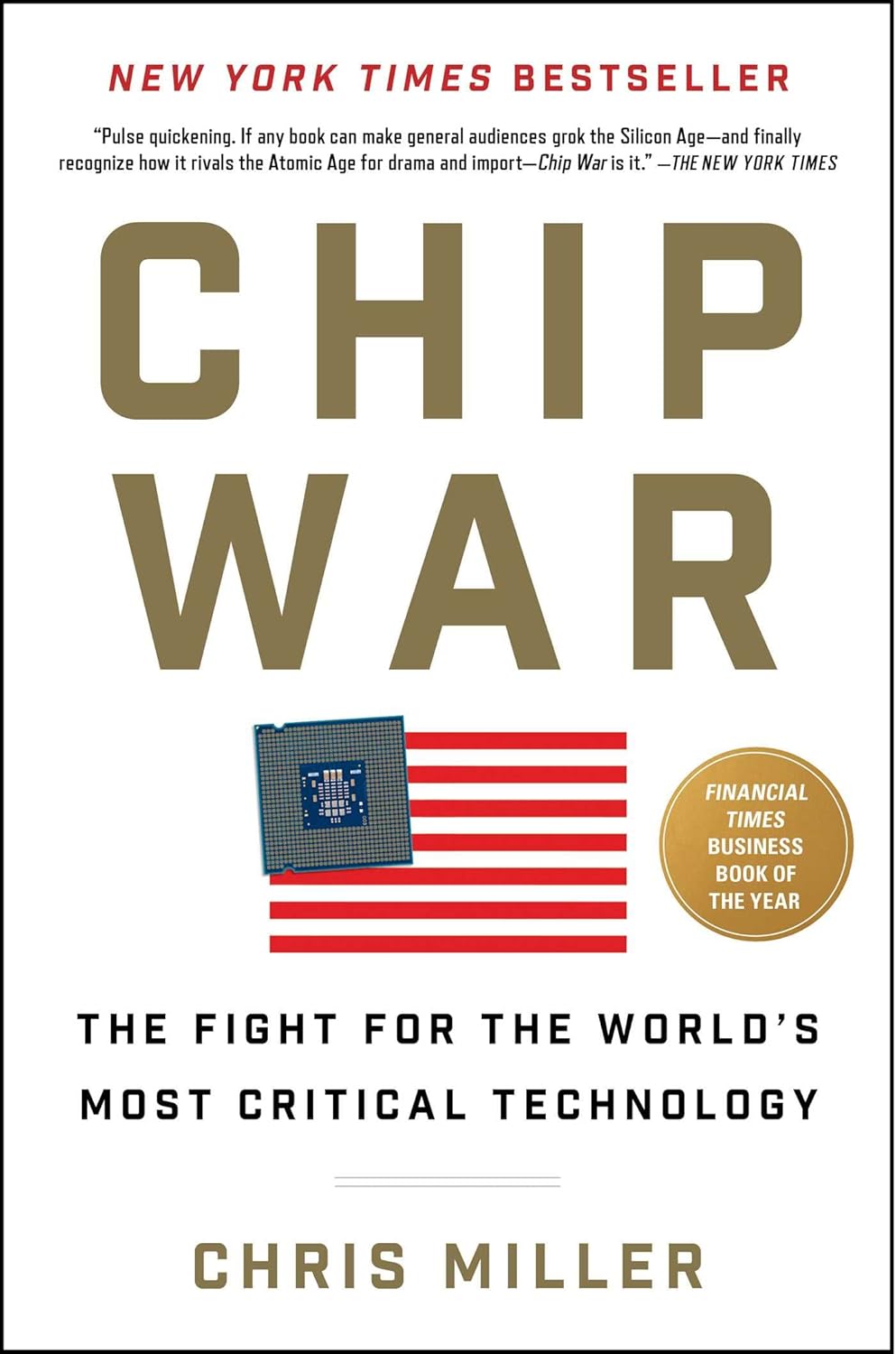
Semiconductors as the oil of the 21st century: history, espionage, and why an island of 23 million people underpins the entire AI economy.
As an Amazon Associate, Zendoric earns from qualifying purchases; the price does not change for you. · all our recommended books →
THESIS. The question "who is winning the AI race?" is badly framed. There are two distinct races. The first is peak capability: building the world's most powerful model and the compute to get there. The United States is winning that one, by a wide margin. The second is ubiquity: making your models the ones the world downloads, adapts and runs. China is winning that one, also by a wide margin. What has been published in recent weeks doesn't weaken this thesis — it reinforces it and adds a third board: inference, the process of serving an already-trained model to millions of users, which may decide the endgame.
THE RACE AMERICA IS WINNING. On raw capability, the data is consistent. Epoch AI, an institute that measures AI progress, calculates that the best Chinese models have trailed the US frontier by an average of 7 months since 2023 (ranging from 4 to 14 months). On resources, the distance is far larger: private AI investment reached $285.9 billion in the US versus $12.4 billion in China in 2025 — 23 times more — according to Stanford's AI Index. The US operates 5,427 data centers, more than ten times China's total, and its estimated compute capacity is double China's (2,400 versus 1,053 exaflops, per analyses compiled by Futu News). The chip chokehold persists too: one analysis cited in that report estimates Huawei will produce just 4% of NVIDIA's aggregate compute in 2026. On our own Zendoric Quality index — which combines hard coding and agent benchmarks — Fable 5 (90) and GPT-5.6 (79) still lead the best Chinese model, GLM-5.2 (77). The absolute frontier still speaks English.
THE RACE CHINA IS WINNING. The other race is measured in adoption, and there the reversal is historic. Chinese open-weight models — those whose parameters can be downloaded and run on your own hardware — now account for 41% of downloads on Hugging Face, the world's largest model platform, overtaking American models for the first time, according to the platform's own report. Alibaba's Qwen family has spawned more than 113,000 derivative models, more than Google and Meta combined. On OpenRouter, an aggregator that routes AI requests, the six most-used models are all open and Chinese, per TechCrunch. And the symbolic blow came with Zhipu's GLM-5: 745 billion parameters trained, according to the company, entirely on 100,000 Huawei Ascend chips — not a single NVIDIA processor — and released under the MIT license, the most permissive one. The usual caution applies — the claim comes from Zhipu, not an independent auditor — but the strategic message is unmistakable: export controls no longer prevent China from training near-frontier models. They have pushed it to build its own supply chain instead.
THE 2.7% MIRAGE. Here we must separate data from narrative. Stanford's AI Index says the performance gap between the two countries' best models has "collapsed" to 2.7% on standard benchmarks, the public tests used to compare models. That is true and misleading at the same time. Standard benchmarks saturate: when every model scores near the ceiling, they stop distinguishing good from excellent. It's the same lesson we learned with cybersecurity evals: what discriminates is hard, unassisted tasks. There, Epoch's 7-month lag and the 13 points separating Fable 5 from GLM-5.2 on our index tell a less triumphant story for Beijing. Our read: China has reached what the AEI think tank calls "semi-permanent parity" on public scoreboards, but not on the peak capability that matters for the hardest tasks. Both things can be true because they measure different races.
THE THIRD RACE: SERVING INTELLIGENCE. The most important analytical development of recent weeks comes from an American Enterprise Institute working paper: in 2026, the compute needed to serve a popular model to hundreds of millions of users exceeds the compute needed to train it by one to two orders of magnitude — that is, 10 to 100 times. Inference, moreover, cannot be centralized: it must be geographically distributed to respond fast. This redraws the board. Training GLM-5 without NVIDIA proves technological sovereignty; serving it at planetary scale on chips delivering a fraction of American performance is a different, far costlier problem. And Washington is moving in contradictory directions: since December 2025 the Trump administration has issued conditional H200 chip licenses to about ten Chinese firms — up to 75,000 units each — yet a Commerce Department official testified on July 14 that actual shipments remain "trivial," per TechTimes. Meanwhile, Congress is advancing the AI OVERWATCH Act, which would ban exports of NVIDIA's most advanced Blackwell chips for two years. America hasn't decided whether it wants to hook China on its silicon or cut it off entirely. That indecision is itself an advantage for Huawei.
IMPLICATIONS. For companies and developers, the practical consequence is already here: "model routing" — using the expensive model only for hard problems and cheap open models for everything else — is becoming the standard pattern, and the cheap models are increasingly Chinese. For governments, the lesson is uncomfortable: export controls have slowed China's frontier but accelerated its autonomy, and handed Beijing the open-source flag. Clem Delangue, CEO of Hugging Face, sums it up with a warning we share: "the biggest risk in AI is the concentration of power." And there lies our underlying, long-term optimism: the open frontier rising this fast is, above all, a democratizing force. It makes intelligence cheaper, gives control and sovereignty to those who can't afford the closed frontier, and brings closer the scenario that truly matters: an abundance of cognitive capability applied to curing disease, extending life and freeing human time for what we love. In the short term there will be real friction — jobs, security, geopolitics. But if the price of great-power rivalry is that artificial intelligence becomes a cheap, ubiquitous resource for the whole planet, history may remember this race split in two as one that, in the end, everyone won.
📚 Go deeper
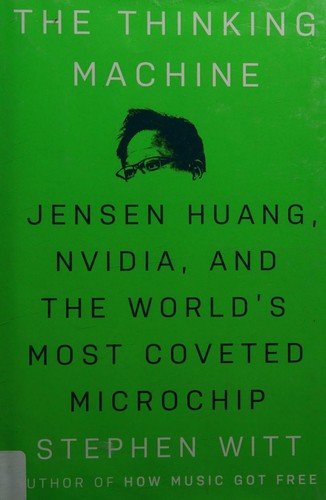
The story of NVIDIA and Jensen Huang: how a video-game card company ended up making the most coveted resource on the planet.
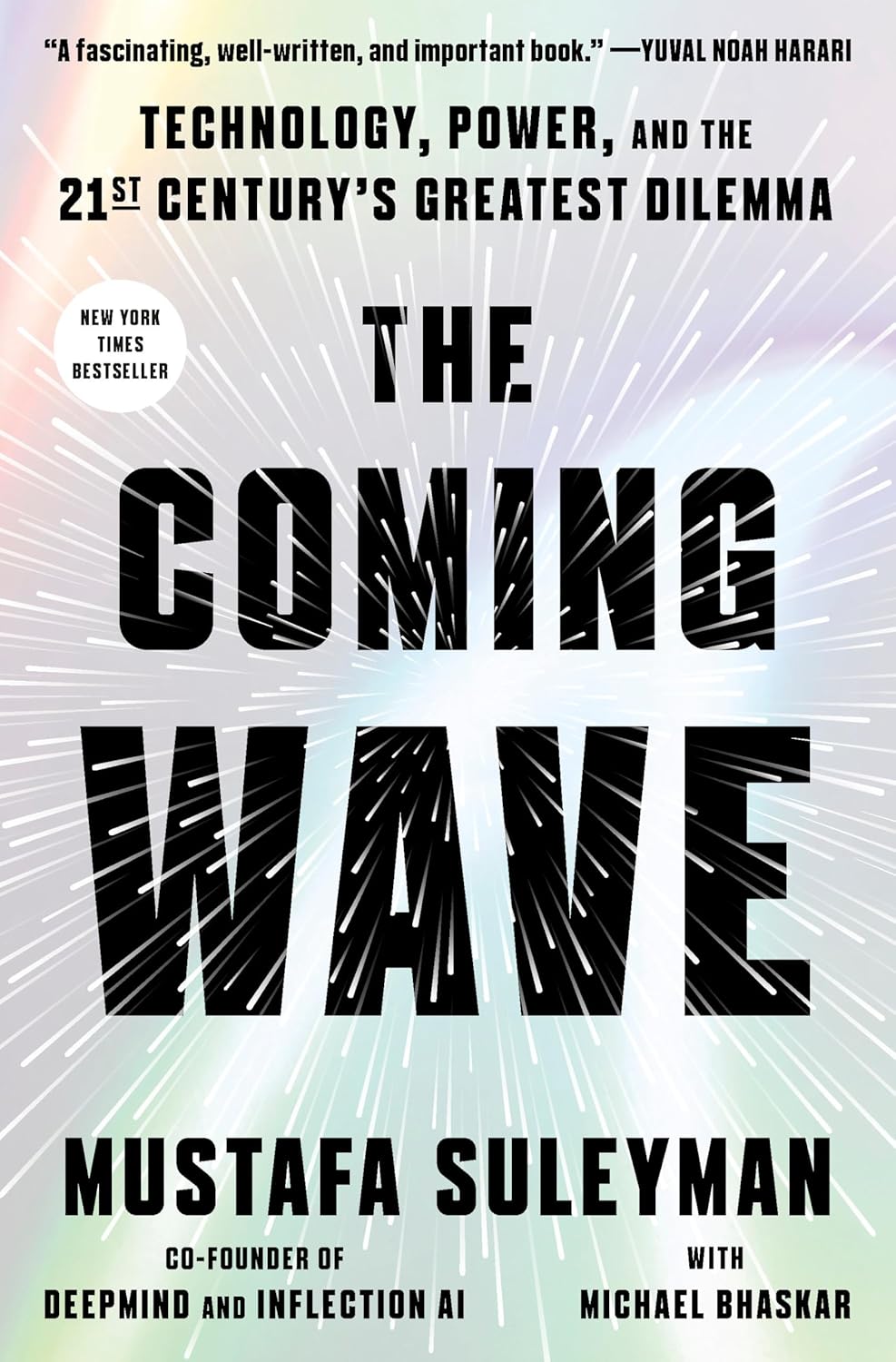
DeepMind co-founder on the dilemma of containing technologies that do not want to be contained.
As an Amazon Associate, Zendoric earns from qualifying purchases; the price does not change for you. · all our recommended books →
Sources & references
- TechCrunch — The real AI race may no longer be at the frontier (14-07-2026)
- Hugging Face — State of Open Source on Hugging Face: Spring 2026
- Epoch AI — Chinese AI models have lagged the US frontier by 7 months on average since 2023
- The Next Web — Stanford AI Index 2026: China narrows US lead to 2.7% while spending 23x less
- American Enterprise Institute — China's Transition to Scalable Intelligence (working paper)
- Trending Topics — GLM-5: The World's Strongest Open-Source LLM Solely Trained on Chinese Huawei Chips
- TechTimes — Nvidia H200 Shipments to China Called 'Trivial' as Blackwell Loophole Draws Fire
- Futu News — The Compute Capacity Challenge in the AI Rivalry Between China and the United States