AI as the citizen's lawyer: the revolt against the fine print has begun
✨ AI-generated · how it's made
A family cut a hospital bill from $195,000 to $33,000 using a $20-a-month chatbot. It is not a miracle. It is the first sign that the power gap between the citizen and the bureaucracy can start to flip. But the machine that defends you is the same one that denies you.
🎬 Our Short
📺 The full analysis on video (with chapters)
📚 Go deeper

DeepMind co-founder on the dilemma of containing technologies that do not want to be contained.
As an Amazon Associate, Zendoric earns from qualifying purchases; the price does not change for you. · all our recommended books →
THE BILL THAT STARTED IT ALL. In November 2025, a user on the social network Threads shared their story and it went viral. Their brother-in-law died of a heart attack after four hours in intensive care. He had no active insurance that day. The hospital handed the family a bill for $195,000. When they demanded an itemized breakdown with the CPT codes —the standard system that assigns a number to every billable medical procedure— the hospital stalled and resisted. Once the codes arrived, the family fed them into Claude, Anthropic's chatbot, on a $20-a-month subscription. The AI flagged duplicate charges, misclassifications and possible regulatory violations. And it drafted the appeal letters, citing standards and possible legal remedies. The final bill came to about $33,000: a cut of $162,000. Let's be precise. This is a personal account, not a case audited by a third party. But it fits everything we know. And that is why it resonated.
THE THESIS. For the first time, the power gap between the individual and the bureaucracy —hospitals, insurers, the tax office, banks, landlords— can begin to reverse. Not because AI is a great lawyer. But because it is a cheap, tireless clerk, available at three in the morning. Exactly where the system counted on you giving up.
WHY IT WORKS, AND IT ISN'T MAGIC. The point is not the model's intelligence. It is that the asymmetry was never legal: it was about effort. Fighting back costs hours, jargon and stamina, and most people don't have them. AI makes exactly that cheap. And the ground is fertile. An estimated 80% of U.S. medical bills contain at least one error, according to industry compilations; the average overcharge on faulty bills runs to 25-30% of the total. Coding errors account for roughly 70% of mistakes, and duplicate charges around 25%. AI is especially good at this: comparing line items, spotting the repeated code, cross-checking it against the rules and drafting a formal letter. It's much the same with insurers. ACA marketplace insurers denied 19% of in-network claims in 2023 and 2024, according to KFF, the leading U.S. health-policy research group. But fewer than 1% of those denials are appealed. And of those that are, nearly half are overturned. Translation: the system makes money betting that you won't fight. AI changes that bet. And not just on bills: there are tools to appeal fines, claim compensation from airlines, or review rental contracts and flag abusive clauses before you sign.
WHERE IT FAILS, AND IT FAILS BADLY. Now the nuance. The same tool that drafts a flawless appeal invents case law with total confidence. It's called hallucination: the model produces a citation that sounds real and does not exist. This is not theoretical. The database kept by legal scholar Damien Charlotin, which tracks the phenomenon, counted 1,598 court cases involving AI-fabricated content as of June 2026, and about 90% of those rulings date from 2025. There have been sanctions: $10,000 against a lawyer in California, and $3,000 fines against each of the attorneys for Mike Lindell (MyPillow) over nearly thirty defective or fake citations. If it happens to a licensed lawyer, imagine the citizen with no training to catch it. There is a second, quieter failure: legal advice with no jurisdictional nuance. A clause that is illegal in California may be valid in another state. The model tends to give a confident, global answer when the law is local. In February 2025, the U.S. Federal Trade Commission (FTC) fined DoNotPay $193,000 —it had marketed itself as "the world's first robot lawyer"— for failing to prove its service matched a human lawyer. The lesson: AI is a great first draft, not a verdict.
THE ARMS RACE IS ALREADY HERE. Now the uncomfortable part. If you have AI, so does the insurer. In fact, it got there first. Cigna used a system called PxDx to review and deny more than 300,000 claims in two months of 2022, at an average of 1.2 seconds per claim, according to a class-action lawsuit. UnitedHealth used an algorithm, nH Predict, to cut post-hospital care; according to a lawsuit brought by two Wisconsin families, its decisions were overturned in more than 90% of appeals, and a STAT investigation cited in the case alleges employees were pressured not to deviate more than 1% from what the machine predicted. In March 2026, a federal judge ordered UnitedHealth to hand over the algorithm's internal documents. The risk is obvious: two machines fighting, and whoever has the better model wins. Carmel Shachar, of Harvard Law School, warns against a scenario of "two robots arguing back and forth" with no human oversight. But there is a less bleak reading. Nonprofits such as Counterforce Health offer AI-generated appeals for free and claim to overturn more than 70% of denials in their beta. And four states —Arizona, Maryland, Nebraska and Texas— already bar AI from being the sole decider of a medical denial.
IS THIS PRACTICING LAW? The underlying question is regulatory. In the U.S., giving legal advice without a license is the "unauthorized practice of law" (UPL). Is it UPL for an AI to tell you how to appeal? The prevailing view holds that AI cannot give direct legal advice to a client without a lawyer's review. But that line collides with a devastating figure. According to the Legal Services Corporation, low-income Americans get no adequate help for 92% of their substantial civil legal problems. The World Justice Project's Rule of Law Index ranks the U.S. 107th of 142 countries on the accessibility and affordability of civil justice. There lies the dilemma. Protecting the profession makes sense when there are lawyers for everyone. It makes far less sense when the real alternative to AI is not a lawyer: it is nothing. Some regulators are starting to see this. In February 2025, Texas issued a formal opinion (No. 705) that permits legal work with AI as long as there is human oversight. That is the sensible path: don't ban the tool, require the control.
OUR READING. In the short term, this is good news with asterisks. Real: specific people are getting back money and rights that were theirs. Fragile: because of hallucinations, jurisdiction, and an arms race the powerful side started with a head start. This is no time for euphoria. A citizen with a chatbot does not, on their own, beat an insurer with a data department. In the long term, though, this is among the most hopeful things we see in applied AI. Driving the cost of defending your own rights down to almost zero is democratization in its purest form. It fits our core thesis: AI as a force of abundance that frees people, not merely as a threat to jobs. But —and this is the point— the outcome is not decided by the model's quality. It is decided by governance. If regulation forces symmetry —human review of denials, transparency of the algorithms that decide about your health or your money, and literacy about AI's limits— the scales balance. If not, the same instrument that defends the citizen today will sharpen the automated denial tomorrow. The tool is neutral. The revolt against the fine print has begun. Who wins it is a political decision, not a technical one.
📚 Go deeper

AI as the latest chapter in the history of information networks, from gossip to the printing press to the algorithm.
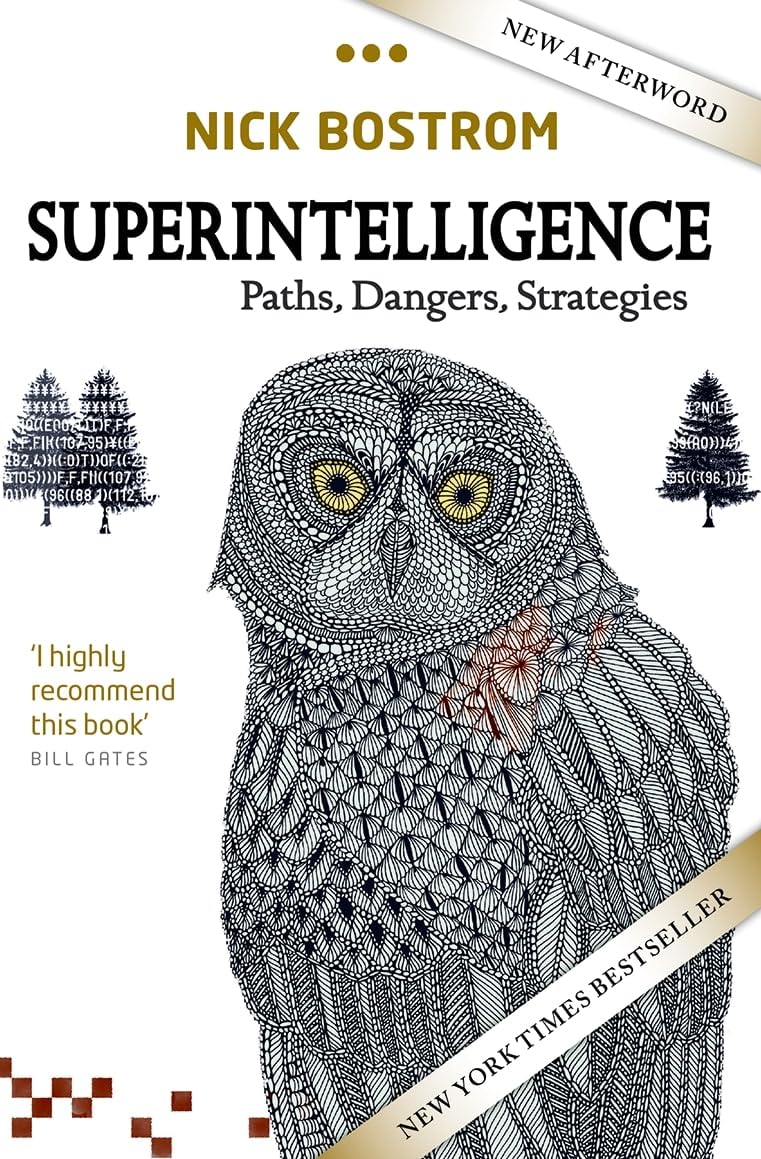
The book that started the existential-risk debate and that half the industry still cites.
As an Amazon Associate, Zendoric earns from qualifying purchases; the price does not change for you. · all our recommended books →
Sources & references
- Family turns to AI to audit $195,000 hospital bill, reducing it to $33,000 after uncovering errors (TechSpot)
- AI vs. AI: Patients deploy bots to battle health insurers that deny care (Stateline / North Carolina Health News)
- Claims Denials and Appeals in ACA Marketplace Plans in 2024 (KFF)
- AI Hallucination Cases Database (Damien Charlotin)
- AI Hallucinations in Court Filings and Orders: A 2025 Review of Sanctions Across the Courts (Sterne Kessler)
- FTC Finalizes Order with DoNotPay That Prohibits Deceptive 'AI Lawyer' Claims (Federal Trade Commission)
- UnitedHealth AI algorithm (nH Predict) allegedly led to Medicare Advantage denials, lawsuit claims (Healthcare Finance News)
- Class Actions Highlight AI-Assisted Payer Denials (Cigna PxDx, UnitedHealth nH Predict) — Thompson Coburn LLP