Talking to the dead now costs $30: digital resurrection, between comfort and grief-as-a-subscription
✨ AI-generated · how it's made
HereAfter AI, StoryFile, Project December and Chinese 'resurrection' services already sell conversations with avatars of the deceased, starting at 199 yuan (about $30). We examine what actually exists, what grief psychology says, and why a chatbot that mimics your father's style does not 'preserve' your father. Our thesis: interactive memory can be valuable; grief on subscription cannot.
🎬 Our Short
📚 Go deeper
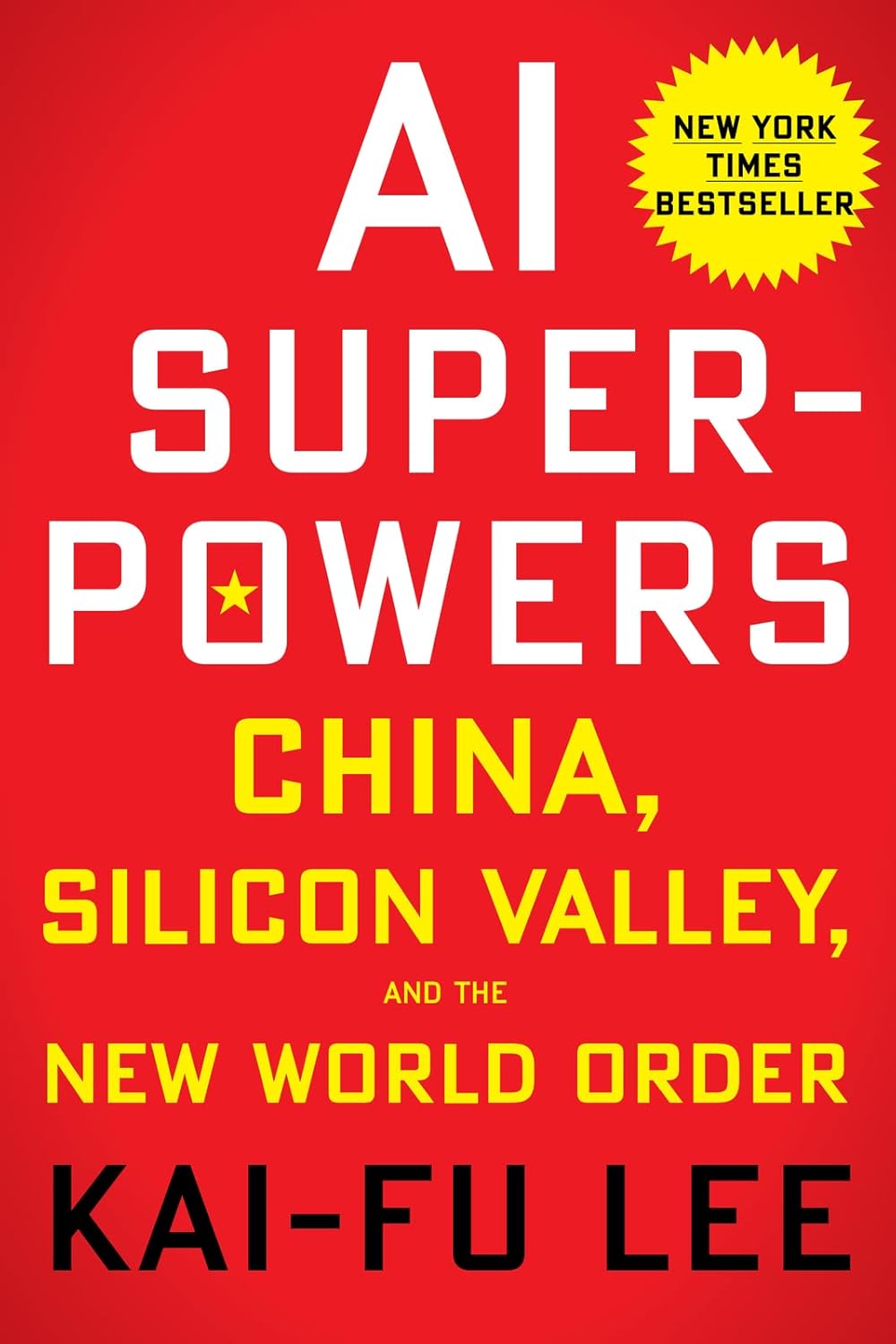
China vs.
As an Amazon Associate, Zendoric earns from qualifying purchases; the price does not change for you. · all our recommended books →
THE THESIS. 'Digital resurrection' is no longer science fiction: it is a market with products, prices and even a bankruptcy. But it sells something it technically cannot deliver. A language model trained on a dead person's messages does not preserve that person: it generates new text that sounds like them. Our thesis is twofold. First: this technology can be valuable as interactive memory — a living archive, augmented oral history — but it is deceptive and potentially harmful when sold as presence, as a way to 'keep talking' to someone who died. Second: the dominant business model, the subscription, creates a structural conflict of interest with the customer's mental health, because the company earns more the less the grief resolves. The rules — consent while alive, transparency, an off switch — must arrive before this sector scales from niche to mass market.
WHAT IS ALREADY FOR SALE. It pays to separate real products from demos. HereAfter AI records a person's stories while they are alive, then lets the family question a voice avatar. StoryFile made interactive video — it was used at funerals — and delivered the industry's first hard lesson: it filed for Chapter 11 bankruptcy protection in 2024 owing about $4.5 million, according to AP. Project December, by programmer Jason Rohrer, is the founding case: in 2020, Canadian Joshua Barbeau paid $5 and used GPT-3 to recreate his fiancée Jessica, who had died eight years earlier; the San Francisco Chronicle told the story in 2021 as 'The Jessica Simulation'. In China the market already operates at scale: Silicon Intelligence offers basic avatars of the deceased from 199 yuan (about $30) using less than a minute of video, and Nanjing-based Super Brain charges 10,000–20,000 yuan ($1,400–$2,800) for a conversational avatar built in about 20 days, according to NPR and MIT Technology Review. Then, in November 2025, came the aesthetic mass-market push: 2Wai, the app co-founded by former Disney actor Calum Worthy, promises a 'HoloAvatar' from just three minutes of footage; its ad — a pregnant woman video-calling her dead mother — drew 22 million views and a wave of revulsion, with direct comparisons to Black Mirror's 'Be Right Back'. Industry projections talk of growth from roughly $22 billion in 2024 to $80 billion by 2034. Treat that as a signal of investor appetite, not as fact.
WHY THAT CHATBOT IS NOT YOUR DEAD. Here is the technical core, and it matters. A large language model (LLM) is a system that predicts the next word from statistical patterns learned across millions of texts. When it is tuned on a deceased person's messages — either by lightly retraining it ('fine-tuning') or by feeding it examples in its instructions ('prompting') — the model learns their style: their verbal tics, their rhythm, their topics. It does not learn the memories that are not in the data. It does not learn their values, what they felt for you, or anything they never wrote down. And when it lacks information, it does what all LLMs do: it invents, fluently. Meredith Ringel Morris (Google DeepMind) and Jed Brubaker (University of Colorado) call these systems 'generative ghosts' for exactly that reason: they generate new content the deceased never said. The honest image is not a recording but an actor improvising from the incomplete script of a life. What these systems preserve is an archive plus an impersonator. There is no continuity of the person: there is a statistical simulation of their verbal surface. Everything else is marketing.
GRIEF, ACCORDING TO THE SCIENCE. Psychology offers two keys. First: since March 2022, the DSM-5-TR (American psychiatry's diagnostic manual) recognizes prolonged grief disorder — grief that remains disabling more than 12 months after the loss; international studies put its prevalence at around 9.8% of bereaved adults. Second: 'continuing bonds' theory, dominant since the 1990s, holds that maintaining a relationship with the deceased is healthy — talking to them, writing letters, visiting the grave — as long as the bond transforms and absorbs the death. That is precisely the deadbot's razor edge: it can be one more ritual, or it can freeze the bond in daily-conversation mode, as if the person had not died. And the evidence? Extremely thin. A qualitative study in Frontiers in Digital Health (2026), with 25 interviewees in China's Guangdong province, found what you would expect: comfort and a sense of connection, alongside fears of dependency and of disrupting natural grieving. Not a single clinical trial shows these avatars help. The Cambridge researchers warn of the inverse pattern: initial relief can turn into an 'overwhelming emotional weight' once the interaction becomes daily.
THE BUSINESS OF ETERNAL GRIEF. The reference study is by Tomasz Hollanek and Katarzyna Nowaczyk-Basińska (University of Cambridge, in the journal Philosophy & Technology, 2024). Their scenarios are uncomfortable because they are plausible with today's technology. A free deadbot funded by putting advertising in the dead person's mouth: the digital grandmother recommending a food-delivery brand. A father who buys 20 years of service, leaving children unable to switch the avatar off: the researchers describe it as being digitally 'stalked' by the dead. Their recommendations: farewell protocols to 'retire' the bot with dignity, the living's right to disconnect, age restrictions, and constant transparency that you are talking to an AI. We add the structural conflict: subscription businesses live off recurring use. Applied to grief, that means the company earns more the more hooked you are on your pain. And there is a second death nobody signs up for: the company's. StoryFile went bankrupt with thousands of 'legacies' on its servers. If your grandfather lives in a startup's cloud, your grandfather has the life expectancy of a startup.
THE DEAD SPEAKING IN PUBLIC. In 2025 the phenomenon jumped from the intimate to the institutional. In May, an Arizona court allowed an avatar of Christopher Pelkey, killed in a 2021 road-rage shooting, to 'deliver' his own victim impact statement; the script was written by his sister — words Pelkey never spoke — and the defendant received 10.5 years. In July, former CNN journalist Jim Acosta 'interviewed' the avatar of Joaquin Oliver, victim of the 2018 Parkland shooting, created by his parents to campaign for gun control; the reaction was largely one of rejection. Both families act from legitimate pain. But the method opens a dangerous door: the dead as spokespeople for the causes of the living, saying what others decide they would have said. And here lies the legal vacuum: almost no country protects post-mortem identity against AI. A person's 'digital estate' — their messages, voice, face — currently sits in the hands of heirs and platforms, with no say from the deceased. The right question is not whether the avatar looks realistic. It is: who is speaking when the dead speak?
OUR READING. In the short term, this is a market with no clinical evidence and no rules, selling presence to people at their most vulnerable. We are not calling for a ban: we are calling for governance. Four minimums: explicit consent from the person while alive, permanent labeling that this is a simulation, an off switch with a farewell protocol, and a ban on advertising and on holding data hostage. In the long term, we keep our measured optimism. Properly framed, this technology is not resurrection: it is memory. StoryFile's origins lie in the USC Shoah Foundation's interactive testimonies of Holocaust survivors, and that is the valuable direction: living archives that future generations can question, always knowing they are talking to an archive. Will we speak with our dead again? No. We will speak with their echo — and an echo can comfort, teach and remember, as long as nobody sells it to us as presence. The AI that will truly confront death is not the one imitating grandfather's voice: it is the one learning to cure the diseases that took him. That is the battle that matters, and on that one, yes, we are optimists.
📚 Go deeper

AI as an extractive industry: the lithium, the energy, the underpaid data-labeling work and the bodies behind the cloud.

The only novel on the list, by a Nobel laureate: an artificial friend observes humans with a blend of lucidity and innocence no essay achieves.
As an Amazon Associate, Zendoric earns from qualifying purchases; the price does not change for you. · all our recommended books →
Sources & references
- Hollanek & Nowaczyk-Basińska — 'Griefbots, Deadbots, Postmortem Avatars' (Univ. de Cambridge / Philosophy & Technology, vía LCFI)
- San Francisco Chronicle — 'The Jessica Simulation: Love and loss in the age of A.I.' (Jason Fagone, 2021)
- AP — 'Mourners can now speak to an AI version of the dead' (quiebra de StoryFile y estado del sector, 2024)
- NPR — 'Chinese companies offer to resurrect deceased loved ones with AI avatars' (Silicon Intelligence, Super Brain, 2024)
- MIT Technology Review — 'Deepfakes of your dead loved ones are a booming Chinese business' (2024)
- Morris & Brubaker — 'Generative Ghosts: Anticipating Benefits and Risks of AI Afterlives' (arXiv, 2024)
- Frontiers in Digital Health — 'Exploring public perceptions of artificial intelligence (griefbots)' (2026)
- Boelen et al. — 'Prolonged grief disorder in DSM-5-TR: early predictors' (prevalencia ~10%, PMC)