The AI World Cup: the algorithms playing 2026 (and why football is still smarter than they are)
✨ AI-generated · how it's made
The 2026 World Cup is the biggest AI showcase in sports history: offside resolved to the centimetre, a ball measured 500 times a second, and an analytics platform for all 48 teams. Our thesis: AI no longer decides matches, it makes the invisible visible and democratizes analysis; but football —chaotic and low-scoring— humbles anyone who mistakes precision for truth. The real challenge isn't the algorithm's power, but who decides where we draw the line.
🎬 Our Short
📺 The full analysis on video (with chapters)
📚 Go deeper

The best starting book if you're not technical: a Wharton professor explains how to work WITH AI — when to delegate, when to supervise, when to keep i
As an Amazon Associate, Zendoric earns from qualifying purchases; the price does not change for you. · all our recommended books →
THESIS. At the USA-Mexico-Canada World Cup being played right now —by July 6 we're already in the knockouts— artificial intelligence has stopped being a lab promise and become match-day infrastructure. But two things the media noise blurs deserve to be separated: the AI that MEASURES (offside, tracking, connected ball) works and adds real value; the AI that PREDICTS the winner still trips over football's chaotic, low-scoring nature. Our reading is that 2026 isn't the World Cup where machines started deciding, but the one where they made the invisible visible and handed out capabilities once reserved for the wealthy. And that the underlying controversy is not technical but human: once you can measure to the millimetre, someone still has to decide where to draw the line.
THE SHOWCASE. FIFA has industrialized what was a novelty in Qatar 2022. Semi-automated offside technology goes from 12 to 16 tracking cameras per stadium, reconstructing each player as a 29-point skeleton captured around 50 times per second, while the official TRIONDA ball carries a sensor logging its motion 500 times per second to pin down the exact moment of a pass. Before the tournament, FIFA scanned all 1,248 players from the 48 squads to build 3D avatars of their real body geometry. The leap that interests us most isn't the pretty TV graphic but two design decisions: precision tightens from ~50 cm to roughly 10 cm, and clear signals now go directly to on-field officials, not just the VAR, to speed up the call. FIFA sells it as 'faster decisions'; measured against Qatar, it's genuine evolution, not marketing.
OUR READING (1): precision is not neutral. Here's the paradox of this World Cup. The very technology that delivers certainty also exposes the absurdity of settling a goal by the width of a toe. The group stage already brought friction: per match reports, a Colombia goal (Davinson Sánchez) was disallowed for a toe-tip offside against Portugal, and a marginal Iran position (Taremi, offside by his back) was reviewed. It's no accident that Arsène Wenger's old proposal —keeping the attacker onside as long as any body part is level, the so-called 'daylight' offside— has resurfaced in the debate these very days. Our stance fits the line we defend elsewhere: the problem isn't the machine's capability, it's the governance of that capability. A system that resolves to the centimetre doesn't fix the fact that the rule, written for the human eye, never imagined the centimetre. The technology is right; the question is what we ask it to decide.
THE NATIONAL TEAMS. The 2026 data point that matters most to us is democratization. FIFA gave all 48 teams the same platform —Football AI Pro, a generative-AI assistant built with Lenovo, trained, its makers say, on over 300 million data points and able to process more than 2,000 metrics (pressing intensity, transitions, defensive shape, set-piece patterns). For years, vendors like Stats Perform sold wealthy federations reports that compressed 200 hours of video into a tactical briefing; now that baseline capability is being shared out. In parallel, Google has signed on as a partner of the Argentine, Brazilian and French federations for performance analysis with Gemini. This connects to a thesis we keep repeating: AI's democratizing force —making capability cheaper and more widely available— is the good news underneath. One caveat: equalizing access to the TOOL doesn't equalize the talent to use it; a coaching staff's judgment —what to ask, what to ignore— remains the scarce edge. As with jobs: AI doesn't replace judgment, it changes which judgment matters.
THE PREDICTIONS. Time for skepticism. Opta's supercomputer made Spain pre-tournament favourites (16.1% across 25,000 simulations), with France, England and Argentina above 10%. As the knockouts unfold, the model has reshuffled: France on top (~18.7%), Argentina second (~16.3%) and Spain slipping to third (~13.5%), with the USA the best-placed host. Did it get it right? Half-right —and that is precisely the lesson. On Towards Data Science, an analyst built 11 models and they crowned FOUR different champions. Models don't foresee the future: they quantify uncertainty and readjust it with every result. Norway toppling Brazil on a 90th-minute Haaland goal, or Argentina surviving 3-2 against Cape Verde in extra time, is exactly the noise no pre-tournament simulation captures. In a sport decided by one or two goals, chance weighs too much. Our editorial rule applies here too: verified data over the headline; a 'supercomputer favourite' is a probability, not a prophecy.
TACTICS AND CLUBS: WHERE THE RESEARCH RUNS AHEAD OF THE WORLD CUP. Away from the tournament, the most serious work happens at clubs. TacticAI, developed by Google DeepMind with Liverpool and published in Nature Communications, learned from 7,176 Premier League corners; club experts preferred its suggestions 90% of the time, to the point of being unable to distinguish them from real routines. An honest and necessary caveat: it remains research, not a fully integrated match-day tool. The next step is already visible: DeepMind has announced work with Palmeiras to build on that foundation and simulate open-play situations, anticipating dynamics up to eight seconds ahead. And it's not just for the giants: Brighton and Brentford have made data a scouting edge for years, and Arsenal's set-piece dominance is the visible proof that fine-grained analysis of dead-ball situations —football's most 'solvable' terrain— is already changing outcomes.
IMPLICATIONS. In the short term, the problems are real and we won't sugar-coat them: over-precision erodes the sense of fairness (millimetric offside), data dependence can homogenize the game, and concentrating the best technology in few hands —FIFA, Google, a handful of vendors— reproduces old power asymmetries even when a common platform is shared. In the long term, we are optimistic but measured: the same computer vision that reconstructs a 29-point skeleton to flag an offside is a close cousin of the one reading an X-ray or a patient's movement; the same geometric learning that arranges a corner arranges protein folding. For AI, football is a bounded lab with clear rules: a perfect testbed for capabilities that later migrate to health, logistics and science. That is the horizon of abundance we defend.
CLOSE. The 2026 World Cup confirms that AI is now an undisputed starter in elite football —but in a very specific role: the assistant that measures, informs and democratizes, not the referee that decides nor the oracle that predicts. The best thing about this tournament isn't that machines play; it's that they force us to decide, as a society and as fans, what we want them to measure and what we'd rather leave to fallible, human, beautiful judgment. That question —not the algorithm's power— is what's truly at stake in this World Cup.
📚 Go deeper
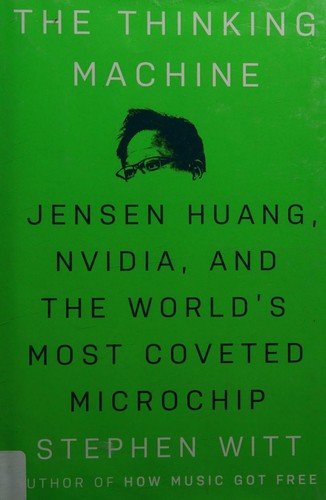
The story of NVIDIA and Jensen Huang: how a video-game card company ended up making the most coveted resource on the planet.
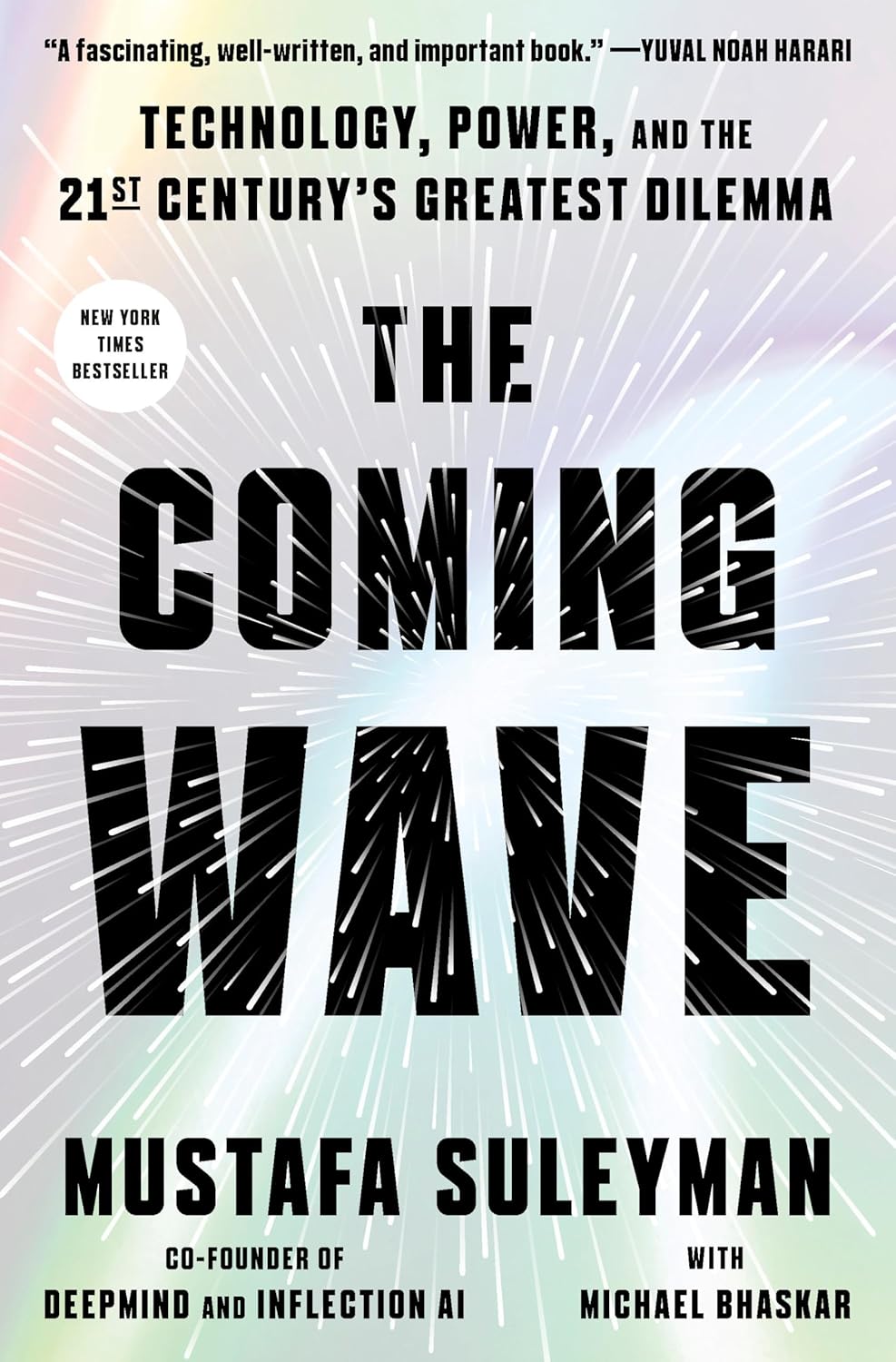
DeepMind co-founder on the dilemma of containing technologies that do not want to be contained.
As an Amazon Associate, Zendoric earns from qualifying purchases; the price does not change for you. · all our recommended books →
Sources & references
- FIFA — Faster offside decisions, referee body cams and more analysis: innovation at the FIFA World Cup 2026
- Al Jazeera — What's new at World Cup 2026? Sensor match ball, AI and player avatars
- Opta Analyst — World Cup 2026 predictions: the Opta supercomputer ahead of the quarter-finals
- Opta Analyst — Who will win the 2026 FIFA World Cup? The Opta supercomputer predictions
- Towards Data Science — I built 11 models to predict the 2026 World Cup. They crown four different champions
- Colombia One — Arsène Wenger's offside proposal back in the spotlight after controversial World Cup VAR call
- Al Jazeera — World Cup 2026: most controversial VAR officiating decisions in the group stage
- SBS News — FIFA World Cup 2026 results: 6 July scores, match reports and highlights