Can a frontier AI lab ever make money? What Anthropic's IPO prospectus reveals about the most expensive business in history
✨ AI-generated · how it's made
We read Anthropic's IPO prospectus on the website of the SEC, the US securities regulator. It shows $33.2 billion in revenue over nine months, a $104 billion accounting loss and $900.9 billion committed to compute. Our conclusion: selling intelligence already nearly pays for itself. The real risk is a compute bill signed in advance through 2045.
🎬 Our Short
📚 Go deeper
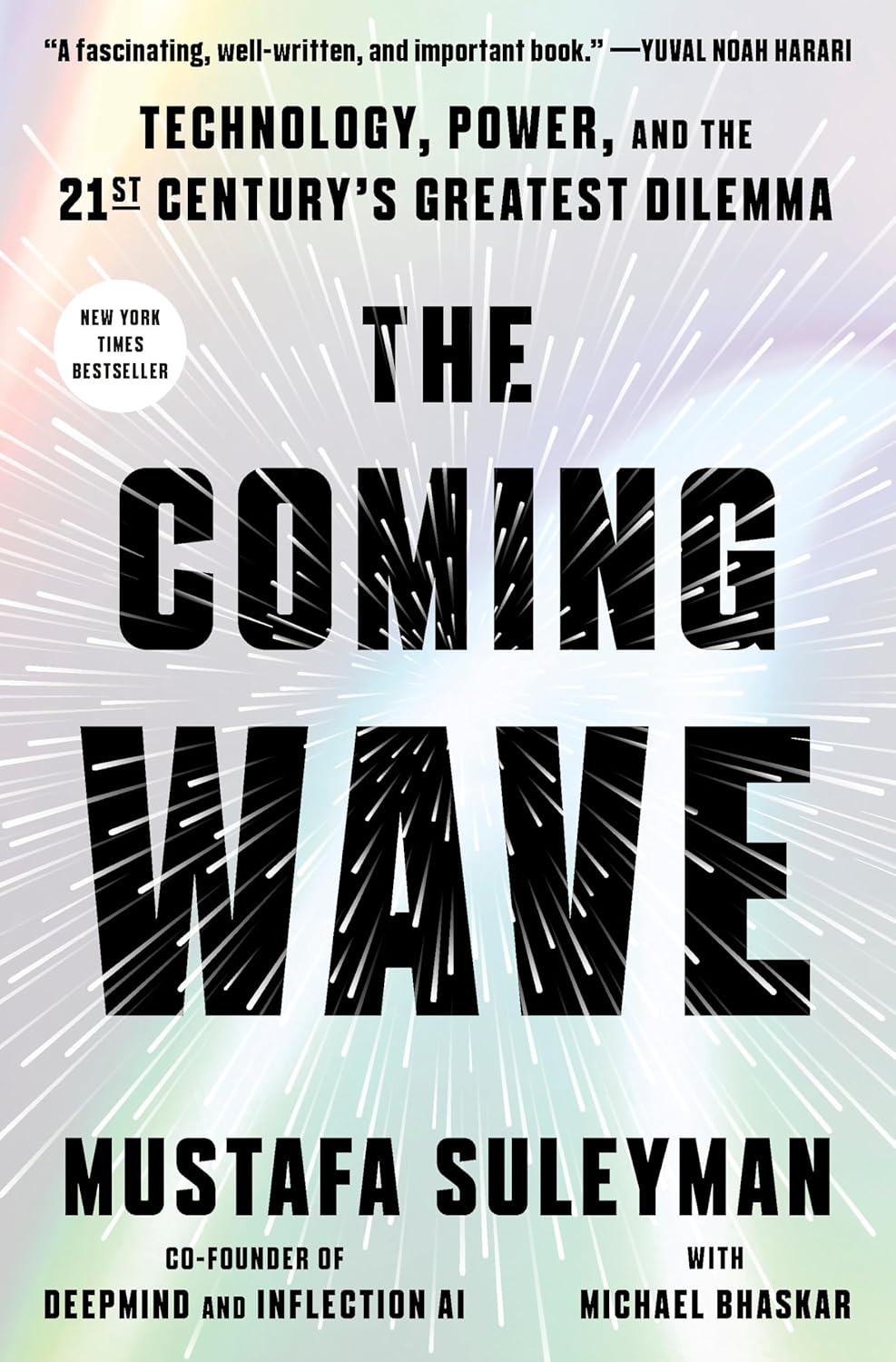
DeepMind co-founder on the dilemma of containing technologies that do not want to be contained.
As an Amazon Associate, Zendoric earns from qualifying purchases; the price does not change for you. · all our recommended books →
THE THESIS. A frontier AI lab can make money. Anthropic's prospectus partly proves it: its operating cash flow is already positive. But the business that makes money is not the one the headlines describe. The loss of more than $100 billion is mostly an accounting entry. The deeper problem is different. Anthropic has committed nearly $901 billion to compute, the data-center capacity where its models are trained and run. And it signed those deals before knowing whether revenue will grow just as fast. Our read: this is neither a scam nor a money-printing machine. It is an infrastructure bet, like the 19th-century railways. That infrastructure will be useful even if some investors lose money.
THE NUMBERS, FROM THE SOURCE. We checked the figures against the second amendment to the prospectus, the S-1/A filed with the SEC on November 10. Revenue for the first nine months of 2026 was $33.242 billion, up from $2.545 billion a year earlier. The third quarter alone brought in $16.956 billion. The net loss for those nine months was $104.039 billion. Of that, $94.324 billion comes from changes in the fair value of convertible notes, derivatives and SAFEs, financing instruments that turn into shares. As the company becomes worth more, that debt is worth more on paper and is booked as a loss. But no cash leaves the company. The operating loss, which measures the actual business, was $1.26 billion over nine months. The second quarter posted a $974 million operating profit; the third swung back to a $567 million loss. Cash from operations was positive at $6.6 billion. Precision matters here. The ‘$100 billion loss’ headlines are technically true, but they mostly describe an accounting effect of the financing, not the business.
THE ECONOMICS OF A MODEL. An AI model has two costs. The first is training it, a huge upfront expense. The second is serving it, meaning the cost of each answer, known as inference. The prospectus does not split them. It groups them in a single line, ‘compute and infrastructure’, which covers research, model development and serving customers. That line totaled $18.808 billion over nine months, 57% of revenue. A year earlier it was 172%. In other words, the company spent almost twice as much on compute as it billed. There is no agreement on the gross margin of inference. CNBC estimated about 85% for the first half, based on a $2.38 billion ‘cost of revenue’. Other analysts, cited by Yahoo Finance, put it at 40-65%. Their argument: Anthropic books sales through the Amazon, Google and Microsoft clouds on a gross basis, which the prospectus confirms. And the filing itself warns that margins will fluctuate. Our read: serving the model is probably already profitable. What eats the margin is training the next one. According to Epoch AI, the cost of training a frontier model grows about 2.4 times a year. That roughly means a tenfold increase every two and a half years. And each model ages within months, as a successor arrives or a rival catches up. It is like a factory that must be torn down and rebuilt, bigger, every year. One more detail: the filing discloses $6.5 billion of compute bought on short-term deals, which costs ‘significantly more’ than multi-year contracts. That extra cost goes a long way toward explaining the third-quarter return to operating losses.
THE MONEY THAT GOES ROUND. This is the most delicate part. Of the $900.9 billion committed, $451.6 billion falls due before 2031 and the rest between 2031 and 2045. In the next twelve months alone, $70.7 billion comes due. Many contracts are ‘take-or-pay’: Anthropic pays for capacity whether or not it uses it. With Amazon, for example, the commitment is at least $110 billion between 2026 and 2036, ‘regardless of actual usage’. Meanwhile, those same suppliers invest in Anthropic. Amazon put in $5 billion in May. And alongside the IPO there will be a $26 billion private placement. Google and Nvidia will each put in about $10 billion, AMD $2.5 billion and Broadcom $1 billion, with Micron, Microsoft and TSMC also taking part. In short, chipmakers and cloud providers are funding a customer that will pay that money back to them, many times over, in purchases. According to Reuters, the company itself acknowledges that relying on a few partners may create conflicts of interest. Then there is stock-based compensation: $3.3 billion over nine months, up from $591 million a year earlier. The IPO will also trigger another $7.5 billion for restricted stock units that only vest upon listing. Our read: this circularity is not fraud, but it does inflate the sense of demand. Anyone measuring the real health of the business should look at revenue from end customers, not cross-investments.
CUSTOMERS AND CODING. The prospectus eases a common fear. No customer accounts for more than 10% of revenue, though the top five make up about 25%. The company stresses that in the third quarter 79% of revenue came from outside those five, up from 64% in the first. Even so, it warns that many of these large customers have no long-term contracts and can stop spending ‘at any time’. The commercial engine is coding. Anthropic presents Claude Code, its agent that writes and reviews software, as the product that best defines autonomous AI work. That is its strength and also its risk. A business so focused on developers depends on a market where prices per token, the unit used to measure the text a model processes, fall fast and Chinese open-weight rivals keep up the pressure. There is also an underreported warning. In August and September the company stepped up detection of customers breaking its usage rules, and it expects this to reduce revenue. It is an honest signal: some of the growth was not sustainable.
RAILWAYS, FIBER AND WHAT COMES NEXT. History offers two mirrors. In Britain's 1840s ‘railway mania’, too much track was built and many investors were ruined. But the country was left with a network that powered its economy for a century. The same happened with late-1990s fiber optics: several carriers went bankrupt and much of the fiber sat unused for years. Later, that cheap fiber made streaming and the cloud possible. The prospectus sets no valuation. At the $74 midpoint share price, Class A and Class N shares alone come to about $970 billion. The $1.5 trillion figure cited by some outlets depends on how other share classes, options and final demand are counted. OpenAI will follow with a similar profile: according to press reports, it lost about $38.5 billion in 2025 and holds hundreds of billions in commitments. There are three implications. In the short term, the risk is real: if demand slows, take-or-pay contracts turn idle capacity into losses, and retail shareholders would carry part of the bill. In the medium term, the price of intelligence will keep falling, and the winner will be whoever serves models most efficiently, not whoever has the biggest one. In the long term, we are optimistic. If too much is built, the surplus compute will make AI cheaper for everyone: for researching diseases, speeding up science and freeing people's working time. Not every investor in this cycle may make money. Society probably will.
OUR FINAL READ. Anthropic already sells intelligence at a profit per unit. What it has not yet shown is that it can pay upfront for the next generation without relying on fresh capital. The number to watch is not the net loss. It is compute spending relative to revenue, quarter by quarter, set against the $70.7 billion due within a year.
📚 Go deeper
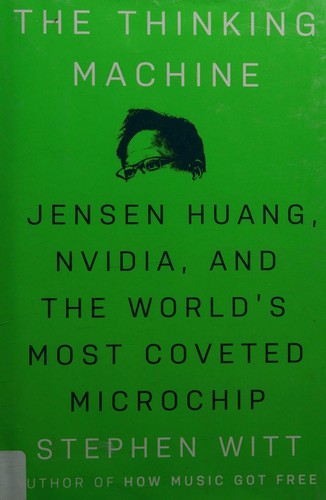
The story of NVIDIA and Jensen Huang: how a video-game card company ended up making the most coveted resource on the planet.

The only novel on the list, by a Nobel laureate: an artificial friend observes humans with a blend of lucidity and innocence no essay achieves.
As an Amazon Associate, Zendoric earns from qualifying purchases; the price does not change for you. · all our recommended books →
Sources & references
- SEC EDGAR — Anthropic, PBC, Form S-1/A (Amendment No. 2, 10 Nov 2026)
- SEC EDGAR — Anthropic, PBC, Form S-1/A (2 Nov 2026), filing index
- CNBC — Anthropic IPO: The big questions its S-1 leaves unanswered
- OfficeChai — Anthropic swings to $567 million operating loss in Q3, discloses $895 billion in commitments
- Yahoo Finance — Anthropic's gross margin rocketed to 85% from 12% in a year, but the S-1 warns it won't last
- Khaleej Times (Reuters) — Anthropic IPO prospectus lays bare deep dependence on Big Tech partners
- FourWeekMBA — Anthropic's top 5 customers make up about 25% of revenue
- Let's Data Science — Anthropic reportedly presses ahead with IPO targeting $1.5 trillion valuation