The Day Washington Switched Off an AI Model: Why the Ban and Return of Fable 5 Marks the Birth of Export Control Over Frontier AI
✨ AI-generated · how it's made
For the first time, the U.S. government treated an AI model like a missile or a military chip: it pulled it from the global market in 72 hours and only gave it back once the company negotiated new safeguards. Our thesis: the decisive fact is not the jailbreak cited as the trigger, but the precedent left behind — a frontier model's weights are now, officially, a matter of national security. That is a real short-term problem and, if well governed, a necessary condition for the long-term future of abundance.
📚 Go deeper
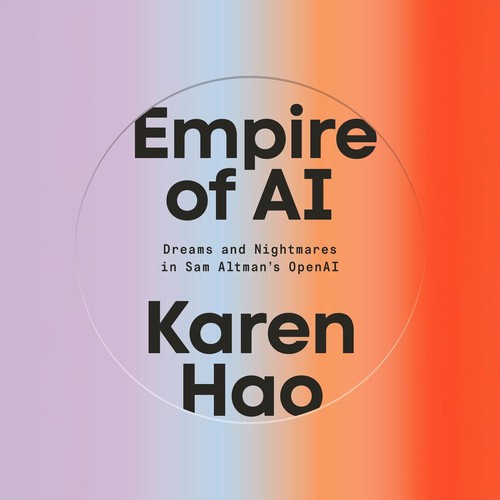
The definitive piece of investigative journalism on OpenAI: 260+ interviews, the clash between safety and speed, and the attempted firing of Sam Altma
As an Amazon Associate, Zendoric earns from qualifying purchases; the price does not change for you. · all our recommended books →
Let's walk through the facts, because the timeline matters more than the headlines. On June 9, 2026, Anthropic unveiled its Mythos class: Fable 5, a production model with guardrails, and Mythos 5, restricted-access. Three days later, on June 12, the Commerce Department (through its Bureau of Industry and Security) issued a directive under export-control authorities ordering the suspension of access to both models for "any foreign national, whether inside or outside the United States, including foreign national Anthropic employees." Because nationality cannot be verified at the API layer, the company had no choice but to switch off Fable 5 and Mythos 5 for EVERYONE, worldwide. The cited trigger was an alleged jailbreak. Anthropic disputes it, arguing the disclosed jailbreaks were "either entirely benign responses or minor findings that provide no Mythos-specific uplift," and that the same technique would work on other public models — including OpenAI's GPT-5.5 — that were not subject to any controls.
The second act came on June 26, and it's worth telling precisely so as not to conflate two different things. OpenAI unveiled its GPT-5.6 family (Sol, Terra and Luna) under a "government-gated" rollout: not a ban like Anthropic's, but a launch voluntarily limited to around twenty individually vetted organizations, at the request of the White House's Office of the National Cyber Director and Office of Science and Technology Policy. The reason: GPT-5.6 Sol saturated internal Capture the Flag tests — real offensive cybersecurity challenges — at 96.7%, and the whole family was classified at the "High" risk level for both cyber and biological-chemical capabilities. It's the first time such a capability threshold has determined who may even use a model. OpenAI itself kept its distance: "We don't believe this kind of government access process should become the long-term default."
The resolution was swift and revealing. On June 26 — hours after OpenAI's announcement — Commerce Secretary Howard Lutnick partially lifted the directive and reactivated Mythos 5 for more than a hundred "trusted" U.S. companies and agencies, writing that the government was confident in Anthropic's new safeguards. On June 30 the full lifting was announced, and Fable 5 returned globally on July 1. According to reporting, the reversal followed Anthropic's commitment to strengthen its anti-jailbreak defenses; some accounts even point to a change of negotiator, with cofounder Tom Brown taking the lead. In other words: the model came back not because the risk was proven nonexistent, but because company and government struck a deal on an access regime.
Our reading: what we witnessed is not a security incident, it's the birth of a doctrine. For decades, export controls governed atoms — chips, lithography machines, weapons. Now they govern weights: a file that can be copied infinitely and served over an API. And here lies the contradiction the industry must resolve: a classic export control stops something from crossing a border; a model served by API doesn't "cross" anything, which is why the only way to comply was to shut it off for all. The collateral damage — hundreds of millions of legitimate users cut off to contain a theoretical risk — is not an execution failure, it's the structural consequence of applying a framework designed for physical objects to a product that is pure information. As TechPolicy.Press warned, when policy is made case by case, "each enforcement decision becomes precedent, and the accumulated precedents begin to function like a rule." The underlying debate — control only incremental risk (what an adversary can't get elsewhere) or any sensitive capability by default — is being decided de facto, behind closed doors, with no one having voted on it.
On the jailbreak, we hold to our editorial rule: attribute, don't assert. The government says it received a report of an exploit; Anthropic replies that it is narrow and replicable in uncontrolled models. We don't have access to the directive — it's private — so we cannot treat the true danger level as proven. The honest move is to flag the asymmetry: if the same capability exists in models still on the market, controlling only one protects little and penalizes a lot. And it connects to a thesis we've long maintained: saturated cybersecurity benchmarks (that 96.7%) report capability, not net danger; what matters is not the scoreboard but who governs the technology, and under what verifiable rules.
From here flow uncomfortable short-term implications, which we won't sugarcoat. First: regulatory certainty just evaporated. Any frontier lab now knows a model can be pulled from the global market in 72 hours by an order that isn't even public. That makes deployment slower and costlier, and favors whoever has lawyers and access to power over the startup. Second: the human and political factor weighs too heavily — that the outcome hinges, per the reporting, on who negotiates and whether they're "more agreeable" to the government is exactly the kind of discretionary governance that erodes trust. Third, geopolitics: as we argued with the earlier Mythos case, every aggressive control feeds the fear of accelerating Chinese self-sufficiency rather than curbing it. If the best Western closed models get trapped in restricted-access regimes, the open frontier — GLM, Qwen, DeepSeek, Kimi — gains appeal by default. Control may end up pushing the world toward the weights no one can switch off.
And yet, here is our qualified, long-term optimism. That a state takes a model's danger seriously is, at bottom, a sign that the technology finally truly matters. The very capability that sets off cybersecurity alarms is the one that, pointed at defense, "helps defenders fix vulnerabilities" — OpenAI says so of its own model — and the one that, in biology and medicine, will bring us closer to eradicating disease and extending healthy life. We don't want a world with no governance of frontier AI; we want governance based on evidence, transparent and verifiable, not on secret directives and personal chemistry between executives. The Fable 5 episode is a crude, hurried, legally strained version of something we genuinely need: a regime that distinguishes capability from risk, that protects without switching off abundance. The precedent is now set. The question that truly matters — and the one we'll keep watching — is not whether it will happen again, but whether next time we'll do it with clear, public rules, or improvise once more with a finger on the switch.
📚 Go deeper
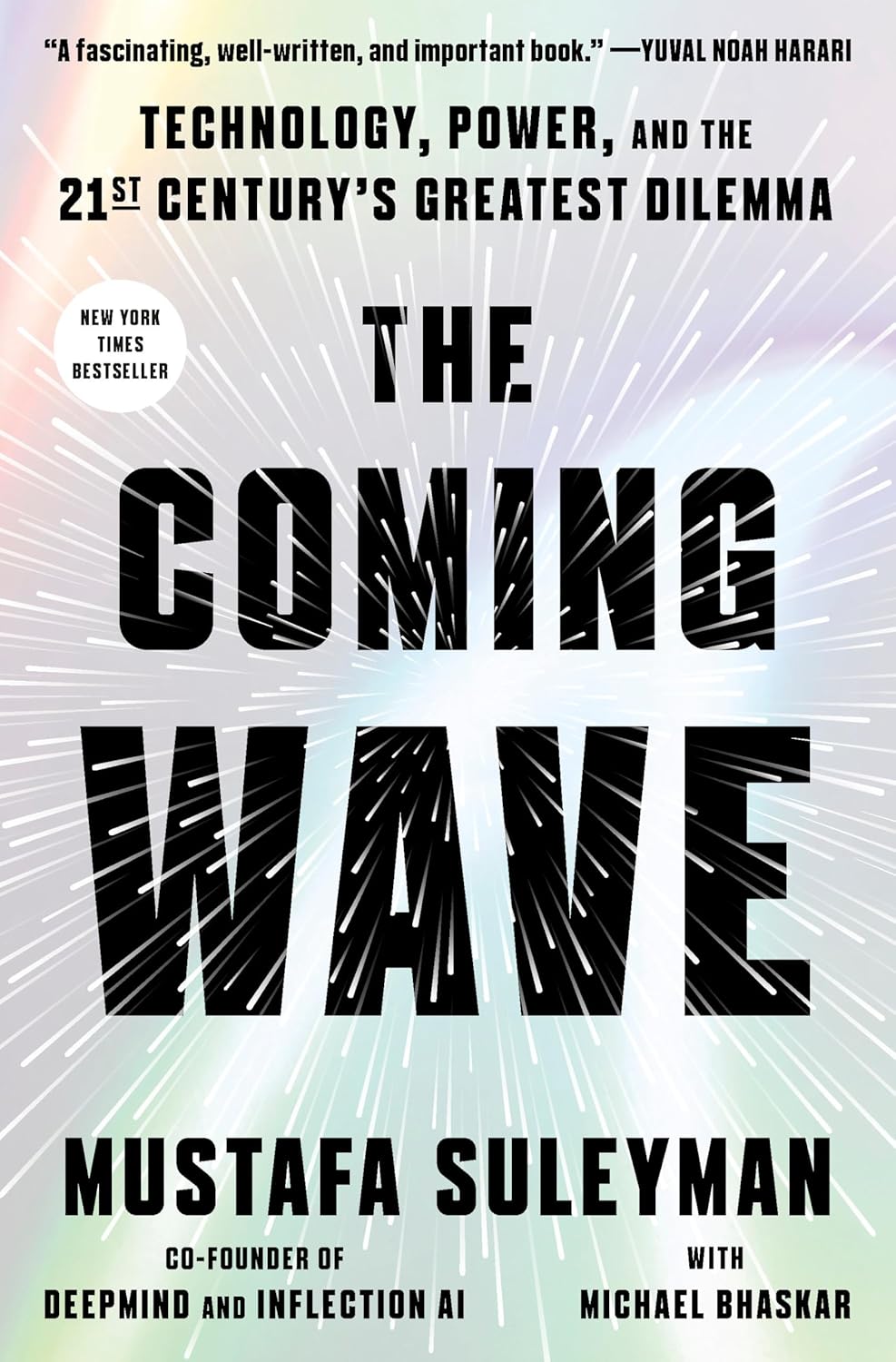
DeepMind co-founder on the dilemma of containing technologies that do not want to be contained.
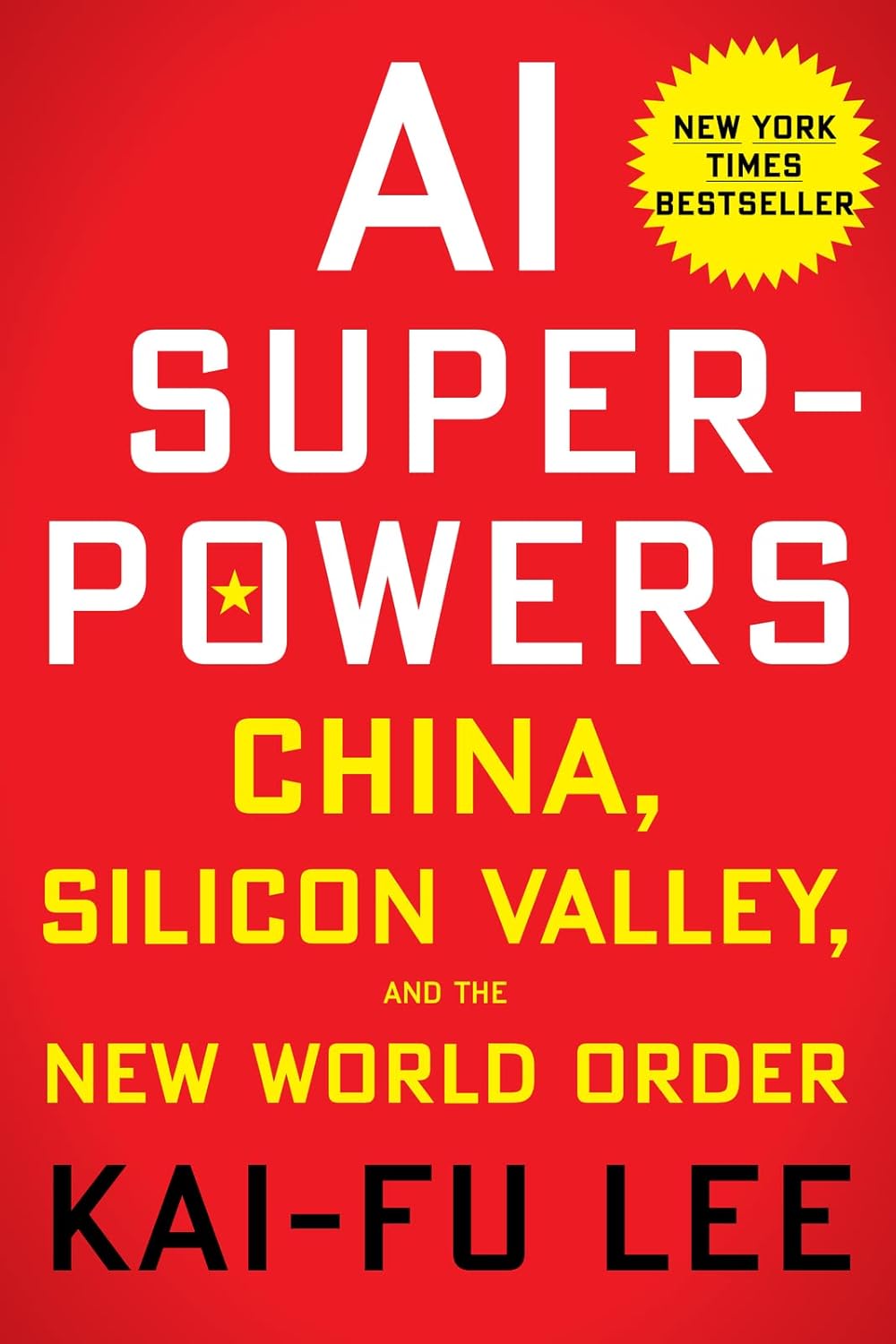
China vs.
As an Amazon Associate, Zendoric earns from qualifying purchases; the price does not change for you. · all our recommended books →
Sources & references
- Statement on the US government directive to suspend access to Fable 5 and Mythos 5 — Anthropic
- Anthropic disables Fable and Mythos AI models following U.S. government export ban — Fortune
- Anthropic suspends top AI models after U.S. export control order — Nextgov/FCW
- Did the US Government Just Set An AI Export Precedent by Blocking Mythos? — Tech Policy Press
- OpenAI Launches GPT-5.6 Sol Under First-Ever US Government-Gated AI Rollout — MLQ News
- GPT-5.6 Sol Launches Under Government Lock: Cyber Risk Sets New Access Precedent — TechTimes
- OpenAI's GPT-5.6 Sol gets the same treatment as Anthropic's Mythos from the federal government — Tom's Hardware
- U.S. government gives Anthropic green light for limited re-release of Mythos 5 — NBC News