AI layoffs weren't strategy, they were haste: half of those companies are already rehiring at a higher cost

🕒 Published on Zendoric: July 17, 2026 · 00:24
Klarna and other companies that boasted of replacing staff with AI are now paying to get them back. The pattern repeats: cut fast, overpromise, underestimate the human element, and spend years rebuilding what was thrown away.
📚 Go deeper

The best starting book if you're not technical: a Wharton professor explains how to work WITH AI — when to delegate, when to supervise, when to keep i
As an Amazon Associate, Zendoric earns from qualifying purchases; the price does not change for you. · all our recommended books →
By Fast Company México · July 16, 2026.
For two years it has worked almost like a script: the company announces layoffs, mentions artificial intelligence, the headline writes itself, and the earnings call goes well. As CNBC reports, that script is falling apart: nearly half of the companies that laid off staff citing replacement by AI are now rehiring, and at a higher cost than if they had never broken up the original workforce. The most cited case is Klarna, which boasted that its chatbot did the work of 700 customer-service agents and would deliver 40 million dollars a year in profit. What came next drew fewer headlines: declining customer satisfaction, public complaints and a quiet rehiring of human agents. The bot managed volume, not nuance or the judgment needed to salvage a bad experience.
Two phenomena that have become blurred in the public narrative need to be separated. One is real: there are tasks —especially administrative and back-office ones— where AI effectively replaces work. The other is narrative: an analysis by Bloomberg suggests that much of the job loss in the United Kingdom attributed to AI actually responded to broader economic factors, and that AI served as an alibi for cuts already decided. It is an important distinction because, if the alibi becomes widespread, it distorts both other companies' investment decisions and the public debate about the technology's real impact on employment. Not every layoff figure "due to AI" measures what it claims to measure.
More interesting than the companies that backtrack is the comparison with those that never made the mistake. Ingka Group, the parent of most Ikea stores, used a chatbot to automate 47% of its customer-service calls. It had on the table the layoff of 8,500 people; instead, it retrained them as interior-design advisers. The result: 1.3 billion euros in revenue in 2024 through that channel, with a forecast of 10% of total revenue by 2028. IBM, after adopting AI aggressively and freezing junior hiring, discovered three to five years later a talent shortage of its own and is now tripling the hiring of Generation Z profiles, redefining their roles rather than eliminating them. Amazon Web Services is heading in the same direction: 11,000 interns and recent graduates hired this year and, according to its CEO Matt Garman, more software developers employed today than two years ago despite far more powerful AI coding tools. The pattern connecting the three cases is the same one this outlet has seen repeated with every wave of automation: technology multiplies what people can do, it does not fundamentally replace the people who know how to do it.
PwC's 2026 Global AI Jobs Barometer, built on more than a billion job postings across six continents, backs that reading with numbers: the 20% of companies with the greatest exposure to AI achieved labor productivity growth of 163% over 2018 —almost five times the average— and, far from cutting staff, increased it by 52%, compared with 36% at organizations that use the technology less intensively. It is a figure worth underscoring because it contradicts the dominant intuition: the companies that make the best use of AI are not the ones that lay off the most, they are the ones that hire the most. The deficit is not in the aggregate volume of employment but in its composition, and there is indeed a real fracture there that should not be downplayed: GMAC's own recruiter survey notes that entry-level positions for Generation Z in technology and manufacturing face a genuine risk of displacement. The response that works, as Ikea and IBM show, is not to avoid automation but to redesign those jobs before eliminating them, something considerably harder to sell in a press release than a layoff headline.
Our reading is that this episode confirms, with concrete names and figures, something we have been arguing about employment and AI: the underlying problem is not that the technology destroys jobs on a net basis, but that it has been easier to sell as an excuse for cost-cutting than to seriously manage the transition of the roles that do change. Jeff Bezos put it at VivaTech with an idea we share: humanity has an almost unlimited capacity to invent things to build, so AI will produce a shortage of skilled labor before a surplus. That is no comfort to anyone who was laid off unnecessarily because of a hasty calculation, and it is important not to downplay that human cost and that real short-term uncertainty. But if Zendoric's underlying thesis is that AI is steering us, with stumbles, toward an economy of abundance where human work concentrates on judgment, relationships and what still eludes machines, this rehiring boomerang is exactly the kind of market correction that was to be expected: the sooner companies stop treating their workforce as an expense line and start treating it as the asset that makes AI useful, the sooner we will leave behind the layoff-headline phase and enter the slower but more solid phase of genuine reinvention of work.
📚 Go deeper
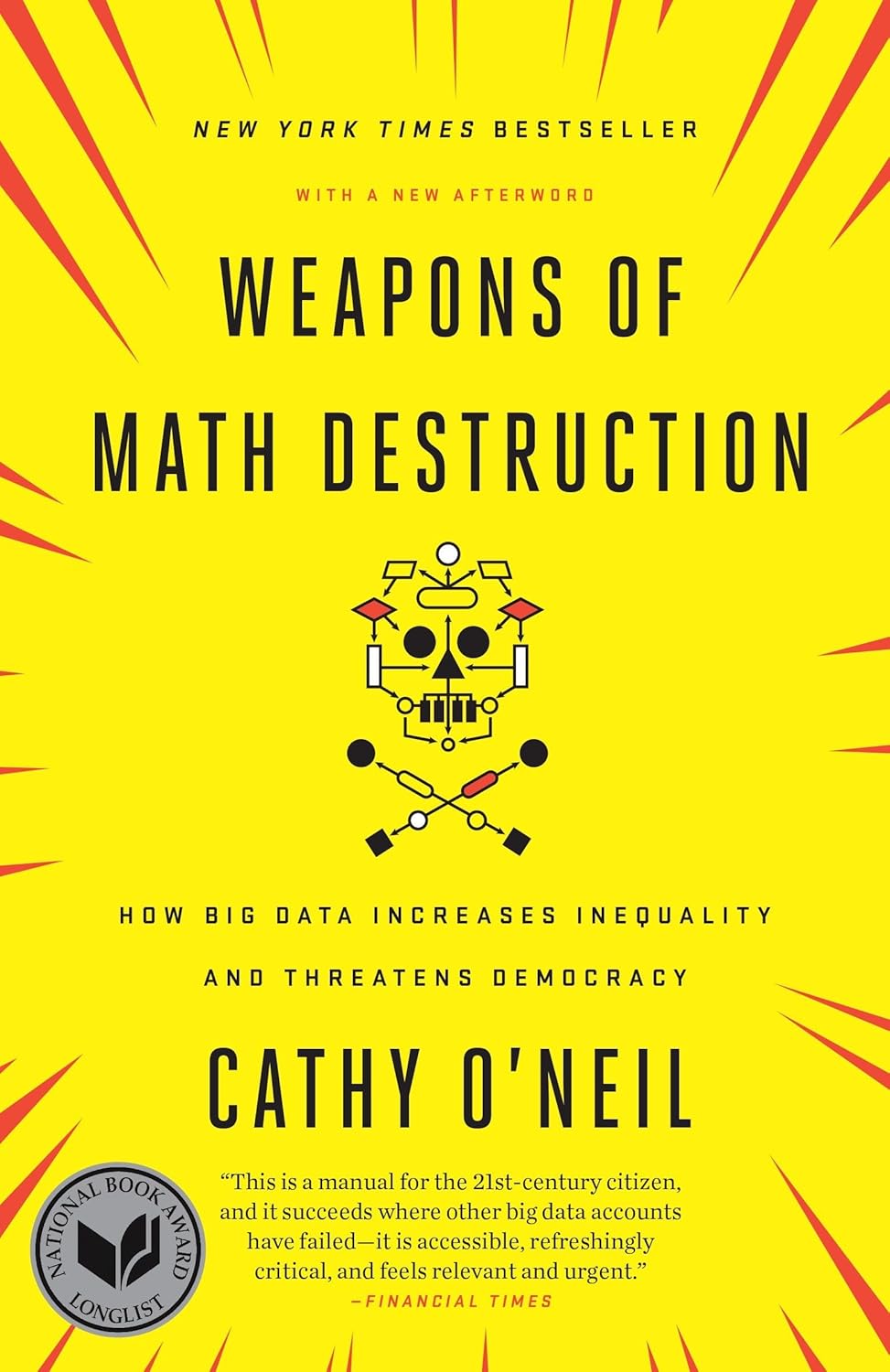
How opaque algorithms decide who gets credit, a job or parole — and why they tend to punish the same people.

The reference manual for building products on top of AI models: prompts, RAG, fine-tuning, agents, evaluation and deployment.
As an Amazon Associate, Zendoric earns from qualifying purchases; the price does not change for you. · all our recommended books →
🔗 Related on Zendoric
- The 'great AI layoff' turns into the 'great rehiring': half of those companies are hiring again · 2026-07-15
- Rehiring after AI layoffs is not a contradiction: it is the sign that workforce cuts moved faster than learning · 2026-06-27
- AI fraud will grow 153% in five years: the arms race companies cannot afford to lose · 2026-06-30