State Street targets $1 billion in savings with AI: custody banking enters its adjustment

🕒 Published on Zendoric: July 17, 2026 · 00:24
✨ AI-generated · how it's made
State Street, one of the world's largest custodian banks, is aiming for $1 billion in benefits by combining AI with internal reorganization. The firm makes no secret that there will be staff cuts in the process.
📚 Go deeper

The best starting book if you're not technical: a Wharton professor explains how to work WITH AI — when to delegate, when to supervise, when to keep i
As an Amazon Associate, Zendoric earns from qualifying purchases; the price does not change for you. · all our recommended books →
By Boston Business Journal · July 16, 2026.
State Street, the asset-custody and financial-services giant headquartered in Boston, has set a target of $1 billion in benefits derived from adopting artificial intelligence and a broader corporate reorganization. The announcement, reported by Business Journals, comes with the explicit warning that layoffs are coming as part of that transformation.
The specific details —exact number of jobs affected, timeline, particular areas— have not been made public with precision in the available information, but the pattern is recognizable: a large financial institution turns AI into a lever for operational efficiency and uses that same process to undertake a restructuring it probably already had in mind before the technology was mature enough to fully justify it.
This fits with what we have been observing in banking and insurance: the adjustment does not hit uniformly. Administrative and back-office profiles —account reconciliation, transaction processing, document support— are the first candidates for automation, while risk-management, regulatory-compliance and data-analysis roles tend to hold steady or even grow, because someone has to oversee and be accountable for what the AI executes. At a custodian bank like State Street, whose core business is processing and safeguarding assets for other institutions, much of the daily operation is precisely the kind of repetitive, structured work that language models and process automation can absorb relatively easily.
Our reading is that this announcement is less a story about miraculous AI and more about cost discipline dressed up as technological innovation: the $1 billion in benefits combines AI savings with reorganization, without breaking down how much corresponds to each lever. It is a pattern we will see repeated in the financial sector over the coming quarters, and it is wise to be skeptical of aggregate figures that mix technology and classic cuts under a single headline attractive to investors.
In the short term, this means a hard transition for employees in operational functions in custody banking, a segment that was already consolidating before generative AI. In the long term, however, automating mechanical tasks in finance is exactly the kind of freeing up of human labor that, well managed, allows talent to be redirected toward higher-value analysis, more sophisticated risk management and institutional client service, tasks that require judgment and not just processing. The challenge is not whether AI replaces this work —it already is— but whether financial institutions and regulators accompany that transition with real redeployment, and not just cuts presented as efficiency.
📚 Go deeper
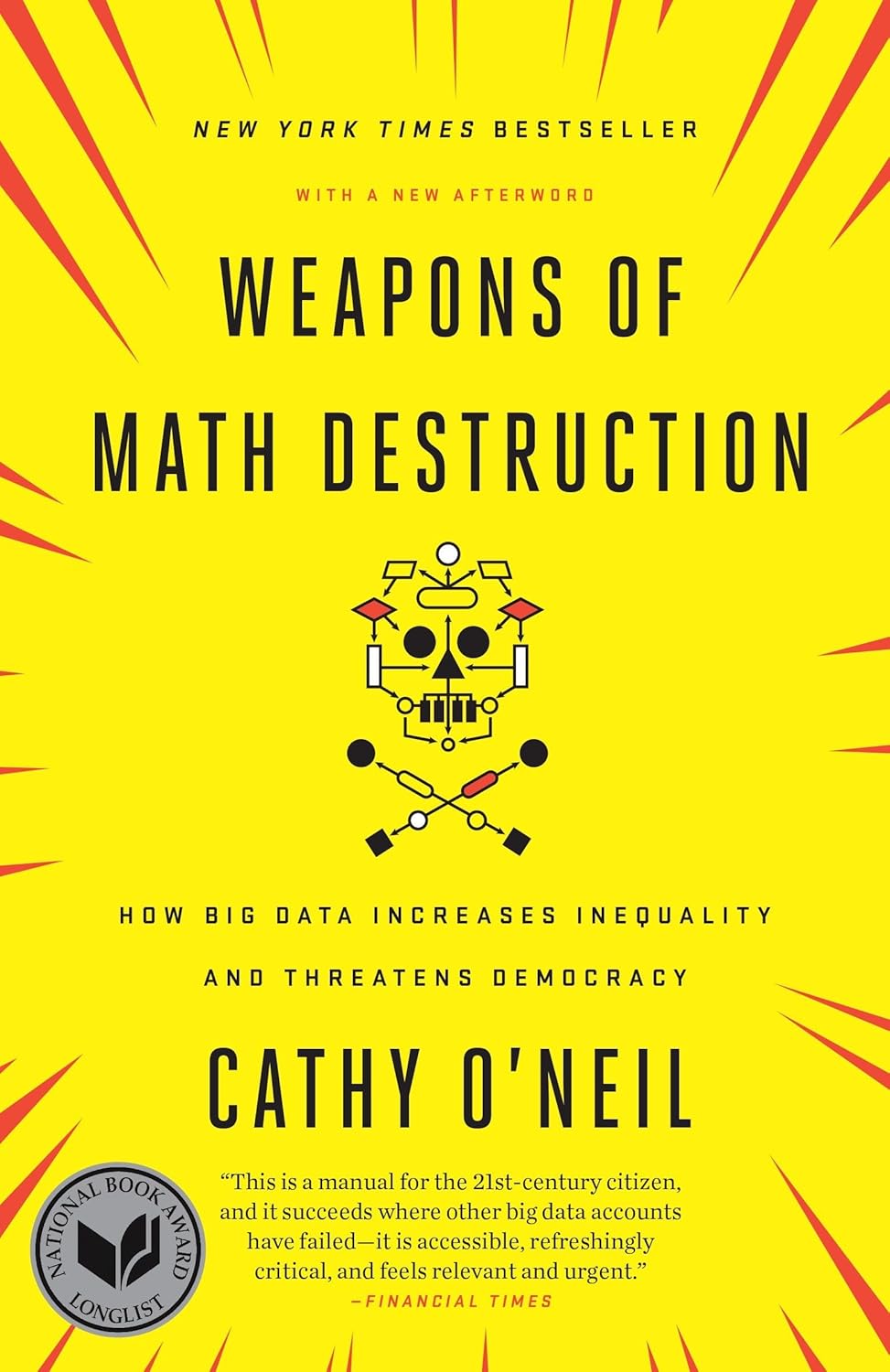
How opaque algorithms decide who gets credit, a job or parole — and why they tend to punish the same people.

The reference manual for building products on top of AI models: prompts, RAG, fine-tuning, agents, evaluation and deployment.
As an Amazon Associate, Zendoric earns from qualifying purchases; the price does not change for you. · all our recommended books →
🔗 Related on Zendoric
- Google DeepMind enters A24 with 75 million: the bet isn't on generating movies, but on the tools that will make them · 2026-06-24
- Anthropic takes AI distillation to the Senate: when copying agentic capabilities becomes a matter of state · 2026-06-26
- African banking now outperforms the global sector: why McKinsey's $100 billion is a signal, not an anecdote · 2026-06-28