Meta assembles the entire AI stack: Spark, Compute and the two faces of Meta

🕒 Published on Zendoric: July 17, 2026 · 00:24
Last Thursday, Mark Zuckerberg posted on X for the first time in three years. That fact alone, the author notes, already says something. The occasion was the launch of Muse Spark 1.1, the second model to come out of Meta Superintelligence Labs and the first Meta model to arrive with a price.
📚 Go deeper

DeepMind co-founder on the dilemma of containing technologies that do not want to be contained.
As an Amazon Associate, Zendoric earns from qualifying purchases; the price does not change for you. · all our recommended books →
By TheSequence.
Last Thursday, Mark Zuckerberg posted on X for the first time in three years. That fact alone, the author notes, already says something. The occasion was the launch of Muse Spark 1.1, the second model to come out of Meta Superintelligence Labs and the first Meta model to arrive with a price tag. The launch included a public API, an aggressive price of $1.25 per million input tokens and $4.25 per million output tokens, an endpoint compatible with OpenAI's format, and closed weights.
The author stresses this last part: the same company that for three years defended open weights as the morally and strategically correct position in AI has just released a proprietary frontier model behind a paid API, and it timed the move to coincide with the CEO's return to social media after a three-year exile.
Spark 1.1 did not arrive alone. Two days earlier, Meta had released Muse Image, its first image-generation model to come out of the new lab. A week before that, reports surfaced that Meta is building a cloud business, internally called Meta Compute, to sell surplus AI infrastructure to outside customers. On top of this comes its own MTIA silicon, which is moving toward production.
Putting the pieces together, the author argues that in roughly eighteen months Meta has gone from being an open-weights research lab with an advertising business attached, to a company assembling the entire vertical stack: chips, data centers, cloud, models, API, apps and devices. Only Google, he notes, has ever had all those pieces at once.
From this arises the article's central question: can Meta really compete with the frontier labs? The author suggests that this is actually two distinct questions disguised as one, and that they have different answers. At the layer where models reach users —the applications and agents layer— Meta could be the favorite. At the layer where models are built, the evidence is scarce and the structural arguments work against Meta. The essay promises to develop both sides of the argument with equal rigor.
Note: the body of the email cuts off just as the detailed analysis begins ("The launch, read closely..."), and the rest of the article remains behind Substack's paywall, so this summary is limited to the facts and arguments included in the fragment received.
📚 Go deeper
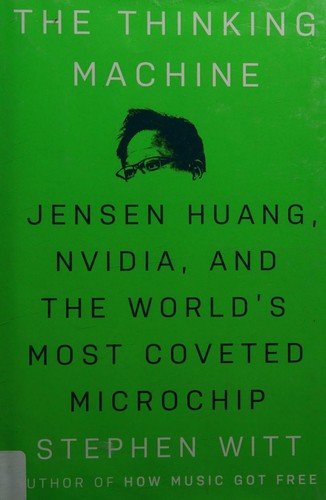
The story of NVIDIA and Jensen Huang: how a video-game card company ended up making the most coveted resource on the planet.
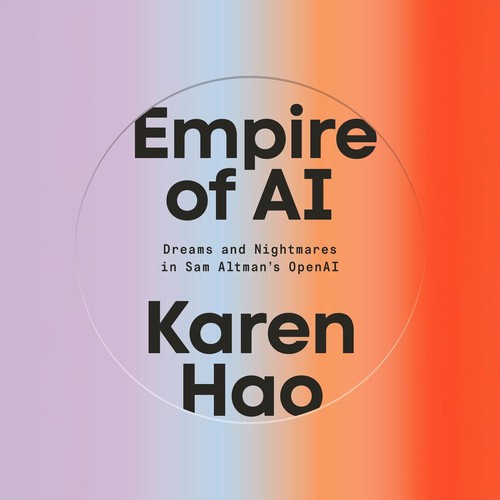
The definitive piece of investigative journalism on OpenAI: 260+ interviews, the clash between safety and speed, and the attempted firing of Sam Altma
As an Amazon Associate, Zendoric earns from qualifying purchases; the price does not change for you. · all our recommended books →
🔗 Related on Zendoric
- Meta buys time: an agentic coding model and its own chips ease fears over AI spending · 2026-07-10
- Meta and Qualcomm seal an alliance that moves mobile energy efficiency to the heart of the AI data center · 2026-06-25
- Breast cancer leaves traces six years earlier: AI can already see them, and that forces a rethink of the entire screening process · 2026-06-28