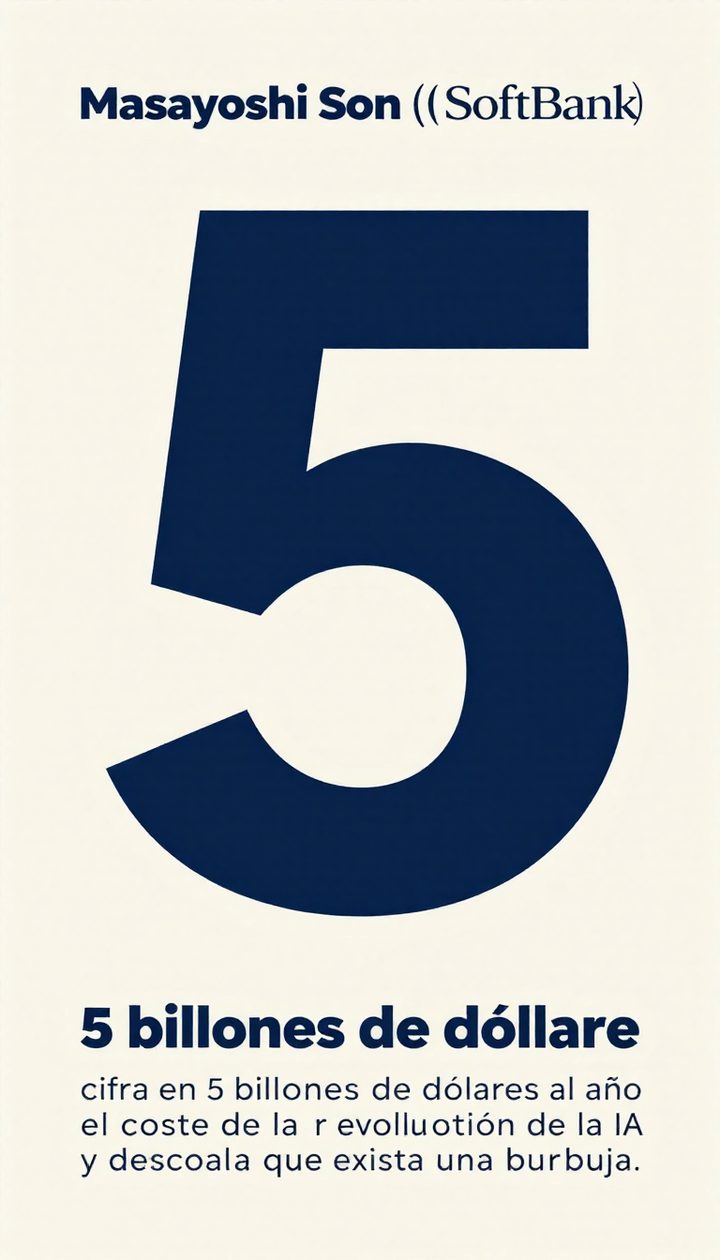
Masayoshi Son (SoftBank) puts the cost of the AI revolution at $5 trillion a year and dismisses talk of a bubble
🕒 Published on Zendoric: July 17, 2026 · 00:24
Masayoshi Son, founder and largest shareholder of SoftBank, has once again vehemently defended his bet on artificial intelligence during the company's annual corporate conference in Tokyo.
📚 Go deeper
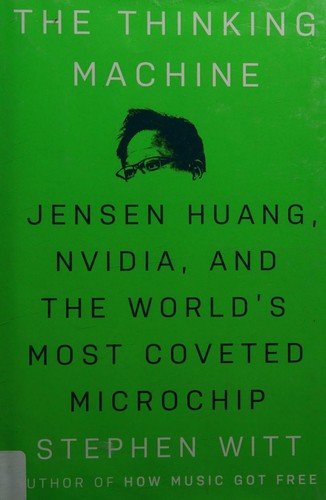
The story of NVIDIA and Jensen Huang: how a video-game card company ended up making the most coveted resource on the planet.
As an Amazon Associate, Zendoric earns from qualifying purchases; the price does not change for you. · all our recommended books →
Masayoshi Son, founder and largest shareholder of SoftBank, has once again forcefully defended his bet on artificial intelligence during the company's annual corporate conference in Tokyo. By his own figures, developing and deploying AI for society as a whole will cost $5 trillion per year (some ¥800 trillion) through the year 2040. Son declared himself 'confident' that this figure reflects the real cost of the technological revolution, though he did not specify exactly where that money would come from.
His reasoning starts from a highly optimistic premise: if AI-related revenues come to represent 20% of global GDP by 2040, then spending $5 trillion a year to get there would end up being, in his words, 'a rounding error.' Asked directly whether there is an AI bubble, Son was blunt: he called the question an 'absurd proposition' and stated that those who raise it simply 'don't understand what AI is about.'
The original article, published on TechSpot, recalls SoftBank's track record as a high-risk investor: the company made very shrewd bets in the past, such as the early investment in Chinese giant Alibaba or the introduction of the iPhone into the Japanese market, but it also starred in resounding failures, such as the case of WeWork, the shared-office-space company that SoftBank came to value at $47 billion in 2019 and that years later filed for bankruptcy. SoftBank has invested heavily in OpenAI and in other AI-related 'unicorns,' and Son had previously predicted that the first artificial general intelligence (AGI) would arrive in 2030.
The text contrasts this optimism with several warning signs circulating in the economic and technology press: analysts at Deutsche Bank have reportedly noted that the current AI boom might, at this moment, be the only thing preventing the U.S. economy from entering a recession. In addition, several surveys cited in the article suggest that many executives (CEOs) privately acknowledge that they believe an AI bubble exists, yet still continue investing for fear of being left behind (what the article describes as 'FOMO' mode). Added to this is that nearly half of the data center projects planned for 2026 in the United States would not be completed on the anticipated schedule, amid a context of growing geopolitical tensions in the Middle East that add further uncertainty.
Despite all this, Son remained unfazed. The SoftBank executive estimates that AI data centers will need 3 terawatts of electricity generation by 2040, a figure that would nearly double the current total electricity consumption of the entire world. To meet that demand, Son points to gas as the main energy source in the short term, while in the long term he trusts that nuclear fusion (not traditional nuclear power) will become the cheapest and cleanest alternative. Asked whether space-based solar power, the proposal championed by Elon Musk, could be the solution, Son responded that both technologies could have a role, but that terrestrial nuclear fusion would end up being the most practical option.
As for the longer-term horizon, Son projects that over the next fifteen years AI agents will be the ones making decisions, reaching some 100 trillion agents by 2040. In his own words, quoted in the article: 'We will go from a human-centered world to an agent-centered world. The era in which humans are the highest form of life on Earth will come to an end. For better or worse, it is going to happen, and it cannot be stopped.'
The article, written by Alfonso Maruccia and published on July 14, 2026 on TechSpot, provides no further details on the specific financing of that $5 trillion in annual spending, nor on how it would be split between SoftBank and other players in the sector. Nor does it delve into additional figures on the executive surveys or into concrete details of the data center projects mentioned, so these claims should be taken as general references reported by the outlet itself, not as independently verified data in this summary.
📚 Go deeper
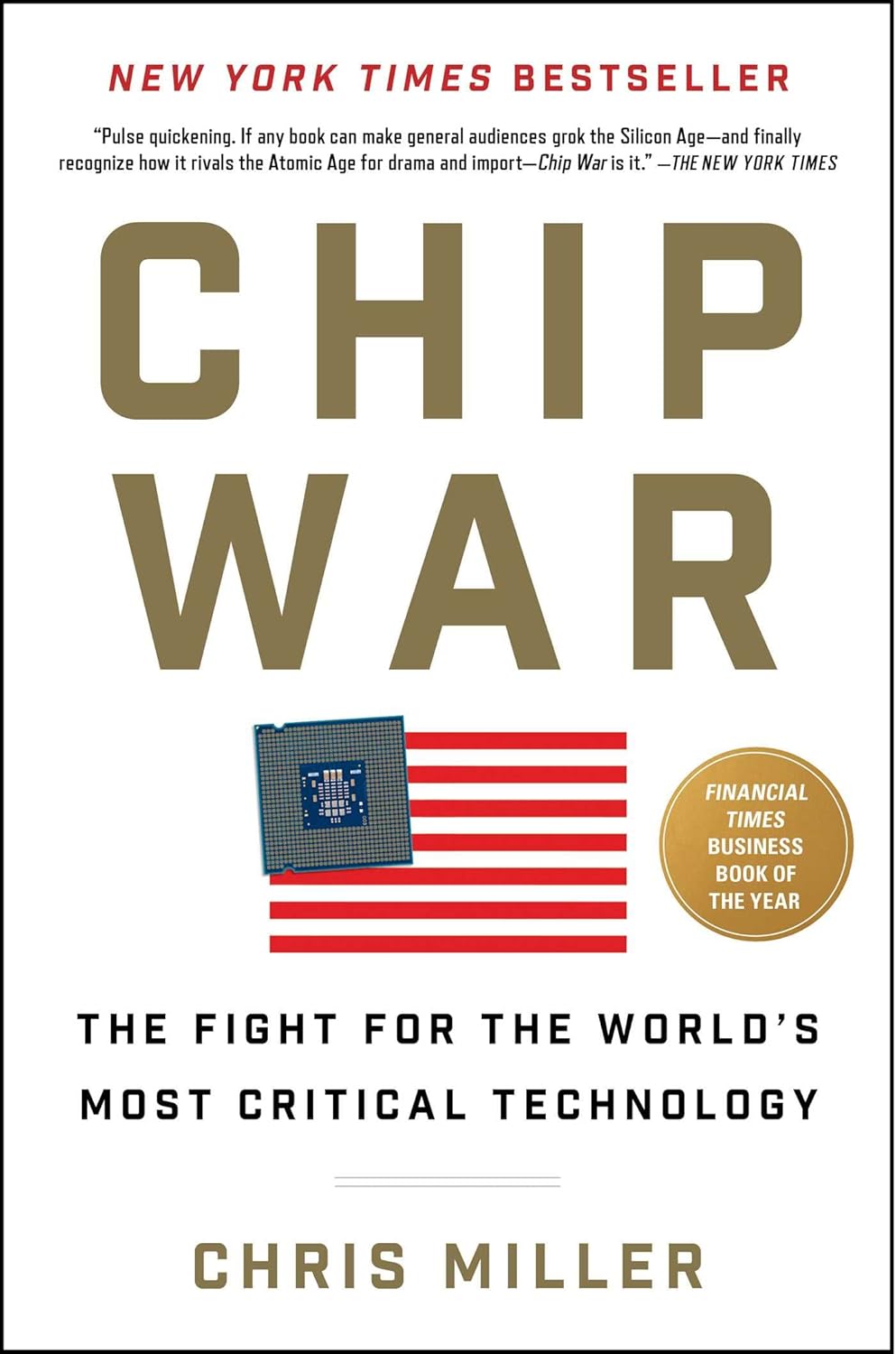
Semiconductors as the oil of the 21st century: history, espionage, and why an island of 23 million people underpins the entire AI economy.
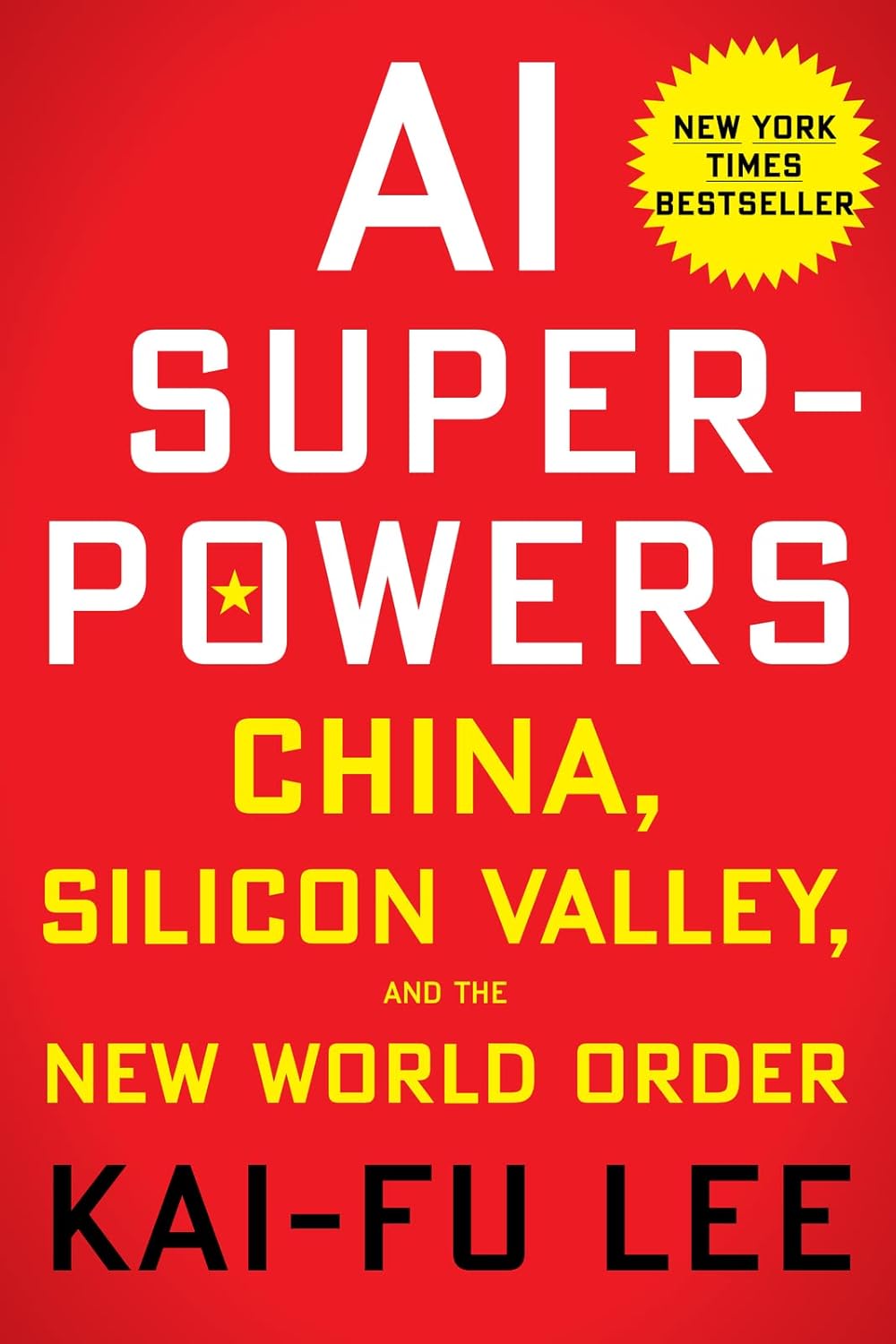
China vs.
As an Amazon Associate, Zendoric earns from qualifying purchases; the price does not change for you. · all our recommended books →
🔗 Related on Zendoric
- False positive: this 'AGI' isn't superintelligence, it's a Canadian silo maker · 2026-07-14
- SoftBank bets its future on superintelligence: Son turns record profits into ammunition to dominate the AI era · 2026-06-25
- Cheap intelligence is useless if your context is trapped: GLM-5.2 vs. Claude Tag · 2026-06-29