When an agent signs a commit or moves funds, who can prove it did only what was authorized?

🕒 Published on Zendoric: July 17, 2026 · 00:24
A new technical framework, CAVA, proposes translating the tangle of logs from different agentic AI environments into a single, verifiable format. It's a small but telling building block: the race is no longer just for more capable agents, but for being able to prove what they did and with what permission.
📚 Go deeper
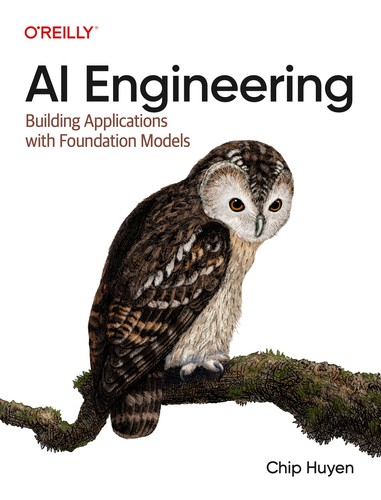
The reference manual for building products on top of AI models: prompts, RAG, fine-tuning, agents, evaluation and deployment.
As an Amazon Associate, Zendoric earns from qualifying purchases; the price does not change for you. · all our recommended books →
By StartupHub.ai · July 16, 2026.
The fact, stripped of its technical wrapping, is simple: as AI agents operate across different environments —a local coding hook, a corporate API gateway, an internal approval flow—, each of those environments logs the same action (publishing code, moving funds, approving a change) in a different and mutually incompatible way. That means that, if something goes wrong or you simply need to audit what happened, reconstructing which action was actually approved, who executed it and whether the record matches reality becomes difficult or impossible. A technical paper introduces CAVA (Canonical Action Verification and Attestation), a "runtime semantics" layer designed to translate that heterogeneous activity into a canonical, stable format: standardized action objects on which higher-level governance frameworks, such as the so-called PCAA (Proof-Carrying Agent Actions), can actually operate. The work formalizes concepts such as the canonical identity of an action, semantic pattern detection to distinguish subtle behaviors, robust binding mechanisms between an action and its approval, integrity of execution receipts and portable projections across different execution environments. According to the material itself, it was evaluated with a test bench of 96 seeds and 384 variants, covering everything from detecting "wrapping" attempts to evade controls to deployment tests in environments such as Azure.
It is worth being precise about what we have in front of us: the material contains no institution, no authors, and no identifiable company behind CAVA beyond the outlet that publishes it, and there is no sign of real adoption by any agentic infrastructure provider. It is, at best, a research proposal with its own empirical validation, not an industry standard. That said, the problem it describes is real and increasingly urgent, and that is where the interest of the piece lies beyond its specific acronyms.
The reason this matters is that agentic AI is migrating from demos to systems that touch money, production code and decisions with legal consequences. When an agent merely drafted an email, a sloppy log was an inconvenience. When an agent can merge a pull request or initiate a transfer, traceability stops being hygiene and becomes the enabling condition for any regulated company to dare to delegate real autonomy to it. We have already seen this tension in the financial arena, where 'vibe coding' shifts the risk from technical capability to quality control and regulatory traceability: the same logic appears here, but at the infrastructure layer that is supposed to underpin that control. It is no coincidence that the text itself places this piece "beneath" flashier governance frameworks: it is the invisible plumber on which whether the promises of auditing and compliance amount to more than a checked box in a compliance PDF depends.
Our reading is that this kind of work —obscure, low-profile, with no lab names behind it— is exactly the kind of infrastructure that decides who wins the next phase of the agentic race. We have already argued that the contest between giants has shifted from "who has the smartest model" to "who controls the plumbing" through which the agents run: verifiable action standards, receipt formats and approval protocols are precisely that plumbing. If something like CAVA —or its equivalent adopted by a heavyweight player, be it a cloud, a model provider or a governance consortium— ends up establishing itself as the standard layer, whoever controls it will have a governance lever over the entire agentic ecosystem, not unlike the one that identity or payment standards exert today. In the short term, this solves nothing on its own: there is still the question of who defines the policies, who audits the auditor and what happens when the verification mechanism itself fails or is manipulated. But it is exactly the kind of low-profile work that, added up over the coming years, will let us delegate increasingly consequential tasks to agents without losing the ability to account for what they did. Without that verifiable traceability, the promise of an AI that frees up human time by managing money, code and paperwork on our behalf remains a leap of faith; with it, it begins to look like an infrastructure to rely on.
📚 Go deeper
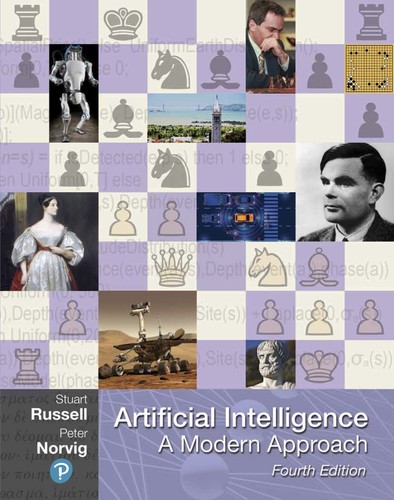
THE AI textbook: used by 1,500+ universities.

The academic "bible" of deep learning, with a Turing Award winner among its authors, and legally free on the web.
As an Amazon Associate, Zendoric earns from qualifying purchases; the price does not change for you. · all our recommended books →
🔗 Related on Zendoric
- OpenClaw comes to mobile: open-source AI agents land in everyone's pocket · 2026-07-01
- The figure that matters from Expo B2B Tech Asia isn't agentic AI: it's that you no longer need to code to deploy it · 2026-07-13
- Google fuses perception and action in Gemini 3.5 Flash: the agent that watches the screen is no longer a separate model · 2026-06-26