Voice deepfakes and MFA fatigue at 3 AM: how the election campaign has become AI's new front

🕒 Published on Zendoric: July 17, 2026 · 00:24
It's no longer enough to protect the campaign's official inbox: attackers clone the candidate's voice to request urgent transfers and bombard staff with MFA notifications at 3 in the morning until an exhausted volunteer hits 'approve'. Election security is entering a phase where the weak link is no longer the server, but the exhausted human being.
📚 Go deeper
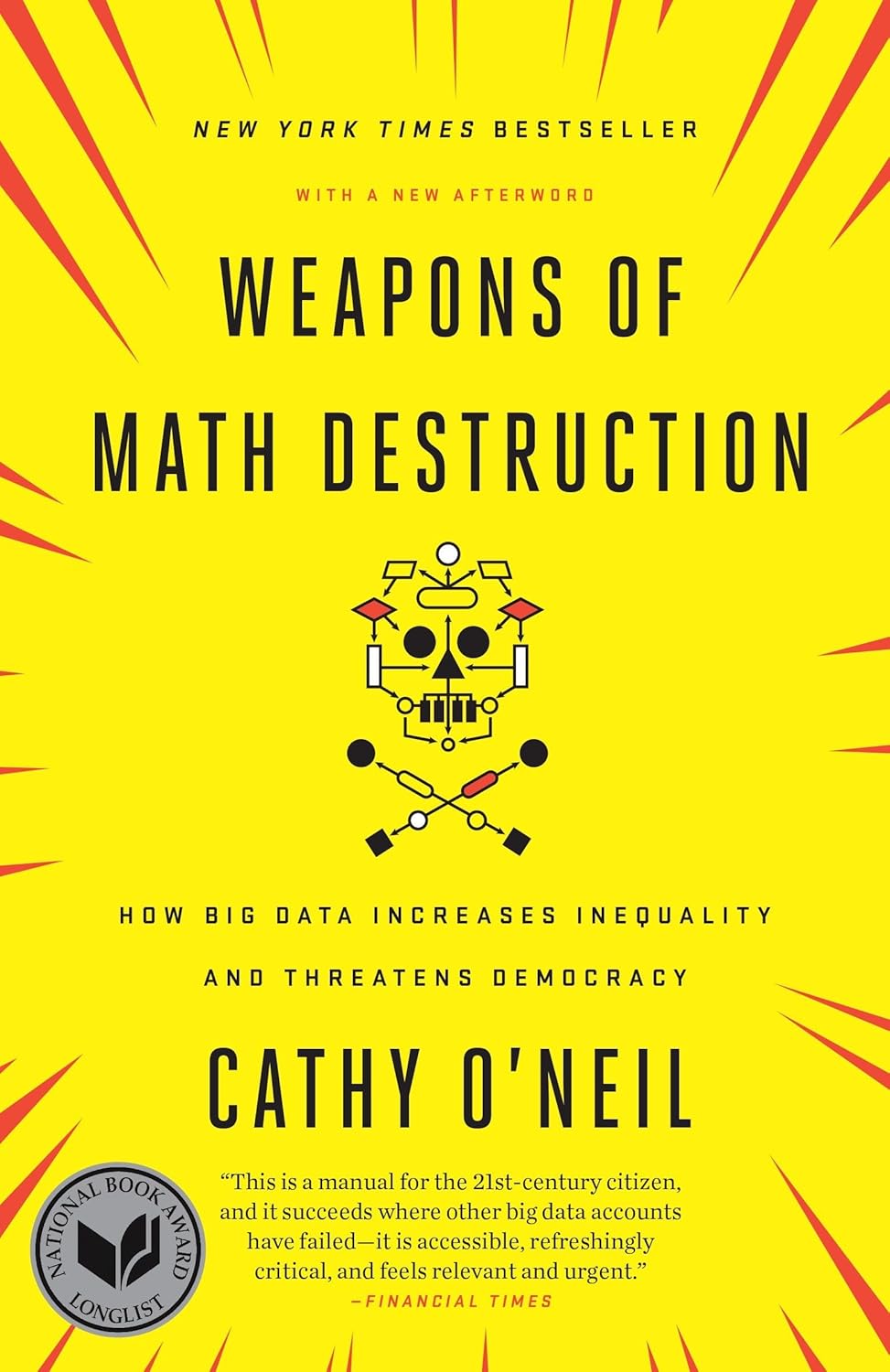
How opaque algorithms decide who gets credit, a job or parole — and why they tend to punish the same people.
As an Amazon Associate, Zendoric earns from qualifying purchases; the price does not change for you. · all our recommended books →
By Security Boulevard (Doppel Blog) · July 16, 2026.
The article, written by Ines Marjanovic and originally published on the Doppel blog (a digital risk protection company), describes in detail a phenomenon that deserves attention beyond the obvious commercial interest of the person telling it: U.S. political campaigns have become a top target for AI-assisted fraud. The piece documents three specific techniques in use during the 2026 election cycle. The first is voice-cloned vishing: attackers take public audio from a speech or debate, process it with voice-cloning software and call a field organizer in the early morning hours pretending to be the candidate or campaign chief to demand access to a database or an urgent transfer for a 'last-minute ad buy.' The second is 'push bombing': flooding an employee's phone with dozens of multi-factor authentication requests at 3 a.m., betting that fatigue will make them hit 'approve' just to make the phone stop vibrating. The third is the exploitation of spoofed domains and donation sites, cloning platforms like WinRed or ActBlue to divert fundraising money.
The facts fit with something we already know from the constant drip of recent months: voice cloning and MFA-fatigue attacks are not laboratory theory, they are the standard toolkit of targeted fraud in 2026. What is distinctive about election campaigns is that they combine exactly the ingredients social fraud needs to work: high volunteer turnover, express onboarding with no security training, impossible deadlines and exhausted staff. It is, literally, an experimental design to maximize the success of social engineering. The article recommends reasonable and well-established technical measures —MFA with number matching or physical FIDO2 security keys instead of a simple 'approve/deny'— and advocates the use of digital risk protection tools that continuously track impostor domains and fake profiles on social media, in contrast to the old model of manually reporting each fraudulent profile through slow forms.
It is worth being honest about the nature of the text: it is branded content from a cybersecurity vendor (Doppel) that sells exactly the solution it describes as necessary, later syndicated by a specialized outlet. That does not invalidate the technical facts —voice cloning, MFA fatigue and lookalike domain fraud are widely documented by independent security analysts—, but it does call for reading the 'old vs. new' comparisons and the sales pitch with more critical distance. The table contrasting manual reporting of fake profiles against automatic detection 'at machine speed' is, at bottom, a legitimate but self-interested sales argument: it should be checked against the real effectiveness reported by third parties before buying it, exactly as we recommend doing with any model performance benchmark.
There is, however, a genuinely interesting point that transcends the sales pitch: the piece itself acknowledges that generative AI is, at once, the attacker's weapon and the campaign's operational survival tool. A tiny communications team today uses language models to draft press releases and rapid responses to a rival's slip-up in minutes rather than hours. The industry's own recommendation —'AI for speed, humans for sovereignty,' with a senior official as the last sign-off before anything is published— is sensible and generalizable far beyond politics: it is the same principle of non-delegable human oversight we advocate for any agentic deployment in a regulated or sensitive environment. The difference between a campaign that gains time with well-governed AI and one that exposes itself to a catastrophic headline because an agent published without review is, in essence, a governance problem, not a technological capability one.
Our underlying reading is this: the 2026 election cycle confirms that digital security no longer protects only infrastructure, it also protects the credibility of the human voice as proof of identity. When anyone with enough public audio can be convincingly cloned, voice authentication ceases to be a guarantee and the standard shifts toward out-of-band verification protocols —an agreed-upon code, a callback to a known number, a physical key— exactly the kind of friction we spent years trying to eliminate for convenience. It is a real transition cost and it should not be minimized: small, poorly funded campaigns staffed by volunteers are structurally the most vulnerable, and not all of them will be able to afford a subscription to a digital risk protection platform. But it is also a sign that the defensive ecosystem is maturing at the same pace as the offensive one: the same AI capabilities that make it possible to clone a voice also make it possible to map the open web in real time and take down a fraudulent domain in minutes rather than weeks. That is, in miniature, the pattern we expect to see repeat across more domains as AI is democratized: the attack scales first because it is cheaper to automate, the defense follows close behind because it too gets automated, and the terrain stabilizes at a new equilibrium with more friction for the attacker than today. The lesson for any small, exposed organization —not just campaigns— is that basic hygiene (number matching, physical keys, out-of-band verification) remains the cheapest and most effective defense against an enemy that, for now, still needs a tired human to make a mistake.
📚 Go deeper
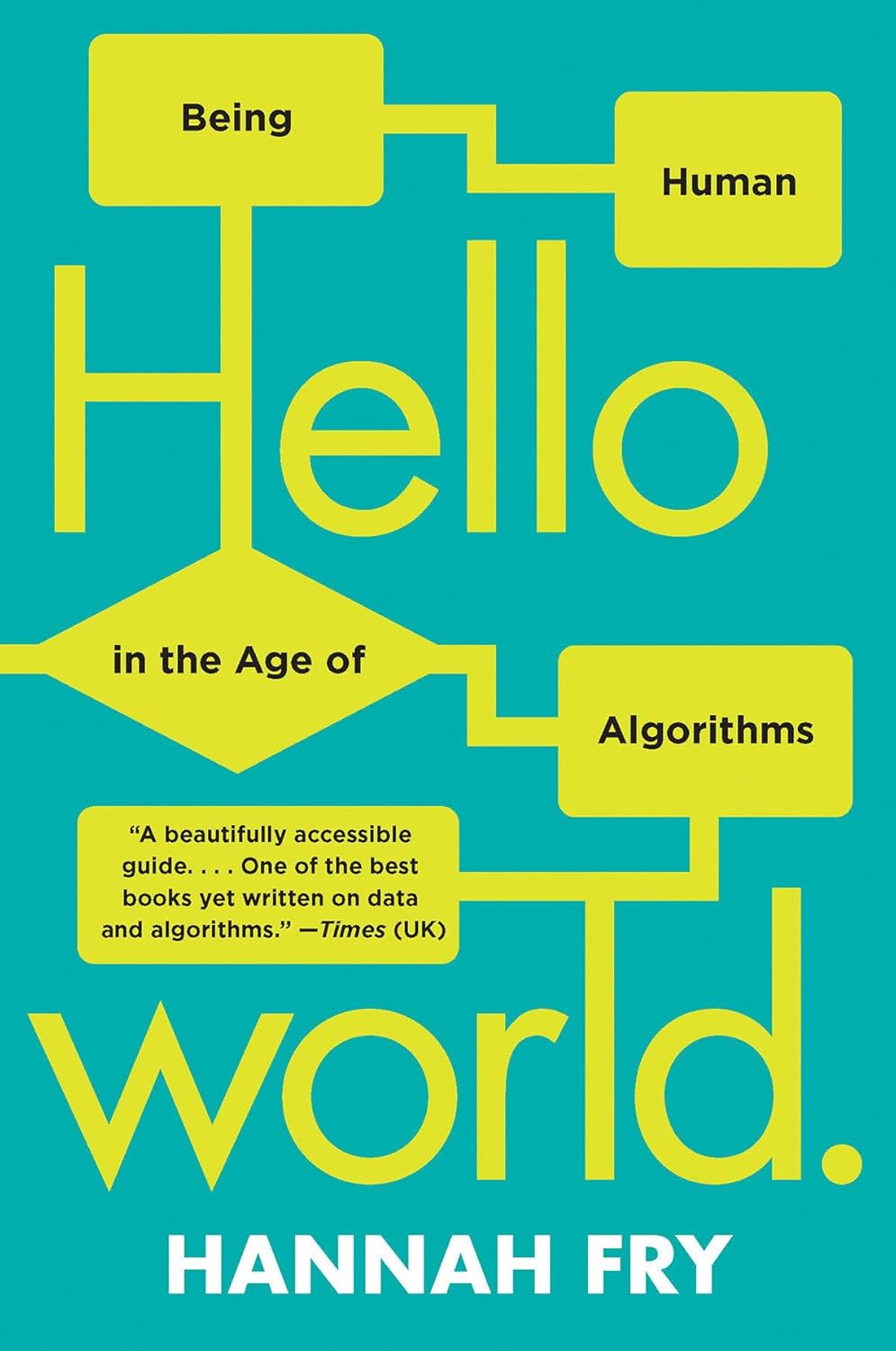
Algorithms in justice, medicine, cars and art, explained with British humor and mathematical honesty.

The reference manual for building products on top of AI models: prompts, RAG, fine-tuning, agents, evaluation and deployment.
As an Amazon Associate, Zendoric earns from qualifying purchases; the price does not change for you. · all our recommended books →
🔗 Related on Zendoric
- Cloning a voice no longer takes hours of recording: why older adults are the easy target for fraudulent AI · 2026-07-02
- The bottleneck of agentic AI is no longer the GPU: it's the hard drive that feeds it · 2026-07-09
- Anthropic points the finger at Alibaba: the AI frontier is starting to defend itself with lawyers, not just code · 2026-06-25