Anthropic nears $1.2 trillion: markets no longer debate whether AI wins, but how much winning is worth

🕒 Published on Zendoric: July 16, 2026 · 00:23
Capital markets now treat AI exposure as non-negotiable: Anthropic is approaching a $1.2 trillion valuation and a prediction market gives it a 91% chance of reaching it before year-end. The figure matters less than what it reveals: capital has stopped betting on AI and started building on it.
📚 Go deeper
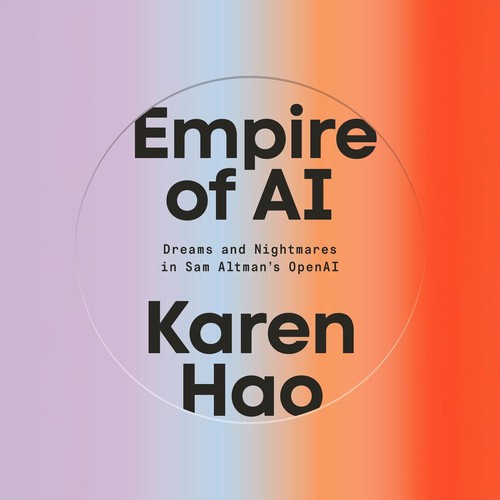
The definitive piece of investigative journalism on OpenAI: 260+ interviews, the clash between safety and speed, and the attempted firing of Sam Altma
As an Amazon Associate, Zendoric earns from qualifying purchases; the price does not change for you. · all our recommended books →
By Crypto Briefing · July 15, 2026.
The specific fact is simple to state: according to Crypto Briefing citing MarketWatch, investment in artificial intelligence has become a dominant component of global capital markets, absorbing a very significant share of venture capital and of Big Tech's infrastructure spending (capex). In that context, Anthropic is approaching a valuation of 1.2 trillion dollars, in the same league as OpenAI, and a prediction market (Vera, the analytics platform behind the article) assigns a 91% probability that the company will reach 1.25 trillion before December 31, 2026.
It is worth separating here two things the article itself mixes without much care. One is the verifiable fact: global capex and venture capital are pouring into AI, and companies like Anthropic or OpenAI are valued —in private rounds, not on the stock market— at multiples that three years ago would have seemed science fiction. The other is the prediction market figure, which is not an actual valuation but an aggregate bet on whether that valuation will become public or effective before a specific date. That 91% measures sentiment and expectation, not the balance sheet. It is legitimate information about where consensus is pointing, but it should not be confused with a done deal; the article itself treats it with that disclaimer in the fine print, and we keep it there.
That said, the underlying phenomenon is indeed real and deserves its own reading. The article points to something important: AI investment is no longer mostly speculative, but industrial construction. It refers to data centers, chips, energy and talent, not lab bets. That is the difference between a bubble of expectations and a real infrastructure investment cycle, though both can coexist and, in fact, do: it is perfectly possible for the construction to be genuine and, at the same time, for some valuations to be inflated by the same enthusiasm that funds the construction. The history of electrification, of the railroad or of broadband teaches that both phenomena —short-term overinvestment and long-term structural transformation— can be true at once.
The other relevant data point, and perhaps the most interesting for the sector, is the valuation premium: the market is paying more for "AI-native" firms than for equivalent legacy software. It is a sign that investors are not only buying growth, they are also buying the belief that traditional software —with its license-and-seat model— has a shorter horizon of obsolescence than its current revenue suggests. It is consistent with something we have already noted in other analyses: when an agent completes tasks end to end without a human opening a dashboard, the link between license and user breaks, and value migrates toward whoever controls the orchestration, not toward whoever was selling the seat.
Our read is that this concentration of capital in a handful of labs —Anthropic, OpenAI, and to a lesser extent the Chinese giants we have tracked closing the quality gap— carries a short-term cost that should not be disguised: capital markets that depend on two or three private companies maintaining their growth pace are fragile markets, and a sharp correction in those valuations would have knock-on effects on pensions, sovereign wealth funds and employment in the tech sector itself. The concentration of economic power in few hands, moreover, is exactly the kind of transition imbalance we have warned about in other pieces on AI's impact on employment: the wealth generated by automation is not distributed automatically or immediately.
But the fact that global capital is willing to bet trillions of dollars that these companies will keep growing is also, in itself, a validation of the underlying thesis we hold at Zendoric: artificial intelligence is not a short-cycle fad, but the infrastructure on which the next phase of economic productivity is being built. If that bet holds —and with it the investment in compute, energy and ever more capable models—, the path toward an abundance of resources that frees human labor for what truly matters stops being a slogan and starts to have, literally, a market price. Whether that price is fair or a bubble will be known, as always, in hindsight; in the meantime, the sensible thing is to follow real capex and recurring revenue, not just the odds of a betting market.
📚 Go deeper

The reference manual for building products on top of AI models: prompts, RAG, fine-tuning, agents, evaluation and deployment.
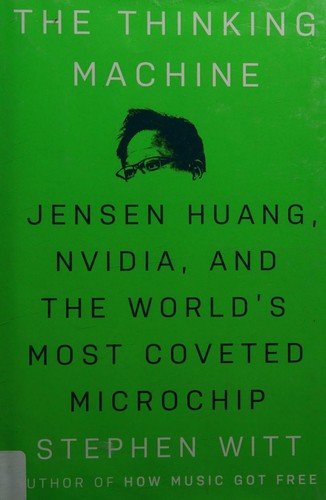
The story of NVIDIA and Jensen Huang: how a video-game card company ended up making the most coveted resource on the planet.
As an Amazon Associate, Zendoric earns from qualifying purchases; the price does not change for you. · all our recommended books →
🔗 Related on Zendoric
- An unverified rumor of a cheaper, smarter Anthropic model reveals how AI races are now priced · 2026-07-12
- An Unverified Tweet Is Moving AI Market Odds—Treat Anthropic's 'Next Week' Model as Rumour · 2026-07-13
- Anthropic takes AI distillation to the Senate: when copying agentic capabilities becomes a matter of state · 2026-06-26