Genomics plus AI: why the public health of the future is also being decided in Rancagua, not just San Francisco

🕒 Published on Zendoric: July 16, 2026 · 00:23
The University of O'Higgins brings together specialists in AI and genomics on July 22 and 23 to discuss precision diagnosis, digital pathology and supercomputing applied to public health. A small case that illustrates something big: precision medicine is also built from the regions, not only in the major tech hubs.
📚 Go deeper

The only novel on the list, by a Nobel laureate: an artificial friend observes humans with a blend of lucidity and innocence no essay achieves.
As an Amazon Associate, Zendoric earns from qualifying purchases; the price does not change for you. · all our recommended books →
By Universidad de O'Higgins · July 15, 2026.
On July 22 and 23, the Universidad de O'Higgins, in Rancagua, will host AIGEN 2026, a conference bringing together researchers, hospitals, the public sector and students to discuss artificial intelligence and genomics applied to public health. The agenda is concrete: digital pathology, medical image analysis and computational biology on the first day; cancer genomics, severe epilepsies and inflammatory diseases on the second. Among the speakers are Lynnette Fernández-Cuesta, of the IARC-WHO computational cancer genomics team, and academics from the Universidad de Chile such as Lilian Jara Sosa and Steffen Härtel. Registration is free and the event is in person.
The relevant fact is not so much the conference itself —a common format for academic outreach— but the project underpinning it: an initiative funded by the O'Higgins Regional Government through the Innovation for Competitiveness Fund, which seeks to equip the region with supercomputing capacity (HPC-UOH) connected to the regional hospital, along with a digital bank of pathology imaging. That is: it is not only about bringing in speakers to talk about AI, but about building computing infrastructure and genomic data with a territorial anchor, something that in Chile —and across much of Latin America— remains concentrated almost exclusively in Santiago or in foreign centers.
This connects with a trend we have been noting across different sectors: computing power and genomic analysis capacity cease to be the privilege of a few global institutions and begin to be distributed toward regional public-health systems, even if on a small scale. Digital pathology —reading biopsies with AI support rather than only under the microscope— and genomics applied to cancer or complex epilepsies are, precisely, two of the fronts where the combination of massive data and AI models is already shortening diagnosis times and opening the door to more targeted treatments. That a regional Chilean university is trying to set up its own high-performance computing laboratory and its own pathology image bank, instead of depending entirely on centralized infrastructure, is a modest but illustrative example of how precision medicine is beginning to decentralize.
That said, it is worth keeping perspective: this is a regional FIC project, with limited public funding, in a capacity-building phase —training professionals, first genomic analysis tools, an outreach event— and not an already operational system transforming cancer diagnosis in Chile. The usual risk with this type of initiative is that regional funding runs out before the infrastructure matures, or that the trained talent ends up migrating to better-resourced centers. The governance of genomic data —who holds it, under what consent, with what guarantees against third parties— is another point that a two-day event does not resolve, though it can put it on the table of decision-makers who would otherwise not encounter these questions.
Our underlying reading is that this type of regional effort, however small, is a necessary piece of the path toward the thesis we hold on AI and health: the combination of genomics and AI models is one of the most credible avenues for getting us closer to much earlier and more precise diagnoses of cancer and complex diseases, and eventually to personalized treatments that today are out of reach for much of the world's population. That medical abundance will not arrive solely from a handful of laboratories in Boston or Shenzhen: it needs mid-sized public-health systems, like that of a Chilean region, to acquire the computing capacity and technical knowledge to apply it with their own data. AIGEN 2026 does not change medicine on its own, but it is the kind of quiet institutional infrastructure —training, computing, data banks, networks between hospital and university— on which the advances that do make noise are later built.
📚 Go deeper

An MIT computer scientist connects AI, quantum physics and video games to take an uncomfortable question seriously: what if we live in a simulation? M
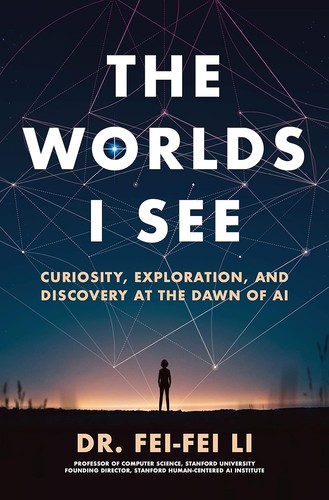
The memoir of the creator of ImageNet, the scientist who made the deep learning revolution in vision possible.
As an Amazon Associate, Zendoric earns from qualifying purchases; the price does not change for you. · all our recommended books →
🔗 Related on Zendoric
- UCLA Health bets on AI for cancer detection: another sign that precision medicine is no longer just a promise · 2026-06-26
- Claude Science: Anthropic steps into the lab, where AI can change more lives but the obstacles are radically different · 2026-07-01
- AI 'Digital Ghosts' Don't Beat Death — They Reshape How We Grieve, for Better or Worse · 2026-07-02