Palantir, from state surveillance to a governance layer for all regulated AI: the thesis holds, but at the usual price

🕒 Published on Zendoric: July 16, 2026 · 00:23
The SBA expands Palantir's anti-fraud software to track wrongly claimed pandemic aid, while the firm adds Rackspace, SNP and GNP Seguros to bring its 'governed AI' to healthcare, finance, energy and insurance. The business is growing, but the valuation and reliance on public spending remain its Achilles' heel.
📚 Go deeper
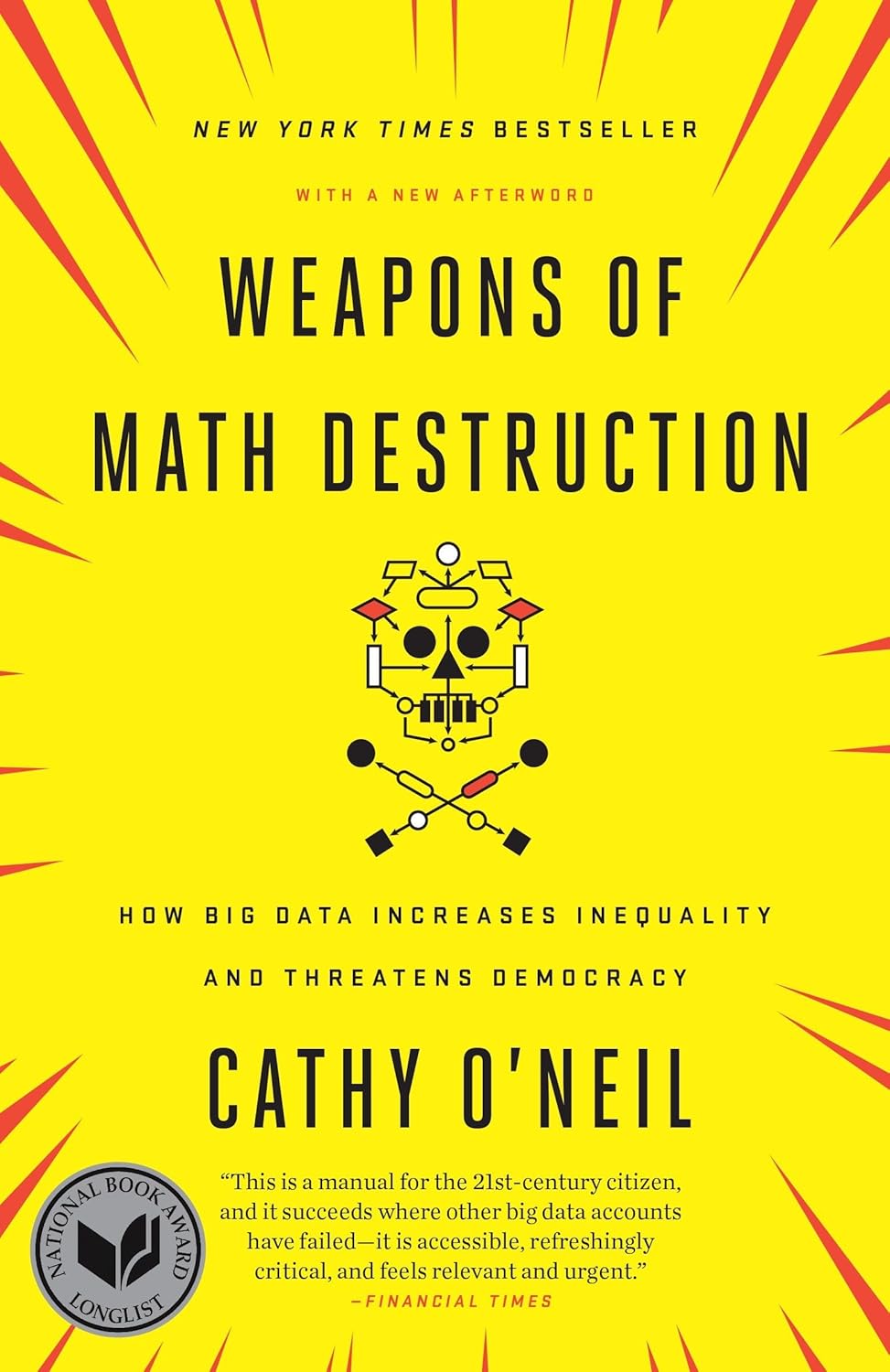
How opaque algorithms decide who gets credit, a job or parole — and why they tend to punish the same people.
As an Amazon Associate, Zendoric earns from qualifying purchases; the price does not change for you. · all our recommended books →
By simplywall.st · July 15, 2026.
The U.S. Small Business Administration (SBA) has formalized a new phase of its anti-fraud initiative supported by Palantir's software, aimed at detecting and prosecuting fraud in the small-business aid programs deployed during the pandemic. In parallel, Palantir is announcing collaborations with Rackspace, the consultancy SNP, and the Mexican insurer GNP Seguros, extending its AI platforms into heavily regulated sectors —healthcare, finance, energy, and sovereign clients— where data sovereignty, governance, and security are non-negotiable.
The thread connecting both moves is clear: Palantir does not sell only AI models, it sells the control infrastructure on which those models can operate without breaching an audit or a data-protection law. It is a value proposition distinct from that of OpenAI or Anthropic, closer to that of a provider of regulatory 'plumbing' than to a research lab. And it fits a thesis we keep repeating at Zendoric: in the race for agentic AI, the winner is both whoever has the most capable model and whoever controls the pipes through which that model reaches production in an auditable way. Palantir is betting everything on being that pipe in the segment where regulatory compliance matters more than the latest benchmark score.
The SBA case is revealing of how the fight against fraud is becoming the preferred entry point for government AI: the covid aid programs left a trail of billions of dollars poorly disbursed, and cross-referencing that data at scale is exactly the kind of task where a well-governed AI system —traceable, auditable, with granular permissions— adds more than replacing staff. It is an AI application with a defensible social benefit (prosecuting fraud, not indiscriminately replacing administrative jobs), which makes it politically easier to expand than other uses of AI in the public sector.
That said, it is worth separating the fact from the investor narrative. Simply Wall St's own analysis —which is not independent journalism but commentary for investors, and should be read as such— recalls that Palantir's bullish narrative requires revenue growth of 40.7% per year through 2028 (up to $10.8 billion) and more than tripling current profit, from $1.1 billion to $3.6 billion. These are projections, not accomplished facts, and the article itself notes that the most optimistic analysts place the ceiling at $11.9 billion in revenue and $4.9 billion in profit, relying on U.S. commercial adoption that has yet to prove sustained. The underlying risk has not changed: a very high concentration in U.S. public spending and its political swings, and a valuation that —according to that same report— leaves little margin for error if the growth trajectory stalls.
Our reading is that Palantir's move toward regulated private sectors (banking, insurance, energy, healthcare) is the correct long-term play if it wants to stop depending on a single client-type, the U.S. government, and that is the real indicator to watch in the coming quarters: not the headlines of new contracts, but what proportion of revenue begins to come from private clients outside the U.S. If the collaboration with Rackspace and insurers like GNP translates into recurring deployments and not pilots that fail to scale, Palantir has a real path to becoming the default governance layer for AI in industries where a compliance error costs fines, not just reputation. If it stays at collaboration announcements without recurring revenue to back them up, the market —which already values Palantir as if that transition were guaranteed— has much to correct.
In general, this type of move fits an underlying trend in the sector: as agentic AI is deployed in production, the demand for governance, traceability, and data control grows in parallel with the demand for the model's raw capacity. It is good news for Zendoric's long-term thesis: the more control infrastructure matures, the easier it will be to deploy powerful AI in sensitive domains —health, finance— without sacrificing security, and that is precisely what is needed for the promise of abundance and better medical diagnoses to materialize without triggering a panicked regulatory backlash. But that horizon does not exempt us from scrutinizing the specific numbers of each quarter closely, something that in Palantir's case remains, above all, a leap of faith about an execution still to be confirmed.
📚 Go deeper

The best starting book if you're not technical: a Wharton professor explains how to work WITH AI — when to delegate, when to supervise, when to keep i
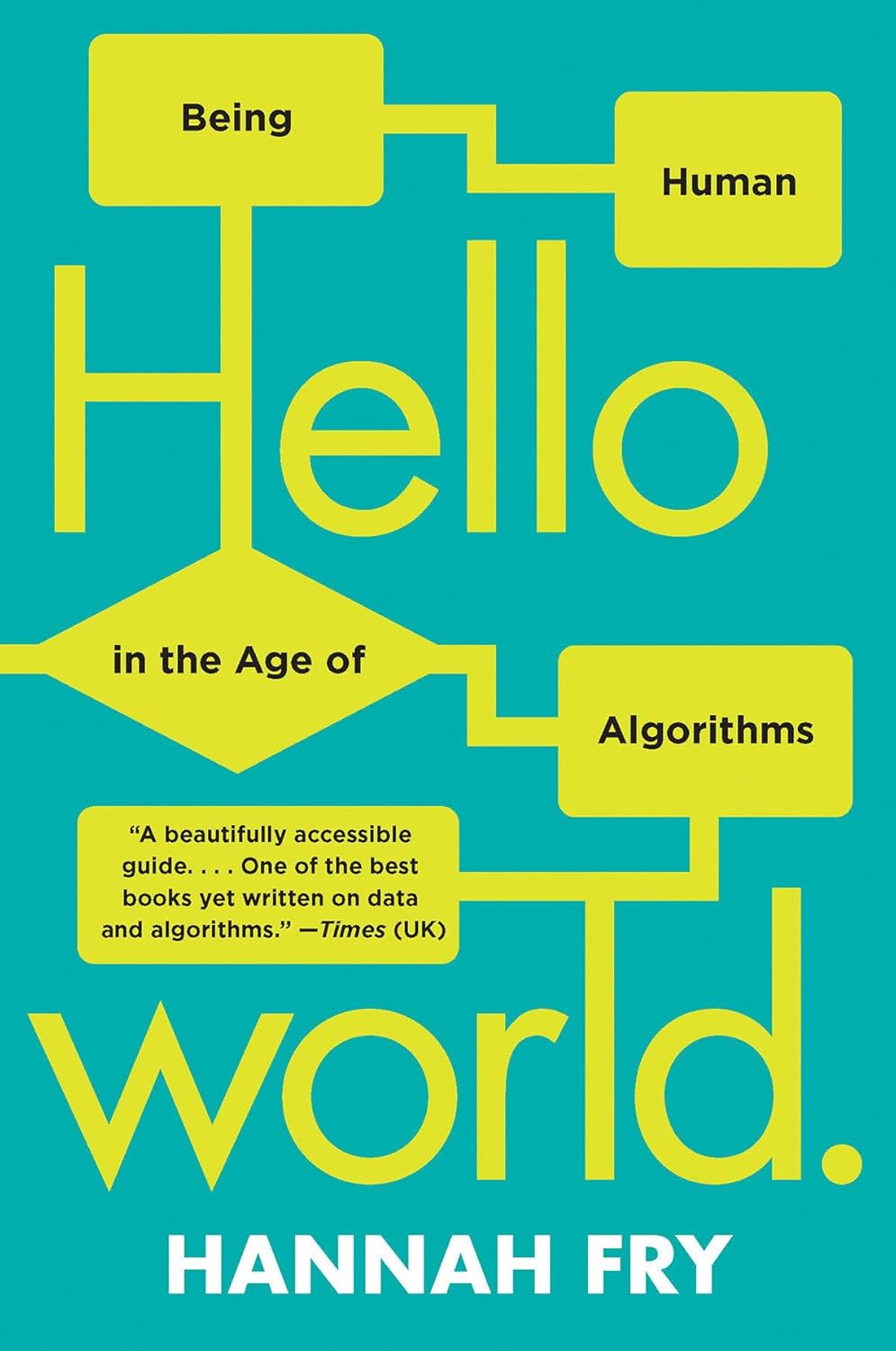
Algorithms in justice, medicine, cars and art, explained with British humor and mathematical honesty.
As an Amazon Associate, Zendoric earns from qualifying purchases; the price does not change for you. · all our recommended books →
🔗 Related on Zendoric
- AI cameras solved a shooting in Hilton Head in five minutes: the price is permanent surveillance · 2026-07-07
- 'Vibe coding' doesn't kill SaaS: it redraws the line between what serves one and what serves many · 2026-06-24
- AI Traffic Cameras That Watch More Than Traffic: When Convenience Quietly Becomes Surveillance · 2026-06-28