Teaching AI in high school before it's too late: the modest bet of a California school

🕒 Published on Zendoric: July 16, 2026 · 00:23
In South Gate, California, high school students use generative AI to produce a documentary while an educator and former Obama administration alumna insists that mastering it is no longer optional. The case is small, but it points to a long-haul race: who arrives prepared for a job market that AI is redefining.
📚 Go deeper
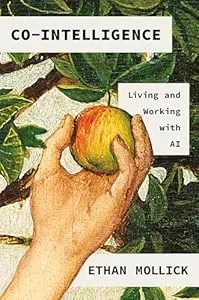
The best starting book if you're not technical: a Wharton professor explains how to work WITH AI — when to delegate, when to supervise, when to keep i
As an Amazon Associate, Zendoric earns from qualifying purchases; the price does not change for you. · all our recommended books →
By Spectrum News · July 15, 2026.
The news, in its bare facts, is modest: at Westbrook Academy, a high school in South Gate (Los Angeles), two 11th-grade students —Angel Barrera and Zion Smith Vargas— are using artificial intelligence tools to help with a documentary project, guided by Shirin Laor-Raz Salemnia, founder of Whiz Girls Academy and Playwerks and a former contributor to educational initiatives under the Obama administration. The original article offers barely more: no adoption figures, no curriculum details, no data on how many schools follow this model. It is, in essence, a local report documenting an anecdote that carries value as a symptom rather than a statistic.
And precisely for that reason it is worth reading carefully: not as a milestone, but as a sign of where secondary education in the United States is heading. Over the past two years, the debate over AI in the classroom has swung between panic (students use ChatGPT to cheat) and vague promise (AI will personalize learning). Cases like this point to a third, more pragmatic path: teaching students to use the tool judiciously, within a specific project, with adults who model ethical use. It is applied digital literacy, not a theoretical course on algorithms.
This connects directly with a thesis we have been advancing about AI's sector-by-sector impact on employment: in education, the winner is not the teacher who merely transmits content, but the one who learns to orchestrate AI as a classroom tool —the augmented teacher, able to guide students in its critical use. What is visible in South Gate is that transition in miniature, a year before those same students enter a labor market where knowing how to use generative AI judiciously will increasingly be a basic competency rather than a specialty.
An honest reading also requires acknowledging the story's limits: it is a local television report, with no hard data on learning outcomes, no independent evaluation of whether this type of program actually improves students' skills compared with unsupervised use of these tools. The short-term risk is not only that young people will misuse AI (to copy rather than learn), but that access to this literacy will be unequal: schools with resources and well-connected educators —as in this case, with ties to federal agencies and edtech companies— will get there sooner and better than schools with fewer means, widening an educational gap that already exists.
In the long run, however, initiatives of this kind are consistent with the underlying thesis we defend at Zendoric: the sooner a generation learns to live with AI as a copilot and not as a substitute for its own thinking, the better positioned it will be to benefit from the abundance these technologies can generate —more time, more resources, more capacity to devote oneself to what each person is passionate about. Public schools, with all their limitations of funding and unequal access, remain the place where it is decided whether that transition benefits a privileged few students or an entire generation. Stories like Westbrook Academy's do not resolve that dilemma, but they at least signal that the clock is already ticking inside the classrooms, not only in the offices of the big tech companies.
📚 Go deeper
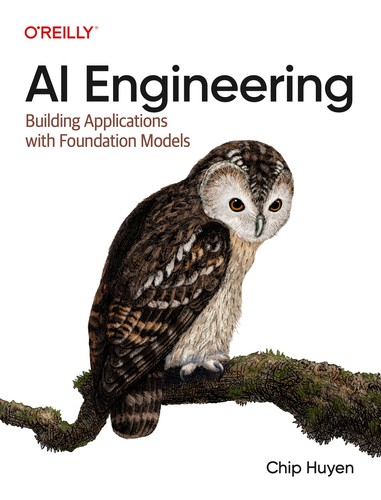
The reference manual for building products on top of AI models: prompts, RAG, fine-tuning, agents, evaluation and deployment.
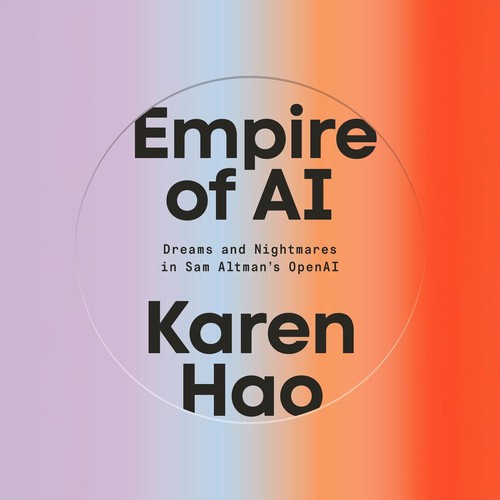
The definitive piece of investigative journalism on OpenAI: 260+ interviews, the clash between safety and speed, and the attempted firing of Sam Altma
As an Amazon Associate, Zendoric earns from qualifying purchases; the price does not change for you. · all our recommended books →
🔗 Related on Zendoric
- Hartford bets on teaching AI to its young people before the job market leaves them behind · 2026-07-01
- AI-generated CSAM at an Illinois school: the hardest abuse to detect no longer needs a hidden camera · 2026-07-04
- ECO-IA: when the classroom replaces the corporate lab at the edge computing frontier · 2026-07-07