O'Leary's 'tenderizing': when an investor sells his defense startup as AI military doctrine

🕒 Published on Zendoric: July 15, 2026 · 08:41
Kevin O'Leary christens on X a supposed new war of AI, satellites and precision munitions against Iran. The problem: the person saying it isn't a military commander, but an investor building exactly that technology and needing to sell it.
📚 Go deeper
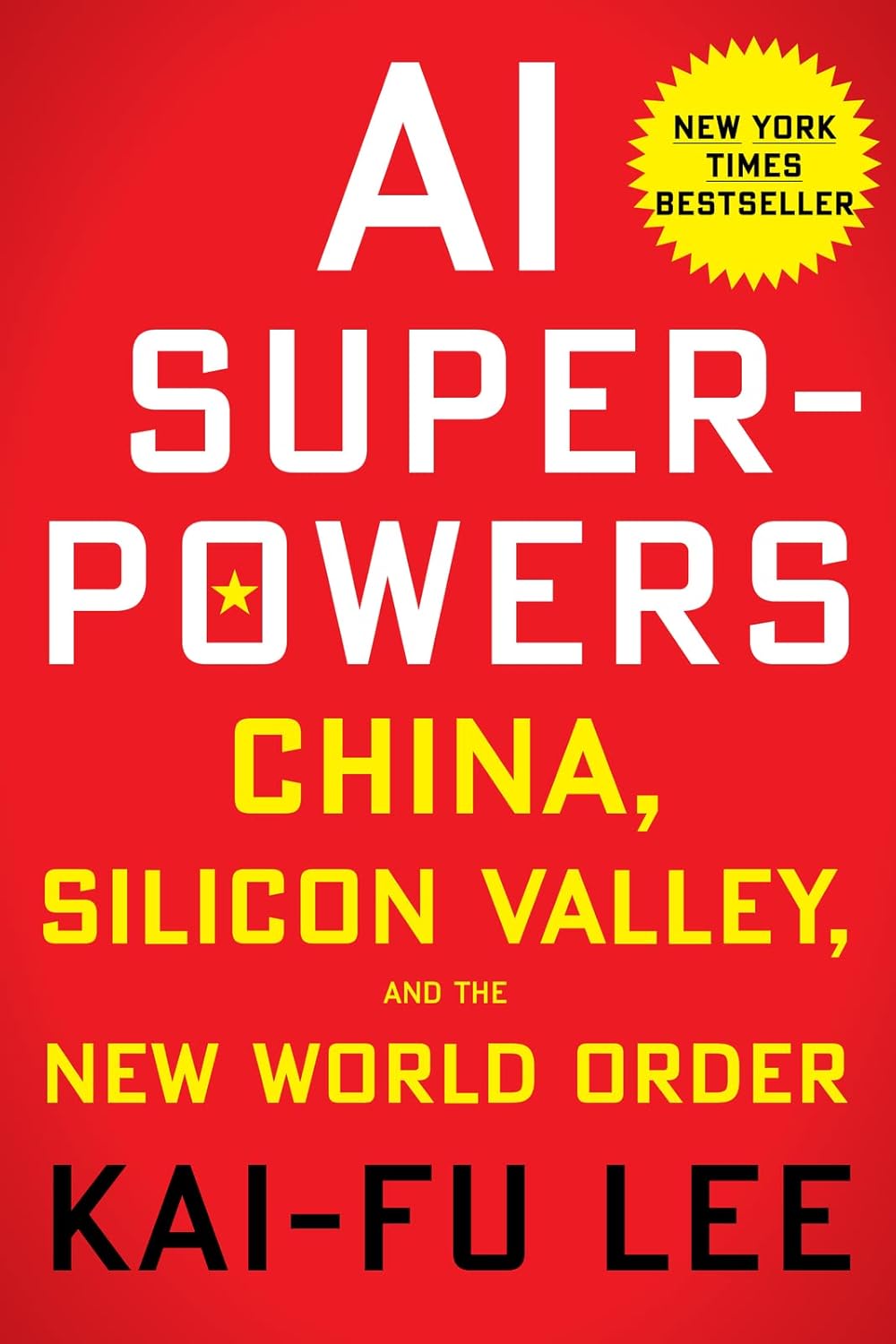
China vs.
As an Amazon Associate, Zendoric earns from qualifying purchases; the price does not change for you. · all our recommended books →
By Benzinga · July 15, 2026.
The facts are modest: Kevin O'Leary, the Shark Tank investor, posted on X on Tuesday a concept he calls "tenderization": using AI systems, satellite-guided precision munitions and predictive analytics to "soften up" an adversary—he explicitly cited Iran—without resorting to full-scale war or mass killing. He paired it with a call to invest more in AI-driven defense and, in passing, acknowledged that he himself is developing that technology. The same article links other pieces of the board: the Five Eyes intelligence alliance warning that AI will accelerate the speed of cyberattacks and urging organizations to prepare in months, not years; XTEND CEO Aviv Shapira describing a platform that connects drones and robots from different manufacturers as "the Android of robotics"; and Palantir's Alex Karp asserting that AI gives the U.S. and its allies a strategic edge in the Middle East by improving intelligence sharing and battlefield coordination.
It is worth separating two things the article inadvertently blends. One is the real and already documented phenomenon: AI is being integrated into command chains, target analysis, cyberoffense and drone logistics, and serious bodies—an intelligence alliance of five governments, not a social-media post—have long been warning that this shortens reaction times against threats. That is a risk data point, verifiable and consistent with what we have already seen in other reports on dual-use AI: the technology does not automatically create a decisive military advantage, but it does change the speed and scale of what an army or an attacker can do. The other thing is O'Leary's rhetoric, which is pure corporate marketing dressed up as geostrategic analysis: he coins a catchy term, singles out a specific country as a target for "forced compliance," and caps it off by saying he is the one building the solution. That an actor with a direct commercial interest in selling AI-based defense systems is also the one framing the doctrine that justifies buying them is, at the very least, a conflict of interest the reader should keep in mind; his words do not amount to official U.S. policy nor to a real operational plan against Iran, and that is how they should be read.
Our reading is that headlines of this kind serve a dual and somewhat perverse function: they dramatize AI's military capability to draw capital into the defense-AI sector, while whitewashing as inevitable an escalation of surveillance and pressure that in reality depends on specific political decisions. We have already seen this in the debate over China and U.S. military muscle: the 'new era of warfare' discourse tends to confuse marketing aspiration with demonstrated capability, and what truly matters is not who announces the flashiest weapon, but who governs its use. Something similar is happening here, with the added twist that the source of the warning and the seller of the product are the same person.
In the short term, the pattern that does deserve sustained attention is the Five Eyes one: generative AI reduces the friction of identifying vulnerabilities, writing malicious code and automating attacks, and that requires governments and companies to update their defenses in months, not in the usual multi-year cycles. It is the honest face of the problem, the one that requires no hyperbole about Iran nor investor neologisms: cybersecurity and the governance of AI's military use are, right now, more urgent than exciting. In the long term we continue to believe that an abundance of computing power and artificial general intelligence can be steered toward curing diseases and freeing human labor for what truly matters; but that promise does not fulfill itself, and the more the public conversation about AI is militarized and sold as spectacle, the harder it will be to direct resources toward the uses that are genuinely worthwhile. The distinction between governing real risk and buying the narrative of an AI-arms salesman is no minor nuance: it is the difference between serious public policy and advertising in uniform.
📚 Go deeper

The best starting book if you're not technical: a Wharton professor explains how to work WITH AI — when to delegate, when to supervise, when to keep i

The reference manual for building products on top of AI models: prompts, RAG, fine-tuning, agents, evaluation and deployment.
As an Amazon Associate, Zendoric earns from qualifying purchases; the price does not change for you. · all our recommended books →
🔗 Related on Zendoric
- The Pentagon formalizes more AI in combat decisions, and the market is already positioning itself · 2026-06-26
- When the State declares its champion dangerous: the regulatory paradox Anthropic lays bare · 2026-06-27
- AI Chatbots Are Failing Kids Today — But Safe-by-Design Is the Fixable Path Forward · 2026-06-28