Meta sued for letting a performance algorithm decide who gets fired while on medical leave

🕒 Published on Zendoric: July 15, 2026 · 08:41
Twenty-six Meta employees are suing the company, alleging that its algorithmic scoring systems penalized those on medical, parental or disability leave during May's layoff round. The case puts a name to a risk that had long been latent: using activity metrics to decide mass layoffs without accounting for who couldn't generate those metrics for legally protected reasons.
📚 Go deeper
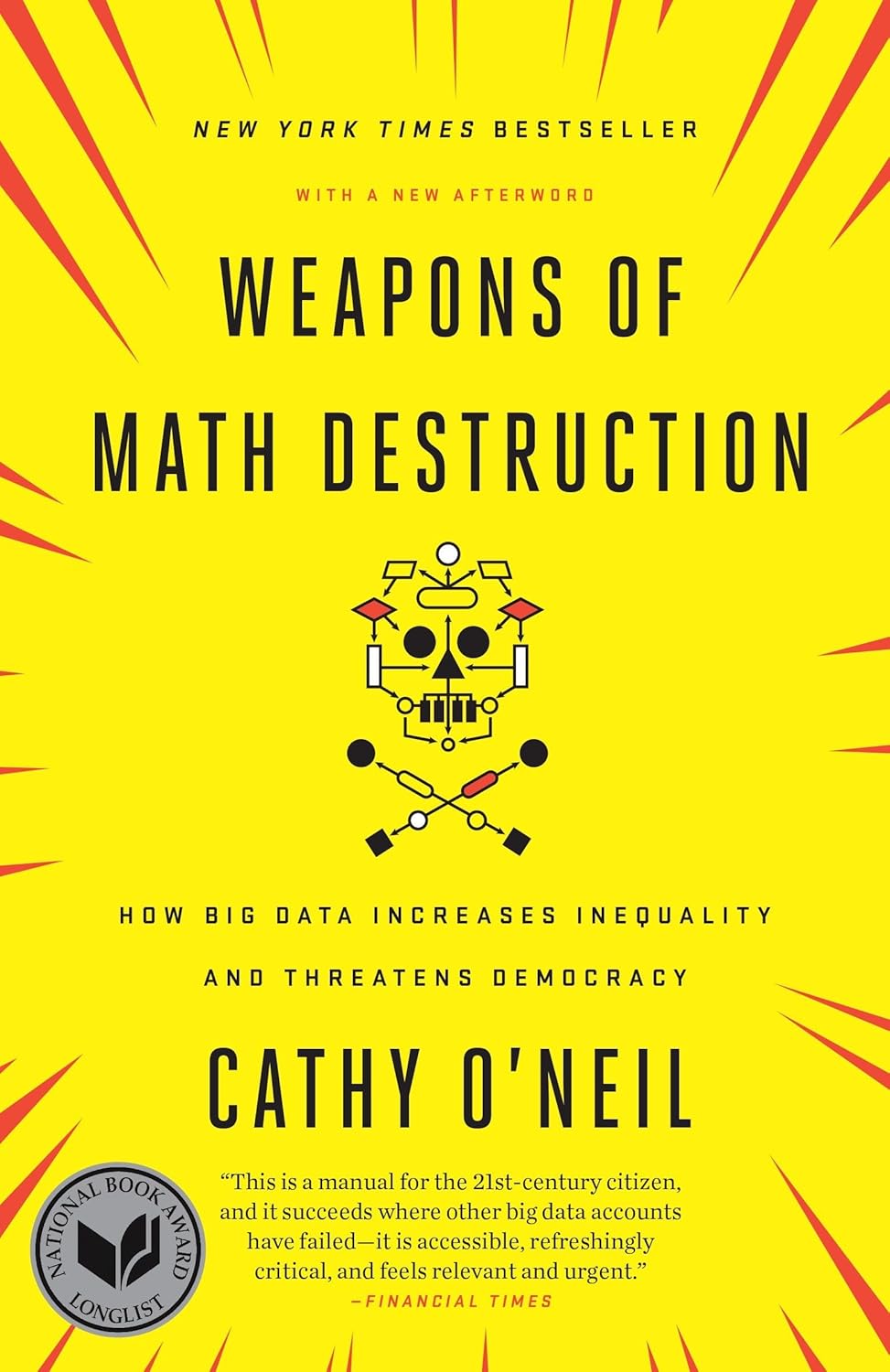
How opaque algorithms decide who gets credit, a job or parole — and why they tend to punish the same people.
As an Amazon Associate, Zendoric earns from qualifying purchases; the price does not change for you. · all our recommended books →
By India Today · July 15, 2026.
Twenty-six Meta employees—all anonymous, all still on the payroll until their departures take effect on July 22—have sued the company in a federal court in Oakland, California. The complaint, filed on Monday, contends that Meta used internal AI systems, token-usage dashboards, keystroke monitoring and algorithmically assisted performance rankings to decide whom to lay off in the cut of some 8,000 positions (nearly 10% of the workforce) announced in May. The central argument is simple and, if borne out, forceful: by design, those metrics cannot accrue when an employee is on protected medical, parental or family leave, or when their output is reduced by a disability. According to the lawsuit, Meta allegedly did not filter out that distortion before using the data to decide layoffs, nor did it pause the system to conduct the individualized review the law requires. Eight of the plaintiffs are women who took maternity or pregnancy leave; four are men who took parental leave; one took leave to care for a family member and later bereavement leave. One especially delicate case: an employee says a supervisor dissuaded him from taking a disability leave already approved by Meta's own medical provider, warning him that doing so would flag him for layoff. Meta denies the allegations and states that workforce decisions are 'made by people, not AI'; it is worth stressing that these are the allegations of a lawsuit, not proven facts, and that the company will have its chance to respond during the proceedings.
What makes this case interesting is not just the judicial outcome—which could take years—but the mechanism it describes. Meta is not being accused of building an AI that decides to fire people for being pregnant; it is being accused of something more subtle and more plausible: designing a productivity-measurement system that, by failing to distinguish between 'worked little because they perform poorly' and 'worked little because the law allows them not to work,' turns a protected category into a low-performance signal through the back door. It is the kind of bias that does not require explicit discriminatory intent to produce a discriminatory result: the plaintiffs' lawyers invoke precisely the doctrine of 'disparate impact,' which allows an apparently neutral policy to be challenged if it disproportionately harms a protected group. Here the argument is that, because pregnancy and family-care leave fall mostly on women, a scoring system blind to that context ends up pushing out more women than men, without anyone having to write that rule into any code.
There is an additional angle the lawsuit underscores pointedly: it invokes the Trump administration's retreat on enforcing the disparate-impact doctrine, with the Equal Employment Opportunity Commission (EEOC) downgrading the priority of these cases and withdrawing ongoing discrimination complaints. The plaintiffs' message is that, even if the federal referee walks off the field, the path remains open through state law and individual action. It is a reminder that labor protection against automation depends not only on good federal regulation existing, but on someone being willing to enforce it; when the regulator steps aside, the burden falls on the workers themselves and their lawyers, which is exactly what we are seeing here.
Our reading: this litigation is less about 'AI discriminates' and more about a pattern we have been flagging in our coverage of AI and employment—the automation of back-office and people-management work is advancing far faster than the safeguard mechanisms that should accompany it. Big Tech has spent two years using the language of 'efficiency' and 'performance' to carry out mass layoffs, and it is increasingly delegating that screening to activity panels, tool-usage dashboards and algorithmic rankings because they scale better than case-by-case human evaluation. The problem is not that the metric is bad in itself, but that it is applied without the safeguards that labor law itself has required for decades for medical and parental leave—safeguards designed for a world of manual evaluations that now collide with automated systems that do not incorporate them by default. It is exactly the kind of short-term friction we have argued must be named without evasion: AI does not need to have intent to produce an unfair outcome, and the responsibility to prevent it remains human and corporate, not technical. In the long run we remain convinced that automating administrative work can free up resources and time toward higher-value tasks—and toward the abundance we champion as our horizon—but that transition will only be legitimate if companies build their algorithmic-management systems with the same legal protections that already exist for people, not as a shortcut to bypass them. If anything should change after cases like this, it is that the design of these scoring systems should incorporate, from day one, a review layer that explicitly excludes protected periods, rather than leaving it to a court, years later, to reconstruct why it wasn't done.
📚 Go deeper
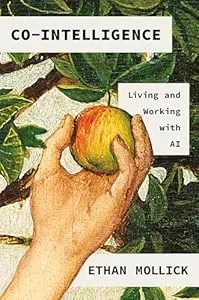
The best starting book if you're not technical: a Wharton professor explains how to work WITH AI — when to delegate, when to supervise, when to keep i

The definitive piece of investigative journalism on OpenAI: 260+ interviews, the clash between safety and speed, and the attempted firing of Sam Altma
As an Amazon Associate, Zendoric earns from qualifying purchases; the price does not change for you. · all our recommended books →
🔗 Related on Zendoric
- When a decree shuts off an API: the Legion case exposes the fragility of building on a single AI provider · 2026-06-24
- 'AI Did It' Is the New Layoff Script — and It's Doing Two Jobs at Once · 2026-06-29
- Healthcare AI in the Pacific: when missing data creates the inequality it promised to eliminate · 2026-06-29