Why AI is 'the most profound invention in human history,' according to a Google AI executive

🕒 Published on Zendoric: July 15, 2026 · 08:41
The article is an opinion piece by Gopi Kallayil, who presents himself as Chief Business Strategist for AI at Google, a former McKinsey consultant and a TEDx speaker.
📚 Go deeper
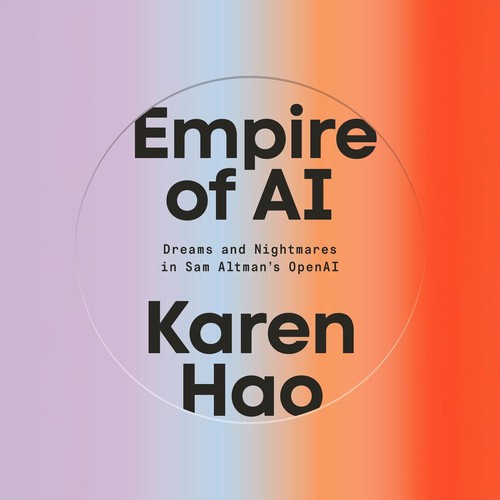
The definitive piece of investigative journalism on OpenAI: 260+ interviews, the clash between safety and speed, and the attempted firing of Sam Altma
As an Amazon Associate, Zendoric earns from qualifying purchases; the price does not change for you. · all our recommended books →
The article is an opinion piece by Gopi Kallayil, who describes himself as Google's Chief Business Strategist for AI, a former McKinsey consultant and a TEDx speaker. It is not a news story or a report: it is an argumentative essay published as an 'Original' on Forward Future, and it should be read as such, with the caution appropriate to an opinion piece written by an executive at one of the companies investing most heavily in AI.
The central thesis is simple and ambitious: for about 12,000 years, humanity has created tools—fire, the wheel, the printing press, the steam engine, electricity, the internet—that, according to the author, share a common trait: they amplify our physical capacity or, at most, make information easier to access. A book, the author says, gives you information, but it does not think for you. AI, he argues, breaks that pattern because for the first time there is a tool capable of reasoning, synthesizing, analyzing and reaching conclusions on its own, concentrating in a single system a thinking capacity equivalent to that of hundreds or thousands of people.
Kallayil lists capabilities that, in his view, distinguish modern AI from earlier tools: learning without step-by-step instruction, generating new concepts and theories, reasoning through abstract logic and symbolic constructs, acting as an autonomous agent on the user's behalf, and synthesizing conclusions from data in a way similar to human thought. From this he draws a broader idea: because cognitive work is 'the source code' of all human creation—even an excavator or a skyscraper first existed as an idea in an engineer's mind—a technology that amplifies cognition ends up affecting every industry, not just some.
To support the argument, the author draws on two concrete examples that are indeed documented in the text and that should be reproduced precisely, without adding figures that are not in the original. The first is the protein-folding problem, considered for 50 years one of biology's great challenges: determining the three-dimensional structure of a single protein could take months or years of experimental work, and in six decades science had managed to solve only around 100,000 structures against billions of known sequences. According to the article, Google's AlphaFold solved the problem in 2020 and has since predicted the structure of more than 200 million proteins, which—the author claims—may have saved hundreds of millions of years of accumulated research work. It is a figure cited by the source itself (referencing deepmind.google), but it is worth remembering that it comes from the same corporate ecosystem the author represents.
The second example is a Google system that, according to the text, predicts river flooding up to seven days in advance. The article states that it was first tested in the Ganges-Brahmaputra basin in India and later expanded to more than 80 countries, covering more than 1,800 forecast points and reaching 460 million people, in a context in which nearly 1.5 billion people—19% of the world's population, according to the source—are exposed to flood risk. The argument here is human and concrete: seven days' warning allows people to evacuate, secure belongings and mobilize emergency resources before disaster strikes.
From these two cases, the author leaps into speculative territory and uses healthcare as a hypothetical example, not as verified data: he cites that the United States spent, according to an external source (Health System Tracker), about $14,570 per person on health in 2023, mainly because of the shortage of highly trained human specialists, and asks—rhetorically, with no concrete figure to back it up—what would happen if AI could offer an equivalent level of medical expertise for just $300 per person. It is important to stress that this $300 figure is a hypothesis floated by the author, not a measured figure or a goal announced by any organization; the text itself presents it not as a fact but as an open question.
With that same speculative logic, the essay concludes that problems such as world hunger, climate change or a cure for cancer 'are no longer beyond our reach,' because AI could find solutions that the human mind, limited by biases and finite cognitive capacity, would never find on its own. The closing reaffirms the initial thesis: AI does not merely automate repetitive tasks or improve efficiency—which it also does—but amplifies the very source of all innovation, cognition, which is why the author considers it the most profound invention in human history.
From an editorial standpoint, it is worth noting what the article does not discuss: it does not mention current limitations of AI models (errors, hallucinations, training-data biases), nor does it address security risks, concentration of power, labor impact, energy cost or governance, nor does it contrast its optimism with critical voices. It is, in essence, a public-relations and strategic-vision argument from inside Google, resting on two well-documented real cases (AlphaFold and the flood-forecasting system) to support a far broader and less verifiable conclusion about the future of healthcare, hunger and climate change. Readers should assess the concrete examples cited—which are backed by sources—separately from the speculative projections about healthcare costs or 'millennia-old' problems solved, which are opinion, not proven facts.
📚 Go deeper
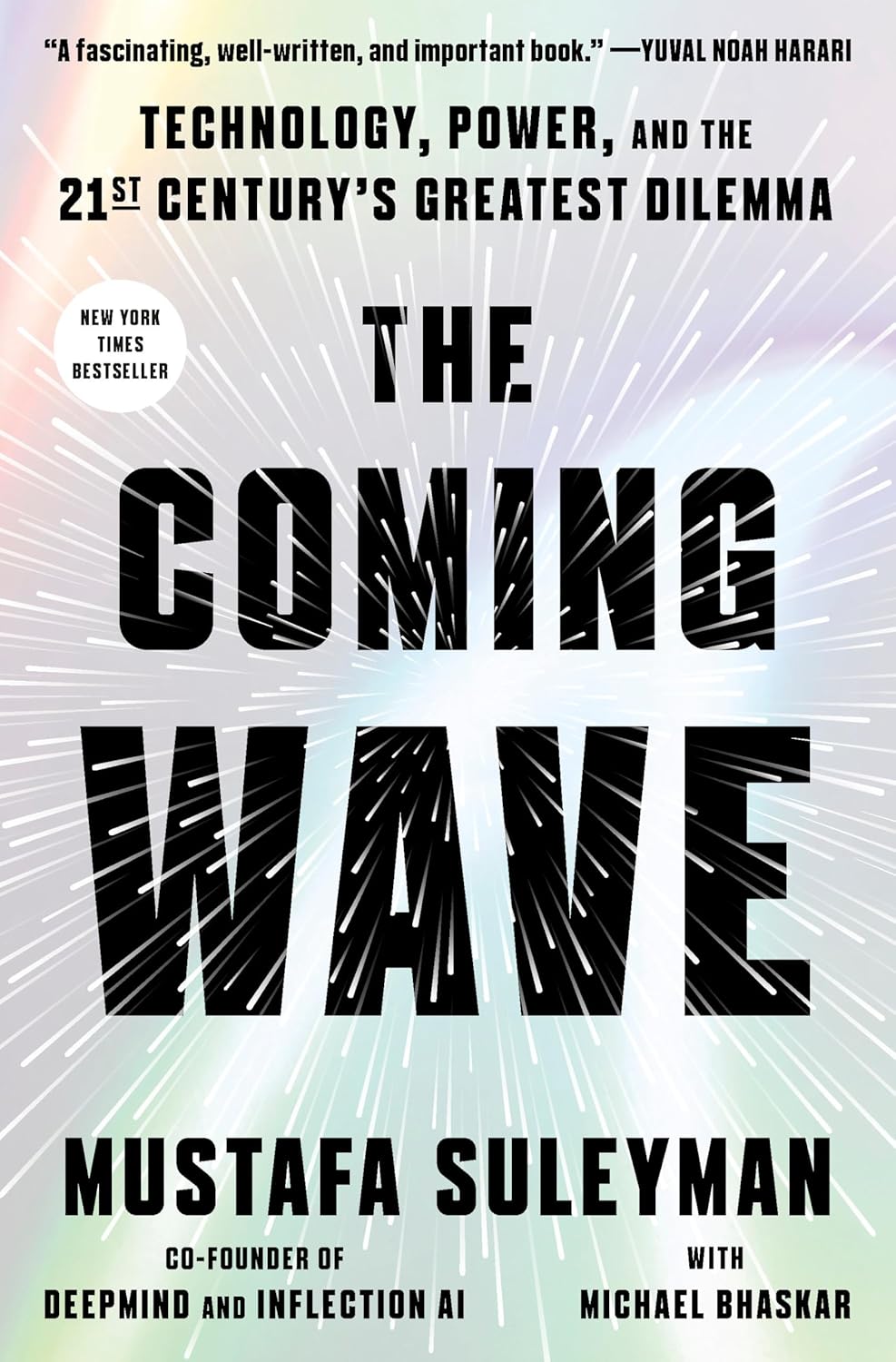
DeepMind co-founder on the dilemma of containing technologies that do not want to be contained.
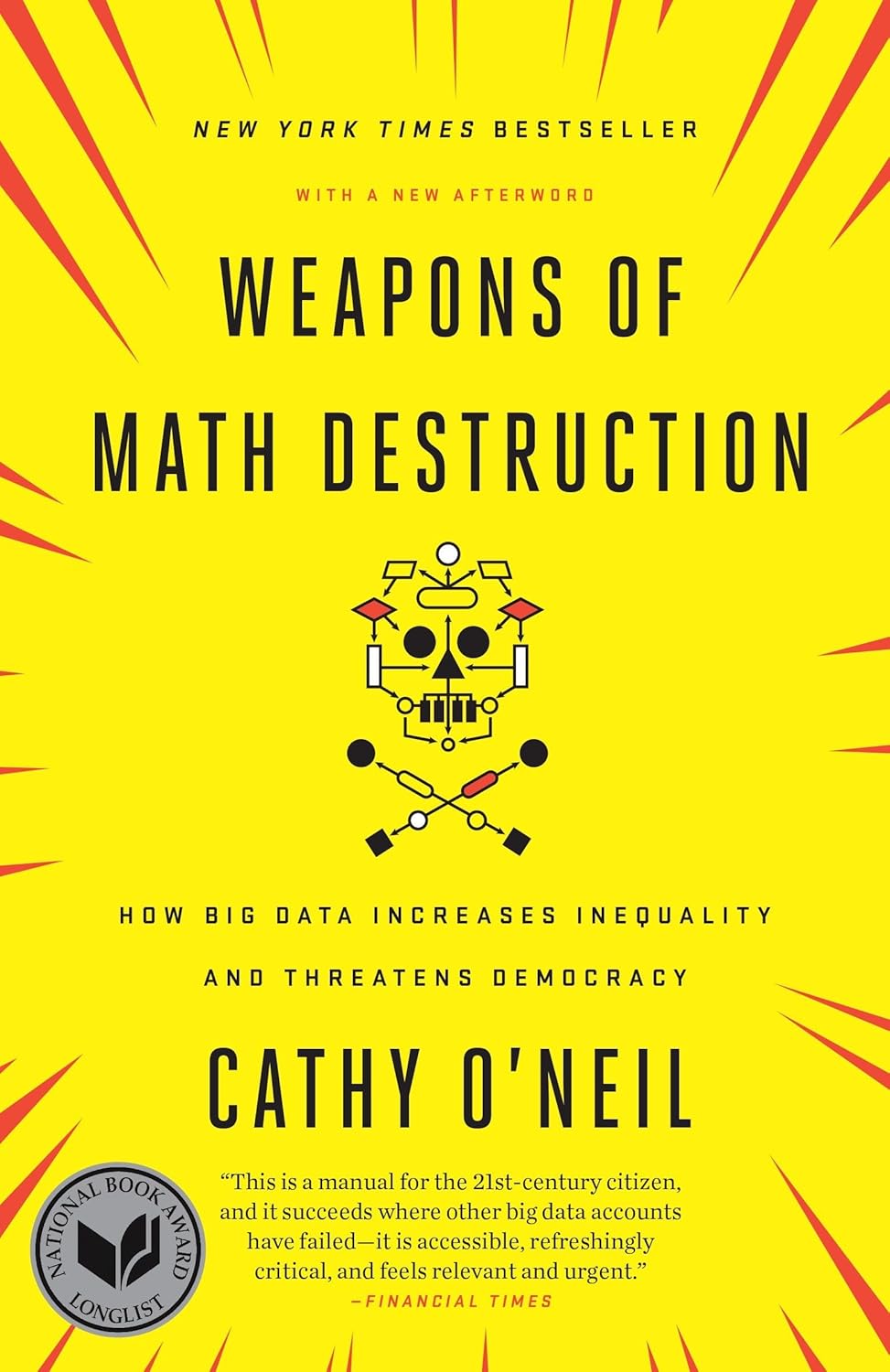
How opaque algorithms decide who gets credit, a job or parole — and why they tend to punish the same people.
As an Amazon Associate, Zendoric earns from qualifying purchases; the price does not change for you. · all our recommended books →
🔗 Related on Zendoric