Apple reportedly preparing the M7 Ultra with up to 1.5 TB of RAM for on-device AI (rumor for 2029)

🕒 Published on Zendoric: July 15, 2026 · 08:41
First, a necessary clarification: the content available for this article is not a report, but a single post on X (formerly Twitter) from the AppleTrack account, accompanied by engagement metrics (views, replies, etc.) that add no substantive information.
📚 Go deeper

The story of NVIDIA and Jensen Huang: how a video-game card company ended up making the most coveted resource on the planet.
As an Amazon Associate, Zendoric earns from qualifying purchases; the price does not change for you. · all our recommended books →
First of all, a necessary clarification: the content available for this article is not a report, but a single post on X (formerly Twitter) from the AppleTrack account, accompanied by engagement metrics (views, replies, etc.) that provide no substantive information. There is no primary source cited, no additional technical details, and no context about where the rumor comes from. Everything that follows should be read with that caveat: it is an unconfirmed leak, spread by an account dedicated to Apple rumors, with no documentary backing visible in the text itself.
That said, the specific claim circulating is the following: Apple would be preparing a chip called the M7 Ultra, whose launch would be placed in 2029, and which according to this rumor could support up to 1.5 TB (terabytes) of RAM. The post frames this figure as a significant leap because, if confirmed, it would give the processor a much greater capacity to run artificial intelligence directly on the device (on-device AI), without relying on cloud servers.
It is important to put this figure in perspective, though without inventing comparisons not present in the original text: 1.5 TB of RAM is a memory volume typical of very high-end servers or workstations, not of current consumer computers. If that capacity were to reach a chip in Apple's "Ultra" family (the highest-end variant within its own silicon line, used in machines such as the Mac Studio), it would represent a notable leap over the unified memory configurations Apple offers today in its M-series chips, designed precisely to accelerate machine-learning tasks through fast, shared access to large amounts of data by the CPU, GPU, and neural engines.
The logic behind why more RAM would help on-device AI is reasonably well known in the industry, although it is not detailed in the post: language models and other generative AI systems that run locally (rather than in the cloud) need to load very large sets of parameters into memory: the more high-capacity, high-bandwidth unified memory a chip has available, the larger and more complex the models that can run without resorting to external servers, which in theory improves privacy, latency, and independence from connectivity. But, again, the post does not explain technical mechanisms, memory architecture, or how that figure would be achieved; it simply states the rumor and its possible implication.
Given the time horizon being handled (2029), it is worth stressing that this is a projection several years out, in a sector where silicon roadmaps change frequently and where rumors about chip generations that far off tend to carry a high degree of uncertainty. There is nothing in the material mentioning manufacturing process specifications, cores, memory bandwidth, power consumption, or which products (Mac Studio, Mac Pro, or others) would incorporate this eventual M7 Ultra.
In summary, the only thing verifiable from this source is that a rumor exists, spread by an Apple news-tracking account, according to which a future M7 Ultra chip planned for 2029 could support up to 1.5 TB of RAM, with the stated goal of strengthening AI capabilities run locally on the device. There is no official confirmation from Apple, nor any additional sources cited in the content itself, so any reading should be treated as industry speculation and not as a product announcement.
📚 Go deeper

Semiconductors as the oil of the 21st century: history, espionage, and why an island of 23 million people underpins the entire AI economy.
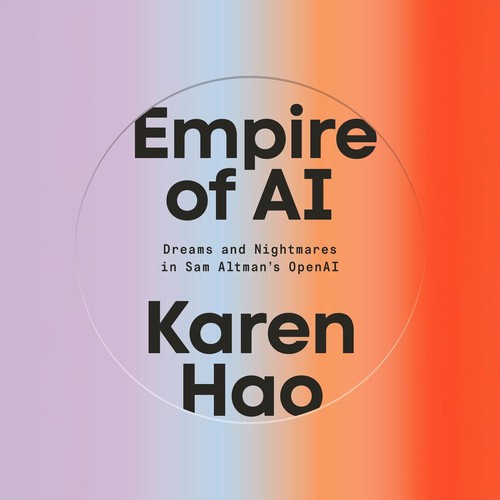
The definitive piece of investigative journalism on OpenAI: 260+ interviews, the clash between safety and speed, and the attempted firing of Sam Altma
As an Amazon Associate, Zendoric earns from qualifying purchases; the price does not change for you. · all our recommended books →
🔗 Related on Zendoric