Leidos and Rune Technologies: military AI wins the quiet battle of logistics, not weapons

🕒 Published on Zendoric: July 15, 2026 · 08:41
✨ AI-generated · how it's made
Leidos is teaming up with startup Rune Technologies to bring AI-powered predictive maintenance to military logistics in the Indo-Pacific. It's the less flashy face of the AI arms race: not missiles or drones, but knowing which part will fail and when to resupply an isolated base.
📚 Go deeper

The reference manual for building products on top of AI models: prompts, RAG, fine-tuning, agents, evaluation and deployment.
As an Amazon Associate, Zendoric earns from qualifying purchases; the price does not change for you. · all our recommended books →
By Simply Wall St · July 15, 2026.
Leidos Holdings (NYSE:LDOS) has announced a collaboration with the company Rune Technologies to develop AI-based predictive sustainment tools aimed at keeping military assets ready in distributed and contested operating scenarios, with the Indo-Pacific as the explicit reference theater. The idea is to combine Rune's predictive logistics engine with the course-of-action tools Leidos already has, so that command and control can decide further in advance which maintenance, which spare part or which resupply route will make the difference at a base or a fleet cut off from its usual supply lines. According to the company itself, the goal is for these decisions —maintenance timing, resource allocation, failure forecasting— to be made before the problem appears, not after.
The move comes at a delicate moment for the stock: Leidos shares closed at $106.56, down 12.8% over the past month and 41.9% year to date, despite maintaining gains of 22% over three years and 8.3% over five. In other words, the market is pricing in something —probably the concentration of business in US government contracts and the company's debt— that this AI alliance does not resolve on its own, though it does reinforce the underlying narrative: Leidos wants to move from selling systems integration to selling recurring decision software, a business with better margins and stickier than hardware or one-off services. On that terrain it competes directly with Booz Allen Hamilton, RTX's Collins Aerospace division and Lockheed Martin, all fighting to be the provider of the software layer that decides, not just the one that executes.
It is worth putting this in its place: it is not an announcement about autonomous weapons or about AI that decides targets, but about the least glamorous yet most decisive part of any prolonged conflict —logistics—. Military history is full of campaigns won or lost over engine maintenance, ammunition availability or the time it takes a spare part to reach a remote Pacific island. That AI enters precisely there, and not through the drone or the missile, is consistent with a trend we had already been noting: today's military advantage with AI is played out in the dual capacity to anticipate and sustain operations, not just in the flashiest weapon. The focus on the Indo-Pacific is no accident either: it is the theater where the United States needs to sustain a presence across enormous oceanic distances, facing a China that competes as much in military capability as in the narrative about that capability.
In the short term, this type of agreement has a concrete and predictable labor effect within the defense sector itself: less need for personnel dedicated to routine logistics planning and more demand for analysts able to audit, calibrate and trust (or distrust) what the predictive model recommends. It is the same pattern we had been observing in other verticals —expert judgment over the automated recommendation gains value, manual execution loses it— now transferred to the military sphere. It is also worth being cautious with the figures: this is an announcement of a collaboration, not a closed contract or verifiable field results; the original article itself warns that the risk of cost overruns, integration delays and re-scoping of government programs is real, and it is wise to wait and see whether this translates into concrete awards before calling it a success.
The underlying reading, however, points in a direction we have already defended in other pieces: AI applied to predictive logistics and maintenance —whether military, industrial or civilian— reduces waste, anticipates failures and frees up resources that are today lost to inefficiency or delayed reaction. It is a manifestation, albeit in a sensitive context, of that promise of abundance we hold to over the long term: systems that do more with less. The important nuance is that here that efficiency is put at the service of sustaining military capability in a region of high geopolitical tension, and that forces us to carefully separate two things: the genuine value of an AI that optimizes supply chains, and the dual use of that same technology as a piece of a silent arms race between blocs.
📚 Go deeper

The story of NVIDIA and Jensen Huang: how a video-game card company ended up making the most coveted resource on the planet.
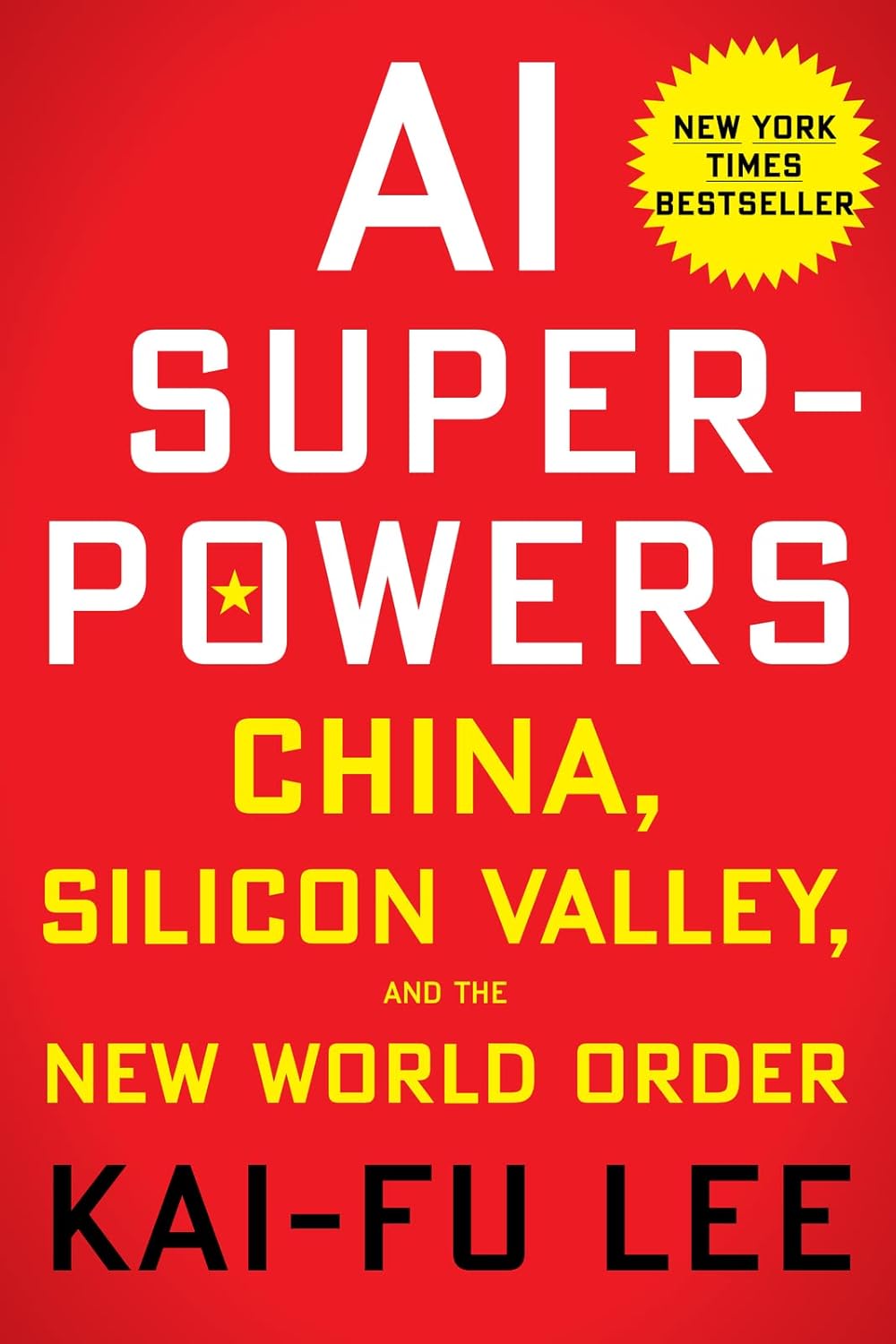
China vs.
As an Amazon Associate, Zendoric earns from qualifying purchases; the price does not change for you. · all our recommended books →
🔗 Related on Zendoric
- Egypt taps Intel to bring AI into its military industry: dual-use is no longer just a US and China affair · 2026-07-12
- Celaya bets on an AI command center: predictive surveillance with accountability still pending · 2026-06-26
- The Pentagon centralizes command of its drones: military AI enters its industrial phase · 2026-07-02