The 'great AI layoff' turns into the 'great rehiring': half of those companies are hiring again

🕒 Published on Zendoric: July 15, 2026 · 08:41
✨ AI-generated · how it's made
Klarna promised that a chatbot was replacing 700 agents; months later it was hiring humans again. According to CNBC, half of the companies that laid off workers blaming AI end up rehiring at a higher cost than retaining their staff would have been.
📚 Go deeper
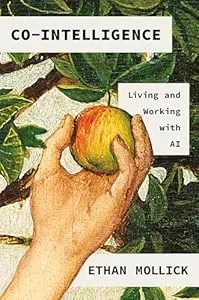
The best starting book if you're not technical: a Wharton professor explains how to work WITH AI — when to delegate, when to supervise, when to keep i
As an Amazon Associate, Zendoric earns from qualifying purchases; the price does not change for you. · all our recommended books →
By Fast Company · July 15, 2026.
For two years an almost automatic script has been running: the company cuts staff, attributes the cut to AI, and moves on. The most cited case was Klarna, which announced that its chatbot did the work of 700 customer service agents and would deliver $40 million a year. The coverage was massive. What got far less coverage was the outcome: customer satisfaction deteriorated, complaints went public and Klarna began rehiring humans. The chatbot handled volume, but it did not know how to de-escalate a genuinely angry customer or exercise the judgment that turns a bad experience into loyalty.
According to data cited by CNBC, this is not an isolated case: around half of the companies that replaced people with AI end up experiencing a 'boomerang effect', rehiring at a higher cost than simply retaining the original workforce would have entailed. A Bloomberg analysis of the United Kingdom adds an uncomfortable nuance: much of the layoffs attributed to AI were in fact driven by broader economic factors, and AI served as a narrative alibi for cuts that had already been decided. The result is a distorted picture of what AI actually does to employment, and a workforce that has borne the damage of a story that was not entirely true.
Against this pattern, the article points to three cases of companies that made the opposite decision and it paid off. Ingka Group, the parent of most Ikea stores, trained a chatbot capable of handling 47% of its customer service calls. Instead of laying off 8,500 workers, it retrained them as interior design consultants, investing in the human capacity AI could not replicate: the result was €1.3 billion in revenue in 2024, with a projection of reaching 10% of total sales in 2028. IBM, after an aggressive cut to entry-level hiring, detected that it was manufacturing a future talent shortage three to five years out, and is now tripling the hiring of Generation Z junior profiles, redesigning those roles rather than eliminating them. Amazon Web Services follows a similar logic: its CEO, Matt Garman, is hiring 11,000 interns and recent graduates this year and states that AWS today employs more software developers than two years ago, despite the enormous improvement in AI coding tools.
The most relevant aggregate figure comes from the PwC Global AI Jobs Barometer 2026, which analyzed more than a billion job postings across six continents: the 20% of companies that squeeze the most out of AI achieved labor productivity growth of 163% relative to 2018 —nearly five times the average— and headcount growth of 52%, versus 36% at companies less exposed to AI. This figure should be read with the usual caution toward studies sponsored by consultancies with a direct interest in selling AI transformation, but the pattern is consistent with the individual cases: using AI well does not shrink the workforce, it grows it. That said, the report itself acknowledges a genuine friction zone: a GMAC survey of recruiters confirms that entry-level roles in tech and manufacturing for Generation Z face a real risk of displacement, something it would be dishonest to downplay.
Our reading is that this story does not contradict the thesis that AI transforms employment; it refines it. Klarna's mistake was not automating, it was automating without preserving the human judgment that sustains the customer relationship, and treating the workforce as a cost to be eliminated rather than the asset that makes AI itself useful. The distinction we propose —and which we had been observing sector by sector— is confirmed here by a very concrete market mechanism: a layoff attributed to AI is not free, it has a measurable reversal cost, and that cost is starting to show up on the balance sheets. It is also a reminder that much of the 'AI destroys jobs' narrative of the past two years mixed real automation with cuts companies would have made anyway for macroeconomic reasons, using AI as convenient PR for an unpopular decision.
In the short term the risk to entry-level employment is real and should not be downplayed: that is where the substitution pressure is highest and where the adjustment will be hardest, especially for those trying to enter the labor market. But the underlying pattern —Ikea, IBM, AWS, and now PwC's own aggregate data— points in the same direction we defend: well-deployed AI does not replace people, it redefines what they do and frees up capacity for higher-judgment tasks, the prelude to a labor market shorter of talent than oversupplied with it, as Jeff Bezos has publicly argued. The path toward the abundance we anticipate does not run through emptying out workforces in one stroke to please an earnings call, but through redesigning jobs with the same patience with which Ikea retrained its 8,500 employees. Companies that confuse that process with an accounting cut are discovering, one after another, that the boomerang comes back, and it comes back expensive.
📚 Go deeper
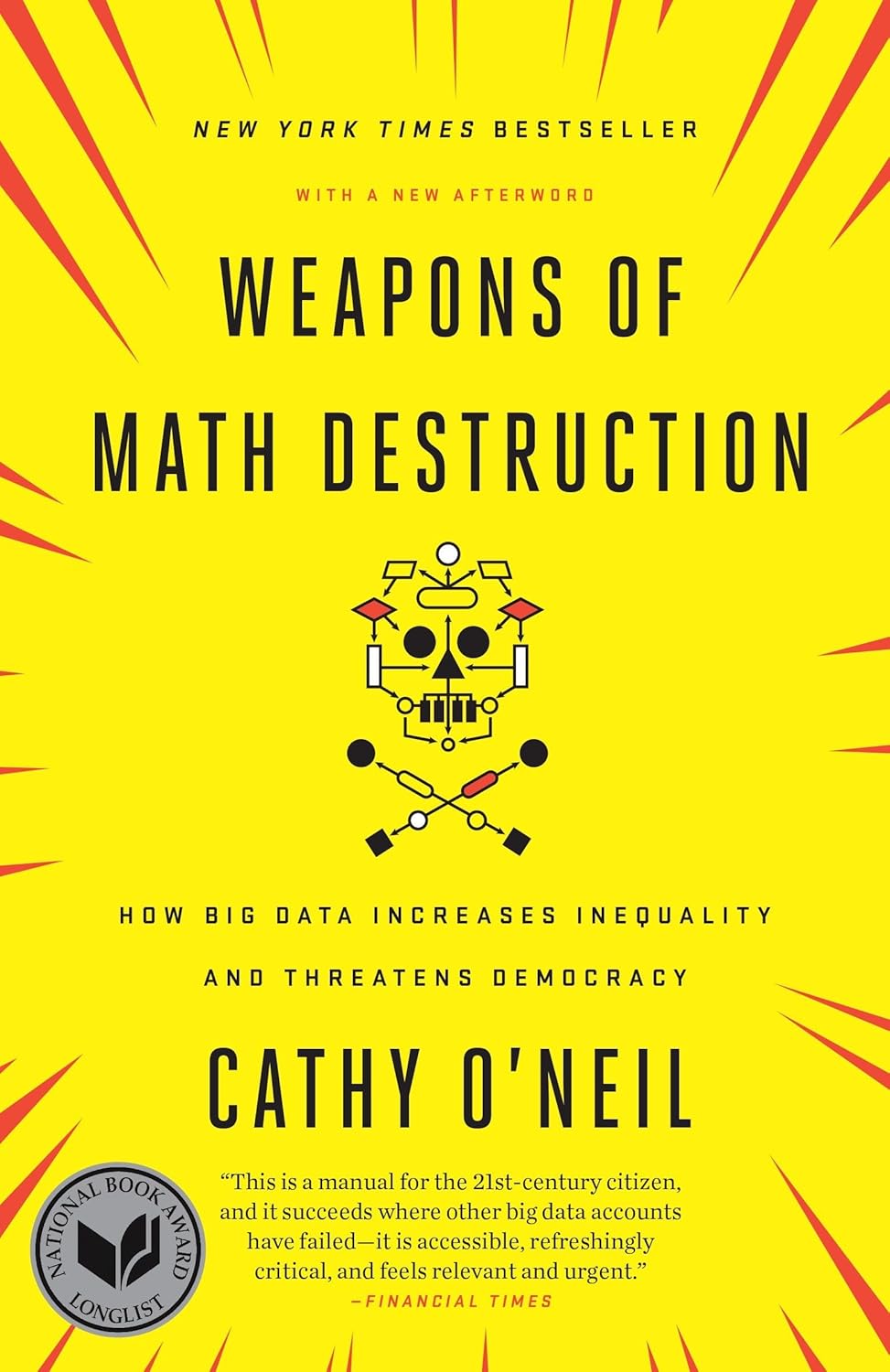
How opaque algorithms decide who gets credit, a job or parole — and why they tend to punish the same people.

The reference manual for building products on top of AI models: prompts, RAG, fine-tuning, agents, evaluation and deployment.
As an Amazon Associate, Zendoric earns from qualifying purchases; the price does not change for you. · all our recommended books →
🔗 Related on Zendoric
- AI layoffs weren't strategy, they were haste: half of those companies are already rehiring at a higher cost · 2026-07-17
- More than a third of AI-driven layoffs end in rehiring: the bet on automation came at a cost · 2026-07-27
- Only 12% of companies know how to govern their AI agents: Google turns that gap into its edge over OpenAI and Anthropic · 2026-07-20