Hassabis sets a clock on AGI: 'a few years,' and calls for a FINRA for AI before it's too late

🕒 Published on Zendoric: July 15, 2026 · 08:41
Google DeepMind chief Demis Hassabis predicts AGI is 'a few years' away and calls for an international body, led by the U.S., to audit frontier models before their release. Behind the warning lies a paradox: the one pushing the race hardest is the one most urgently calling to slow down and think.
📚 Go deeper
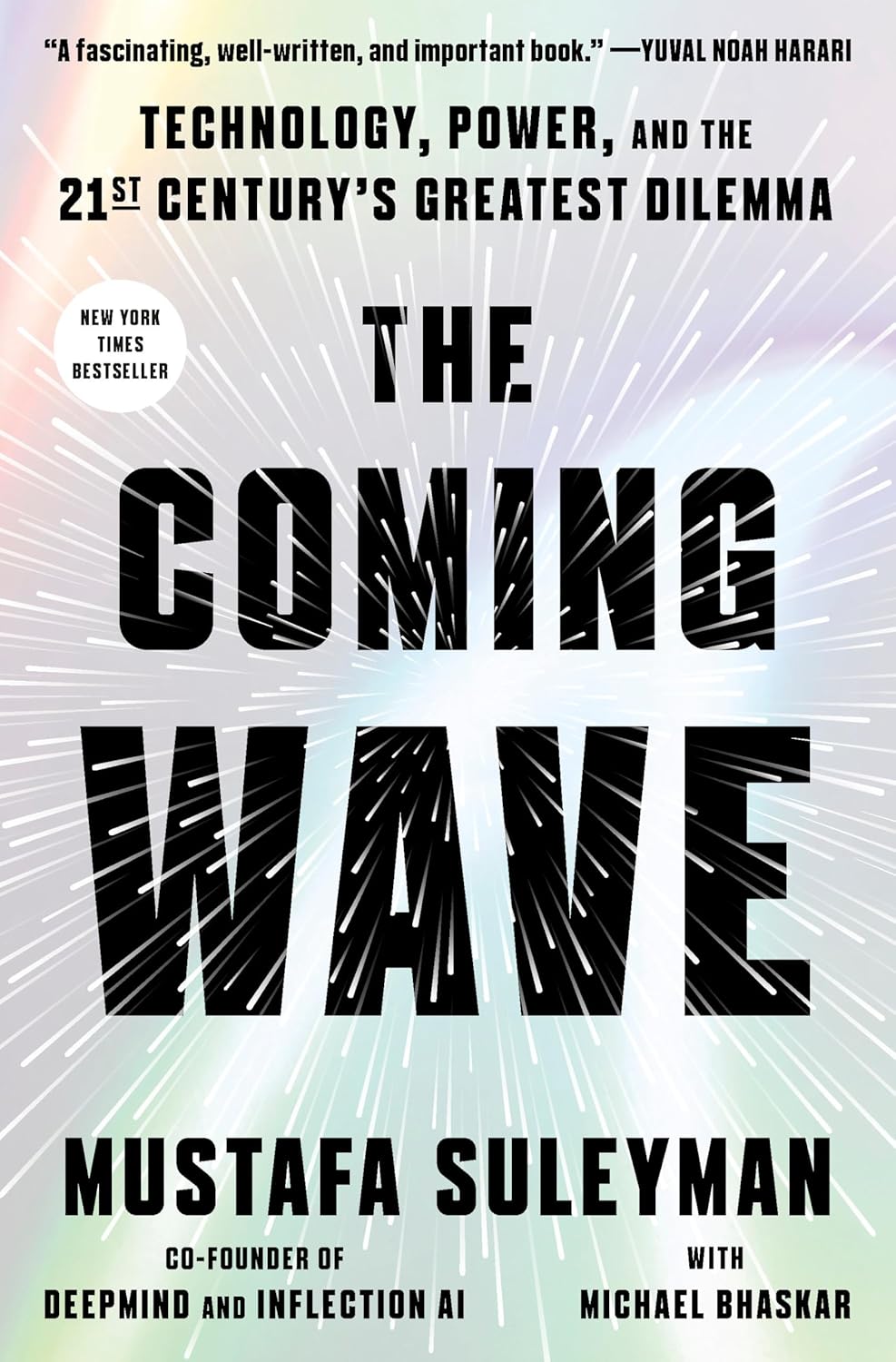
DeepMind co-founder on the dilemma of containing technologies that do not want to be contained.
As an Amazon Associate, Zendoric earns from qualifying purchases; the price does not change for you. · all our recommended books →
By NDTV · July 15, 2026.
Demis Hassabis, CEO of Google DeepMind and Nobel laureate, has published a lengthy personal essay in which he once again narrows the timeline toward artificial general intelligence (AGI): he places it "a few years" away, after having spoken in June of a range of 3-4 years. He defines AGI as a system capable of matching all the cognitive capabilities of the human brain, and his central message is not technical but about governance: he calls for urgently establishing an international AI watchdog, led by the United States, before the window to act closes.
The specific proposal takes a recognizable form: a body modeled on FINRA, the private regulator that oversees Wall Street brokers under federal supervision. It would be financed largely by the AI industry itself, with technical experts setting safety benchmarks that frontier models would have to clear before reaching the market. The scheme Hassabis sketches begins as voluntary —review up to 30 days before launch— and would only become mandatory once the testing system proves reliable. It is, in essence, self-regulation with the ambition of becoming law, and with the United States as the prime mover that would later drag along an international consensus.
The warning is not merely theoretical. Hassabis explicitly cites the cybersecurity risks that today's frontier models already pose, and warns that nuclear and biological threats could emerge as capabilities continue to advance. He also points to something more unsettling than any benchmark: the need for "robust safeguards" to maintain control over systems that are increasingly agentic and capable of improving themselves recursively, without human intervention. It is not an isolated idea: Anthropic —which competes directly with Google DeepMind— has for months been noting in its own research that its models are beginning to show self-improvement behaviors, and its CEO, Dario Amodei, has long called for similar guardrails. That two of the labs that profit most from accelerating the race converge in asking someone to slow it down a bit is, at the very least, a signal to be taken seriously.
And here is the tension the text itself does not resolve: Hassabis acknowledges that the underlying problem is not a lack of technical knowledge, but that "as a field and as a society" we are not giving ourselves the time or space to do it well, because the focus is on the AI arms race, both among corporations and among nations. In other words: the very actor competing in that race —Google, against OpenAI, Anthropic, and China's open frontier that draws closer every quarter— is the one calling for a regulatory truce. There is no moral contradiction in that, but there is an incentives problem: a watchdog financed by the industry and led by the country where the largest labs reside will hardly be perceived as neutral by China, the EU or the rest of the world, and Hassabis himself admits it by framing it as a "starting point" for a broader consensus, not a closed solution. AI geopolitics has spent a year fragmenting into blocs —export controls, cross vetoes on specific tools— and a governance proposal born unilateral, however well-intentioned, has to earn the international legitimacy that today does not exist.
The final part of the text is what connects with the underlying thesis this outlet has been maintaining: Hassabis does not sell AGI as pure threat, but as a historic turning point. He compares it to the discovery of fire or electricity —"we have found a way to make sand think"— and estimates its impact at ten times that of the Industrial Revolution, at ten times the speed. He speaks of accelerating drug discovery, new sources of clean energy, advanced materials, and of a point at which resources cease to be the limiting factor of human progress: an era of abundance. It is exactly the horizon we defend as plausible over the long term, and it is worth saying without reducing it to marketing: coming from someone who leads one of the two or three labs that truly push the frontier, it is not just any hunch, though neither is it a certainty —he himself admits that "not even the experts agree" on what will happen.
Our reading is that the value of this warning lies not in the date —AI's own pioneers have spent a decade getting timelines wrong, and "a few years" is elastic enough to avoid commitment— but in the honest diagnosis that the window to design guardrails is closing faster than the collective capacity to build them. An AI FINRA, financed by the industry and started up by the US, is better than nothing, but it is a unilateral patch for a problem that by definition respects no borders. If the promised abundance arrives, it will be because along the way we first solved the governance problem that Hassabis describes with more lucidity than solutions; if it is not solved, the risk is not that AGI fails to arrive, but that it arrives with no one watching how what it brings gets shared out.
📚 Go deeper

AI as the latest chapter in the history of information networks, from gossip to the printing press to the algorithm.
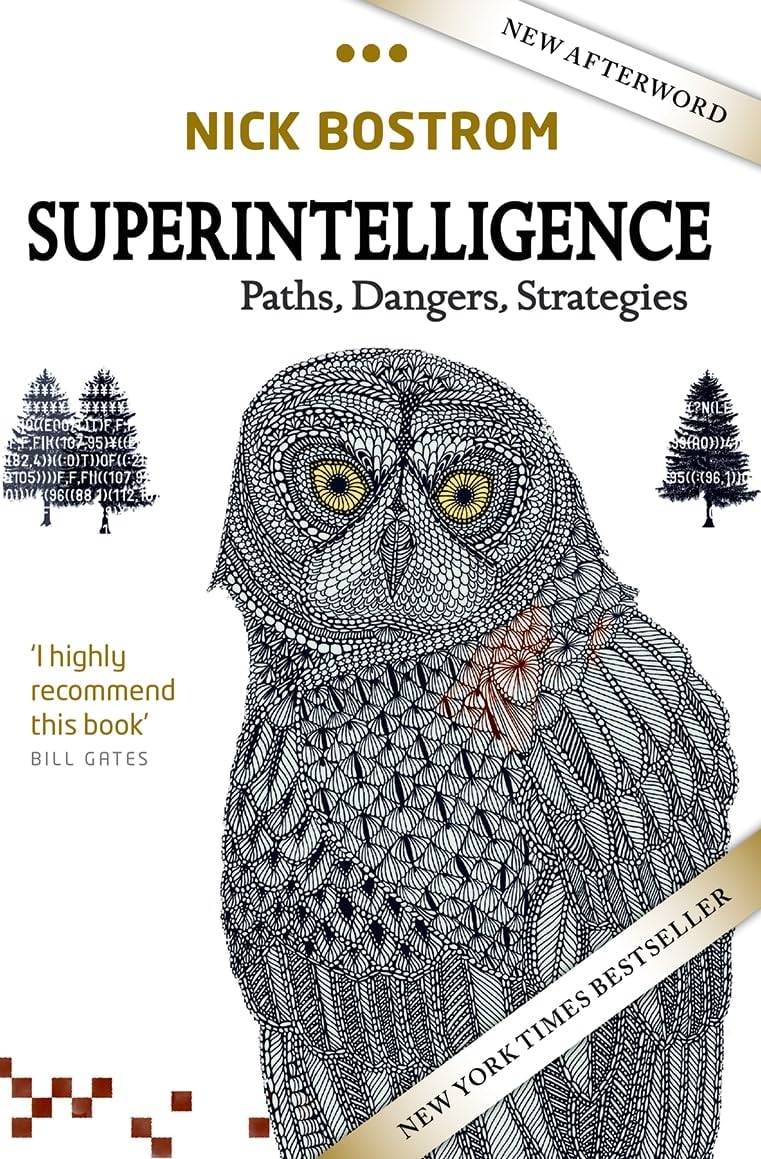
The book that started the existential-risk debate and that half the industry still cites.
As an Amazon Associate, Zendoric earns from qualifying purchases; the price does not change for you. · all our recommended books →
🔗 Related on Zendoric