The Illinois teacher accused of using AI to create child abuse exposes the real limit of safeguards

🕒 Published on Zendoric: July 14, 2026 · 00:03
✨ AI-generated · how it's made
An Illinois teacher, accused of secretly recording students aged 12 to 14 and using AI to create sexually explicit images, could be fired this week. The case, still at the indictment stage, exposes how easily AI today generates child abuse material from real photos.
📚 Go deeper

Algorithms in justice, medicine, cars and art, explained with British humor and mathematical honesty.
As an Amazon Associate, Zendoric earns from qualifying purchases; the price does not change for you. · all our recommended books →
By Patch · July 13, 2026.
The Board of Education of Libertyville School District 70 (Illinois) is meeting this week in a special session to consider the dismissal of Marshall Sheffer, 44, a social studies teacher at Highland Middle School. Sheffer was arrested on July 3 after several students reported suspicions of having been secretly recorded. According to prosecutors cited by Lake & McHenry County Scanner, a search of his phone reportedly found images of students between 12 and 14 years old altered with artificial intelligence to generate sexually explicit content. He faces eight felony charges related to child sexual abuse material. The district superintendent, Rebecca Jenkins, has indicated that the administration will recommend his dismissal, a decision the school board was set to weigh at a special meeting.
It is worth being precise about what is a fact today and what is an accusation pending judicial proceedings: Sheffer has been charged, not convicted, and the definitive details —what he recorded, how, and with what tools the images were generated— will be established by the criminal proceeding, not by a headline. What the case does describe, regardless of its judicial outcome, is a pattern that increasingly worries schools, law enforcement and the AI industry itself: the ease with which image-generation tools, designed for legitimate uses, allow child sexual exploitation material to be created from real photographs of minors, without the need for advanced technical knowledge.
In general, this is not an isolated case. Prosecutors and child protection associations have long been warning of the surge in child sexual abuse images generated or altered with AI, a phenomenon that overwhelms legal frameworks originally designed for unmanipulated photographs or videos. Criminal legislation has been adapting —many states already explicitly classify this manipulated material as child sexual abuse—, but detection capacity systematically lags behind generation capacity: the same models that restore a family photo or generate art can, without adequate safeguards and in hands intent on causing harm, produce exploitation content in seconds.
For the AI industry, cases like this are the most uncomfortable and at the same time the most compelling argument in favor of investing in abuse classifiers, filters in training and inference, and active cooperation with child protection bodies. It is not a matter of reputation: it is proof that current technical barriers —watermarks, synthetic content detection, explicit use restrictions— remain insufficient when an abuser has direct access to minors and motivation to evade controls. Serious providers already block the generation of sexual content involving identifiable minors, but a single editing app without those safeguards, or a local model without filters, is enough to bypass that barrier.
Our reading is that stories of this kind are the clearest example of why optimism about AI only holds up if it is accompanied by serious governance in the present, not only in the future. Zendoric's long-term thesis —that AI can help us live longer and better, and free up human time for what matters— does not clash with the urgency of cases like this: on the contrary, it reinforces it. A technology that multiplies both good and harm is not managed by ignoring the harm while awaiting abundance; it is managed with institutions —school, judicial, technical— that act swiftly when abuse appears, as the Libertyville board appears to be doing by proposing immediate dismissal as soon as the reports emerged. Trust in classrooms, and in the technology that students use every day, depends on these cases being treated with the utmost seriousness, and not being normalized as just another side effect of the generative AI era.
📚 Go deeper

The best starting book if you're not technical: a Wharton professor explains how to work WITH AI — when to delegate, when to supervise, when to keep i
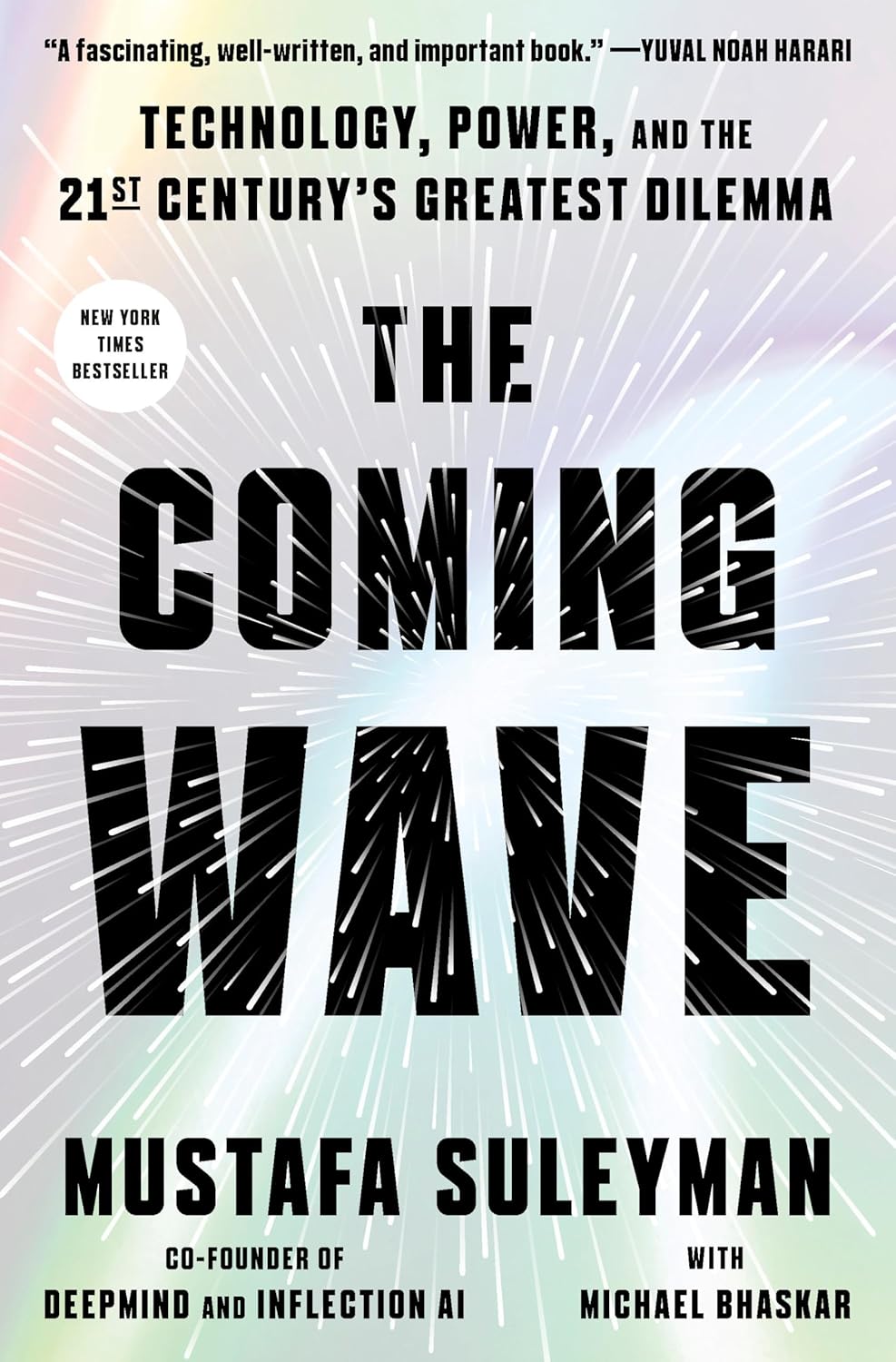
DeepMind co-founder on the dilemma of containing technologies that do not want to be contained.
As an Amazon Associate, Zendoric earns from qualifying purchases; the price does not change for you. · all our recommended books →
🔗 Related on Zendoric
- AI-generated CSAM at an Illinois school: the hardest abuse to detect no longer needs a hidden camera · 2026-07-04
- AI-Generated Abuse Imagery: The Harm Is Here Now, Not in Some Distant Future · 2026-07-09
- A school custodian, accused of using AI to create child sexual abuse material from social media photos · 2026-07-23