When the corporate message falls out of alignment, AI acts as a coherence auditor (not a spokesperson)

🕒 Published on Zendoric: July 14, 2026 · 00:03
Two Tuck (Dartmouth) professors propose using AI to detect when a company's messaging to investors, employees and customers stops adding up to a coherent story, using BlackRock's discursive shift on ESG as a case study. Their thesis: AI is useful for diagnosing, not for deciding the message.
📚 Go deeper
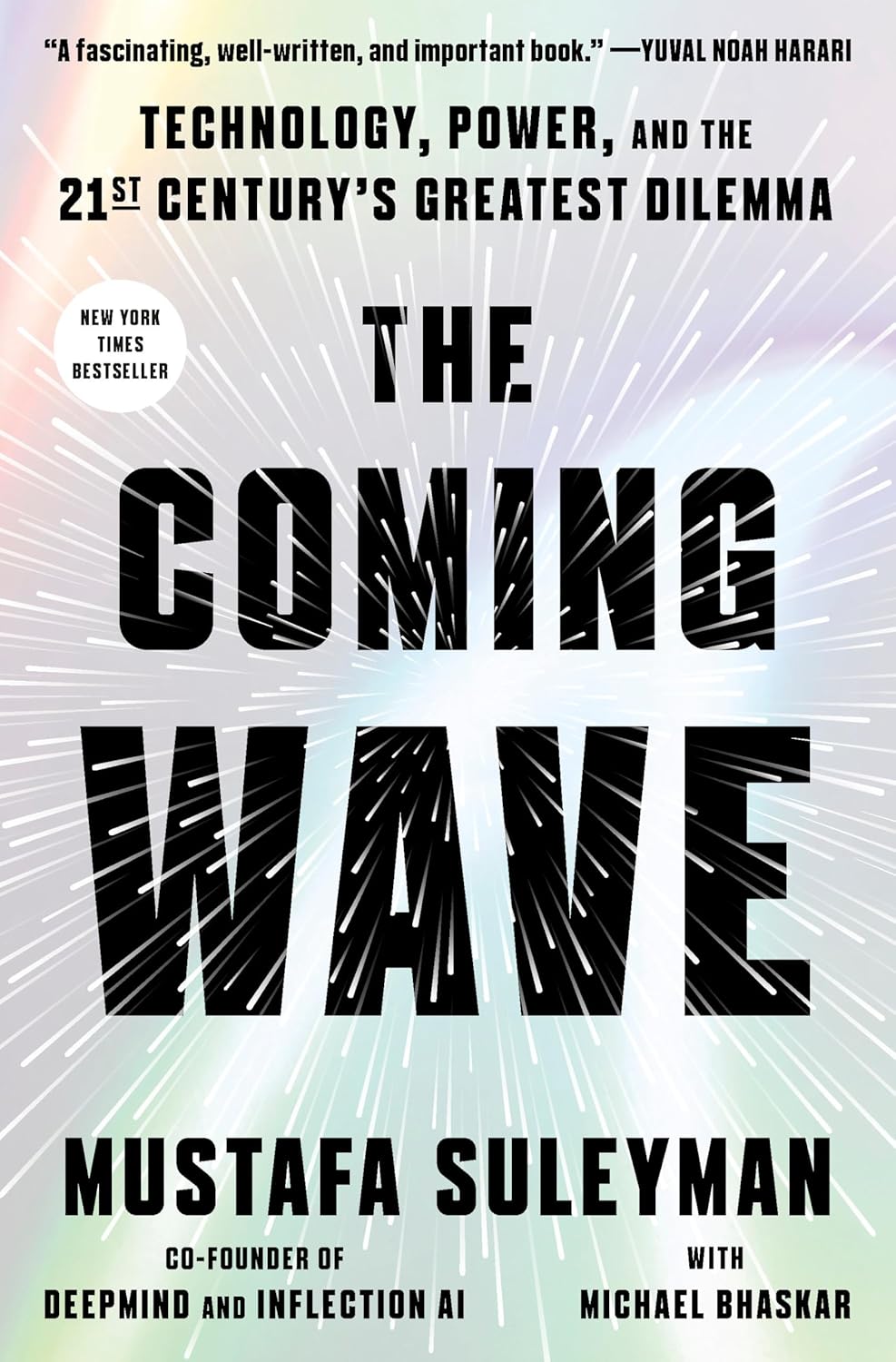
DeepMind co-founder on the dilemma of containing technologies that do not want to be contained.
As an Amazon Associate, Zendoric earns from qualifying purchases; the price does not change for you. · all our recommended books →
By Tuck School of Business (Dartmouth) · July 13, 2026.
The case that opens the article is illustrative: for years BlackRock built its narrative around sustainable investing, with Larry Fink's annual letters arguing that ESG criteria were central to long-term value creation. When political pressure and client expectations changed, the firm reweighted its emphasis toward fiduciary duty and investor freedom. Each message, taken separately, was defensible. Together, they told a less coherent story: for some, greenwashing; for others, a quiet retreat from climate commitment. Professors Mark DesJardine and Paul Argenti, of Tuck, use this episode —without accusing BlackRock of bad faith, but as a symptom of a structural problem— to raise a phenomenon they have been working on for years from different angles: Argenti observing how corporate messaging fragments across marketing, investor relations and the CEO's office; DesJardine seeing, from shareholder activism, how small inconsistencies in how a company describes its strategy are enough for investors to question its credibility.
Their diagnosis is that most of these missteps are not deliberate strategic failures, but coordination failures: global organizations where no one has full visibility of everything the company says, across all channels, at once. And the problem is compounded because analysts, investors and media already routinely triangulate between earnings calls, press releases, speeches and social media — any crack between what is said in one place and another is easily detected. In a paper forthcoming in Management Business Review, the two authors propose AI as a "dual alignment" tool: not to generate the message, but to read a company's entire communicative corpus —reports, earnings scripts, campaigns, internal documents— and flag patterns, shifts in tone and emerging contradictions that no executive could track by hand. The framework they propose has four steps: setting a shared narrative "backbone" with cross-cutting governance across communications, investor relations, legal and IT; building the system that aggregates all channels; embedding review into the daily workflow (Word, PowerPoint, content managers) so the check happens before publishing, not after; and, the part companies find hardest, aligning outward without reinventing the message for each audience, comparing communications side by side and anticipating that no audience is really isolated from the others.
The authors themselves are explicit about where AI can fail: if it is allowed to decide instead of diagnose, it replaces human judgment instead of feeding it; if it is trained only on investor materials, it will have blind spots about how the same message lands with employees or customers; feeding sensitive internal documents into insecure systems creates real legal and competitive risk; and without a clear owner across departments, the tool can generate as much confusion as it resolves.
It is a seemingly modest piece —corporate communication, not frontier models— but it fits with something we have been observing in the employment arena: AI takes hold first, and most firmly, where the work consists of detecting patterns over large volumes of text, not in underlying creativity. Here it does not replace the communications director or the investor relations director; it makes visible what was previously invisible by sheer scale —thousands of documents, dozens of channels, teams in different time zones— and leaves the decision, correctly, in human hands. It is the same pattern we had been pointing to in law or banking: low-judgment, high-volume work is automated first; expert judgment and coordination among people remains, for now, human terrain.
What interests us most about this proposal, however, is the risk the authors themselves name bluntly: without clear governance —who is responsible when AI flags a contradiction between the growth narrative and the cost-discipline narrative, for example— the tool can become one more source of organizational noise, not clarity. It is a useful reminder, transferable to almost any corporate AI deployment: the technology can illuminate the problem, but the absence of an owner to decide what to do with that light is, in itself, a flaw in organizational design as serious as the one it aims to solve. The promise of AI as a "coherence auditor" is both real and modest: it does not spare companies from having to decide what they want to say, it only makes it harder for them to contradict themselves without realizing it while they say it.
📚 Go deeper
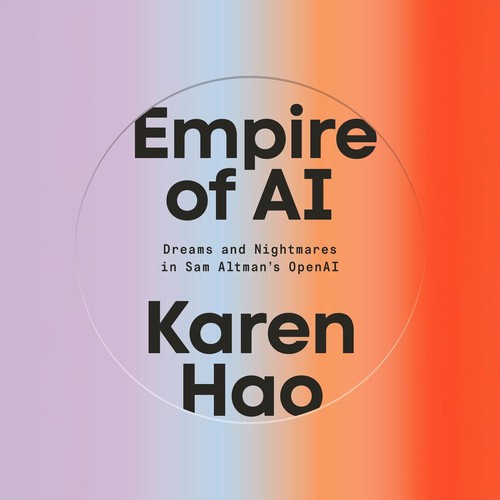
The definitive piece of investigative journalism on OpenAI: 260+ interviews, the clash between safety and speed, and the attempted firing of Sam Altma
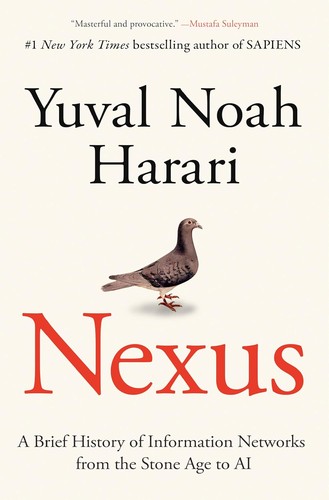
AI as the latest chapter in the history of information networks, from gossip to the printing press to the algorithm.
As an Amazon Associate, Zendoric earns from qualifying purchases; the price does not change for you. · all our recommended books →
🔗 Related on Zendoric
- Self-driving labs: when AI stops running experiments and starts deciding them · 2026-06-27
- Breast cancer leaves traces six years earlier: AI can already see them, and that forces a rethink of the entire screening process · 2026-06-28
- ChatGPT-4o's age bias is not a technical glitch: it's society reflected at industrial scale (KAIST quantifies it) · 2026-06-28