The McConnell photo nobody believed: when not even a real image is enough against suspicion of AI
🕒 Published on Zendoric: July 14, 2026 · 00:03
✨ AI-generated · how it's made
After the death of Senator Lindsey Graham, rumors about Mitch McConnell's health forced his team to release a photo as proof of life. It didn't work: part of the public deemed it AI-generated and turned to chatbots to 'verify' it, with results that only fueled the doubt.
📚 Go deeper
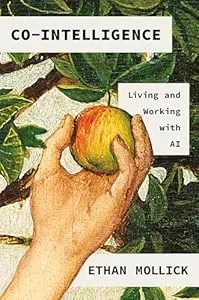
The best starting book if you're not technical: a Wharton professor explains how to work WITH AI — when to delegate, when to supervise, when to keep i
As an Amazon Associate, Zendoric earns from qualifying purchases; the price does not change for you. · all our recommended books →
By Fast Company · July 13, 2026.
The facts are simple and, at the same time, revealing of a larger problem. On Saturday, Republican Senator Lindsey Graham died. Amid the mourning, a rumor spread that another veteran Republican, Mitch McConnell —hospitalized after a fall and absent from public life since— had also died. His office responded with the classic crisis-management playbook: a statement and a recent photograph showing the Kentucky senator in good shape. For decades, that combination —official word plus image— would have been enough to shut down the rumor. This time it was not: part of the public on social media claimed the photo was fake or AI-generated, and some users turned to chatbots to try to 'confirm' it, which in practice fed suspicion more than certainty. Host Jimmy Kimmel, for his part, responded with humor: he posted a parody version replacing McConnell's face with his own, captioned 'for those who were asking, I feel great.'
The episode is a symptom, not an isolated anecdote. For months we have watched how the flood of synthetic content —from rabbits jumping on a trampoline at night to soccer players scared of their own reflection— has steadily eroded the public's ability to distinguish the real from the fabricated. Researchers call this the 'liar's dividend': when any image can be convincingly faked, any real image can also be dismissed as fake, and that benefits whoever wants to sow doubt without needing to fabricate anything. What is new —and truly worrying about the McConnell case— is the second step: people using conversational chatbots as if they were forensic AI-detection tools. They are not. Language models are not trained for forensic image analysis nor do they have reliable access to provenance metadata; when asked whether a photo is AI, they can respond with the same apparent confidence whether they are right or wrong. The result is worse than not asking: a false technical authority that armors the conspiracy with the appearance of verification.
As sector context, the industry's response to this problem —content credentials such as C2PA, watermarks like Google's SynthID, or specialized deepfake-detection services— is still neither universal nor the default in the capture and publication of official photos. The offices of public figures continue to operate with crisis-communication protocols designed for a pre-AI world, where 'posting a photo' closed the discussion. That gap between the speed of distrust and the slowness of verification infrastructure is, today, the real bottleneck: it is not that technology to authenticate content is lacking, it is that it is not integrated by default into how institutions, hospitals and political offices communicate.
Our reading is that this is exactly the kind of short-term friction we had been anticipating: generative AI, before delivering tangible benefits to the average citizen, first corrodes something we took for granted —that seeing is believing— and that erosion of shared epistemic ground carries a real social cost, beyond the anecdote about a particular senator. In the short term, those who exploit ambiguity win (conspiracy theories, political disinformation) and the institutions that need their word and their evidence to still carry weight lose. But it is worth not confusing the symptom with the destination: the same technology that makes doubt possible is the one that can, with the right infrastructure of cryptographic provenance and robust detection, restore to the image a verifiable status —in fact, potentially more reliable than in the pre-AI era, because it will require an explicit chain of custody instead of blind trust. That maturing of verification infrastructure will not arrive on its own or quickly, and in the meantime we will keep seeing episodes like this one, where a senator's health becomes a matter of algorithmic debate. But it is a problem of adoption and standards, not an insurmountable technological limit, and it fits into the same uncomfortable transition that other fields affected by AI are going through: painful while it is being resolved, resolvable once society builds the trust tools that the technology itself makes necessary.
📚 Go deeper

The reference manual for building products on top of AI models: prompts, RAG, fine-tuning, agents, evaluation and deployment.

The definitive piece of investigative journalism on OpenAI: 260+ interviews, the clash between safety and speed, and the attempted firing of Sam Altma
As an Amazon Associate, Zendoric earns from qualifying purchases; the price does not change for you. · all our recommended books →
🔗 Related on Zendoric
- Cloning a voice no longer takes hours of recording: why older adults are the easy target for fraudulent AI · 2026-07-02
- When a teen's first confidant is a chatbot: what 1 in 5 reveals · 2026-06-26
- The IIT Bombay–SUNY alliance is no ordinary agreement: it's proof that AI training is now played on a global network · 2026-06-28